Get Full Government Meeting Transcripts, Videos, & Alerts Forever!
Get email alerts on the Rental Assistance topic
No spam. Unsubscribe anytime.
Council weighs using LAHA funds, nonprofit partnerships and county options for emergency rental aid
Summary
Maplewood council discussed joining the Safe & Stable Communities coalition’s recovery work and debated using Local Affordable Housing Aid (LAHA) or other funds for emergency rental assistance; staff will return with options including nonprofit administration costs and peer models.
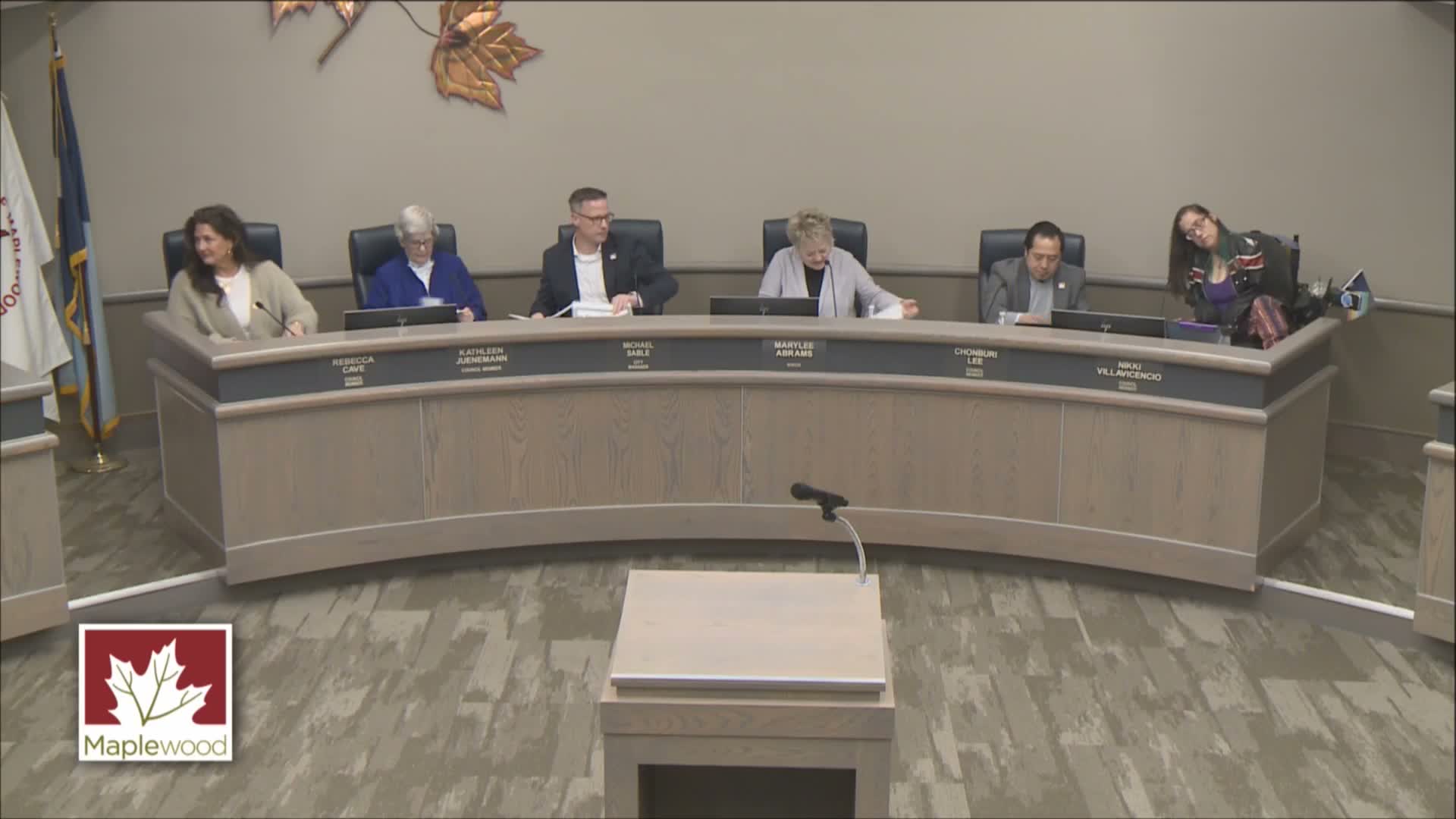
Maplewood staff and council members discussed local recovery and housing needs tied to the Safe & Stable Communities coalition on March 9, focusing on economic impacts to residents and businesses and whether the city should provide direct emergency rental assistance.
City Manager Stable briefed the council on observed impacts — workforce disruptions, increased requests for food and housing help, and spikes in nonprofit inquiries — and on regional assistance programs. “Minnesota nonprofits, they’ve estimated 116% spike in inquiries for financial aid in February,” Stable said, citing demand seen across the region.
Staff outlined local funds that could be available for housing‑related responses: a housing trust fund the council is finalizing ($525,000) already committed under a Minnesota Housing contract, and the local affordable housing aid (LAHA) account, which staff said contains about $809,115 and is not yet allocated to a specific project. Council members debated whether to use LAHA for emergency rental assistance limited to Maplewood residents.
Council Member Lee proposed considering a modest set‑aside (for example, $50,000) targeted to Maplewood residents, while Council Member Villavicencio urged a larger allocation and asked staff to study what peer cities (such as Roseville) are doing in partnership with nonprofits that administer programs. Mayor Abrams and staff cautioned that the housing trust fund amount is already committed and that redirecting funds could forfeit matching funds or undermine other projects; staff said nonprofit partners typically charge administrative fees of roughly 10–20%.
Council asked staff to return with a summary of neighboring communities’ programs, estimates of administrative overhead, and options for program design and eligibility. Staff also said the city will continue to point residents to county and nonprofit resources and maintain an online clearinghouse of assistance programs.
What’s next: Staff will prepare a packet comparing peer city models, program overhead and tradeoffs, and return to council with options for potential council action.