Lifetime Citizen Portal Access — AI Briefings, Alerts & Unlimited Follows
Senate panel advances bill to create research-security council after heated testimony from faculty and industry
Loading...
Summary
The Senate Education Committee reported SB399 favorable as amended after debate over a proposal to create a Louisiana Higher Education Research Security Council to screen foreign partnerships; supporters cited national security risks, while faculty and vendors warned the bill’s definitions could block routine collaborations and university work funded by federal agencies.
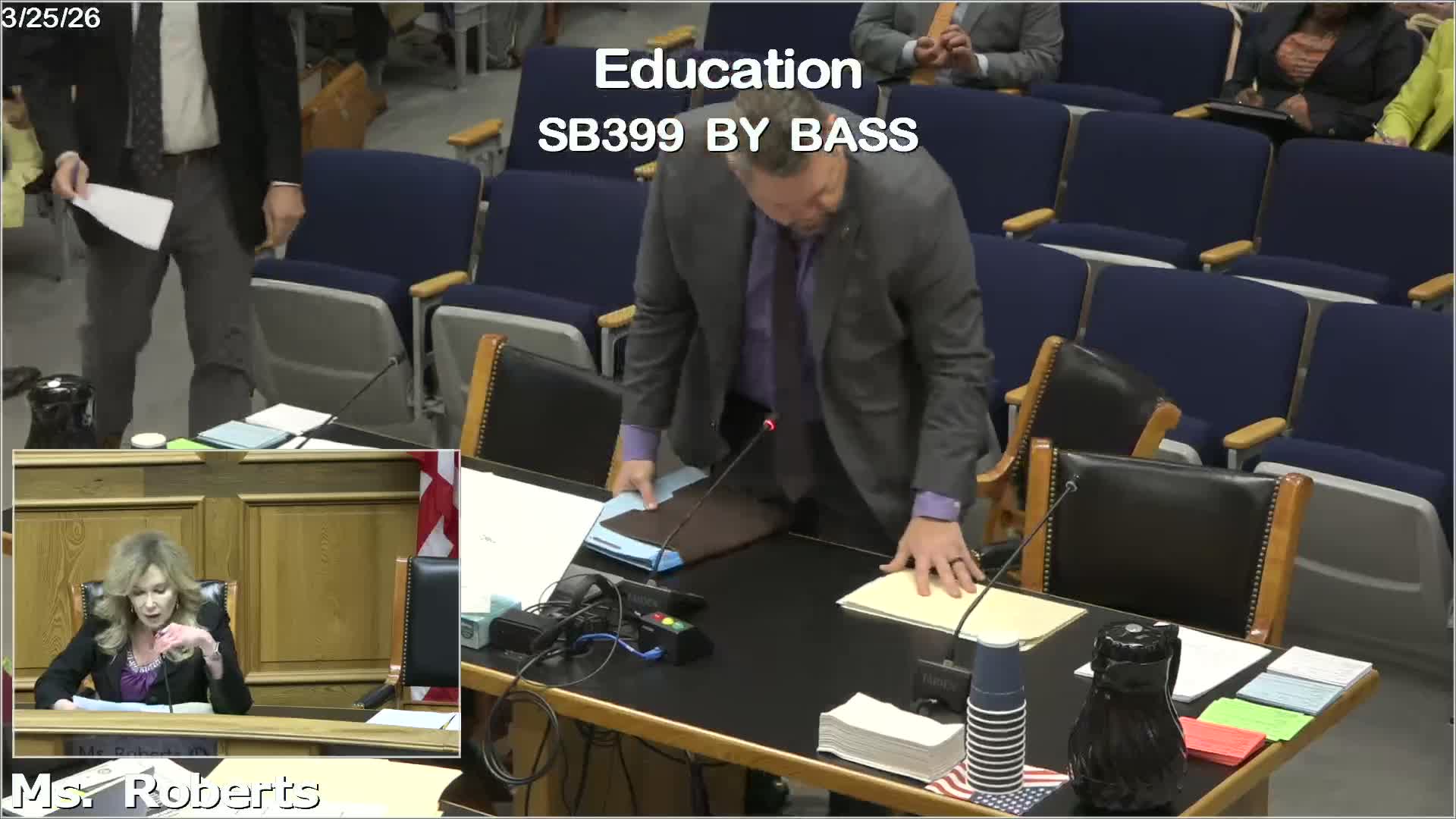
Senator Bass, the bill’s sponsor, told the Senate Education Committee SB399 would create a Louisiana Higher Education Research Security Council to review gifts, contracts and research partnerships involving designated foreign adversaries and to impose safeguards around sensitive research. He said the bill responds to national concerns about foreign influence at universities and that an amendment shifts some reporting to the legislative auditor to address fiscal concerns.
Michael Lucci, founder of the nonprofit State Armour, testified in support and warned the committee that "the Chinese Communist Party very openly and robustly has infiltrated our university systems," describing a pattern he called "United Front political warfare strategy" and urging a council that can vet research partnerships and “give thumbs up or thumbs down.”
Industry and campus witnesses said the bill risked sweeping too broadly. Rodney Braxton of Southern Strategy Group, representing Lenovo, told the committee that Lenovo is a publicly traded company vetted to do business with the U.S. government and cautioned the language could unintentionally limit access to hardware and software relied on by researchers.
Jason Lee, a legally authorized researcher working in higher education, testified in opposition, saying the bill’s draft language could “impact virtually all the research projects” because federal funders such as the Department of Energy, HHS and defense-related agencies commonly fund campus work. Lee asked the committee to allow case-by-case review by the council rather than blanket prohibitions so collaborations involving vetted foreign scholars would not be barred.
LSU faculty member Shui Lian Meng told senators that many faculty felt blindsided by the proposal and warned that broad definitions of past or present membership in organizations could catch ordinary students and visiting scholars, with "much wider impact for many innocent people who just live here and want to pursue a life here." She asked the committee to limit the bill’s reach to currently active, clearly risky affiliations.
Senators pressed the sponsor to tighten definitions. Chair Senator Edmonds and others cited statutory cross-references already used in federal law (including 15 CFR 791.4 and visa-related statutory lists referenced in the bill) and asked staff to adjust drafting to avoid inadvertently barring routine, vetted collaborations. The committee adopted an amendment set (noted by the sponsor as primarily technical and changing reporting duties) and moved SB399 forward as amended.
The committee reported SB399 favorable by voice vote; senators and witnesses said they expected further refinements on the bill language before floor debate.