Get Full Government Meeting Transcripts, Videos, & Alerts Forever!
Get email alerts on the Property Tax Levy topic
No spam. Unsubscribe anytime.
Residents decry steep preliminary levy; council trims projection and delays police hire
Summary
Dozens of residents and business owners urged Thief River Falls City Council to slow a proposed 21.82% preliminary property‑tax levy. After lengthy debate on overtime and staffing tradeoffs, the council voted to amend the budget projection to reflect delaying a police hire, bringing the proposed levy to about 19.36% and setting a later hiring window.
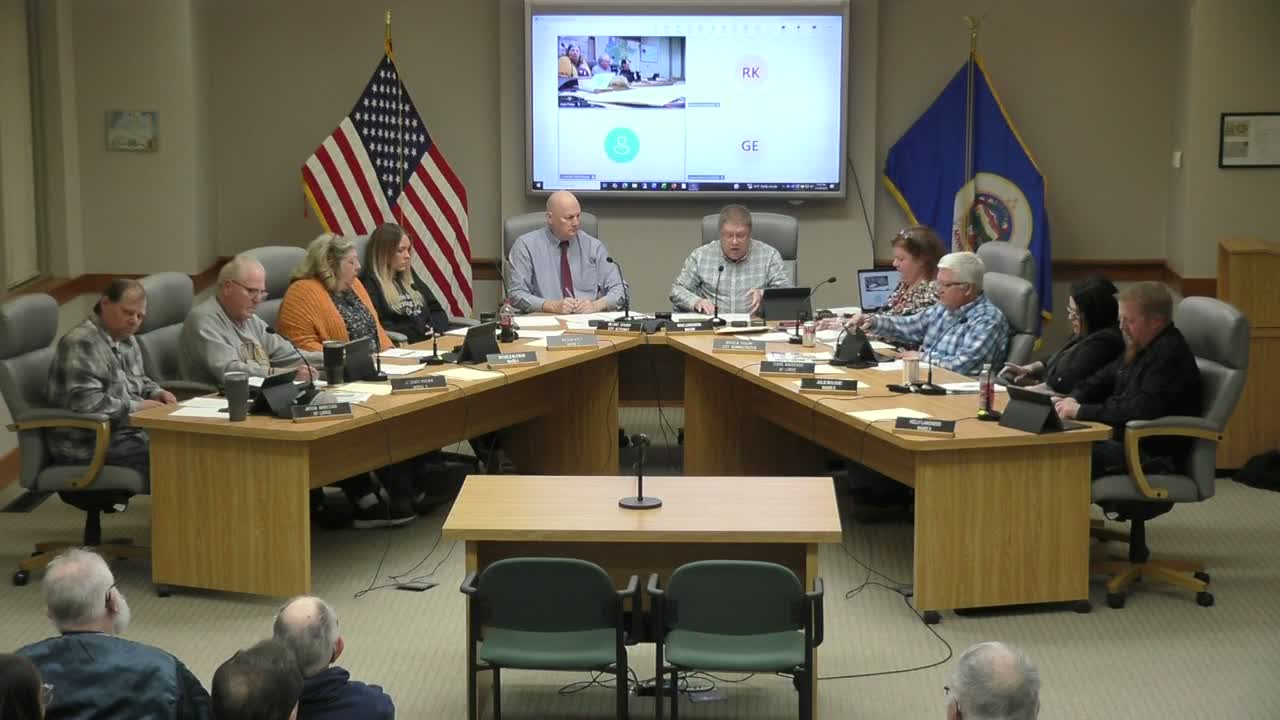
Dozens of Thief River Falls residents and local business owners urged the City Council on Nov. 4 to slow a proposed preliminary property‑tax levy they said is driving people and businesses away.
At a packed public‑forum segment, Jim Daig, who organized the appearance, told the council the group represents homeowners, renters and commercial property owners worried about a preliminary 21.82% levy proposed for 2026. “These increases are excessive and are outpacing our income growth,” Daig said. Business owners gave specific examples: Tom Frielis of TRF Mini Storage said his tax bill rose roughly 85.5% over five years; Jared Schertz, general manager of Neighbors Ford, told the council his company’s city‑portion tax increased by about 118% over four years and that employees and customers are feeling the strain.
Why it matters: Council members and staff said rising personnel costs — notably step increases and the negotiated salary/COLA package — and higher operating costs account for much of the levy pressure. Council members balanced those budget drivers against residents’ pleas for relief and the city’s statutory obligations and service levels.
Council debate centered on a near‑term personnel decision. The budget as published included delaying the start of a newly authorized 17th police officer for a short period to save money. Police and public‑safety staff warned that shrinking bench strength increases overtime and burnout risk; council members and residents pushed back, arguing reduced staffing could harm response capacity. City staff presented comparative ratios and noted the city would remain within typical small‑city benchmarks even with one fewer officer, but police leaders described rising case complexity and the operational strains caused by overtime.
After more than an hour of discussion weighing overtime, insurance costs for a new hire and recruitment timing, Councilwoman Julie Bolduc moved — with Councilwoman Megan Arlt seconding — to amend the proposed levy and timing to reflect a later start for the new officer (a compromise proposed to begin recruitment earlier but set the earliest start date at September 1). The council approved the motion by voice vote; the adopted budget projection in the meeting materials was revised from the initial 21.82% figure to a modified 19.36% projection to account for the changed hiring timing.
What the vote did and did not do: The vote updated the council’s proposed levy projection used for budget planning; it did not finalize the levy (the council will adopt a final levy in December). Council members emphasized they would continue to seek other budget reductions, examine overtime practices, and explore revenue timing changes to limit the final levy increase.
Voices from the meeting: Resident Kelly Savage said, “My property taxes increased 45% in five years,” and asked the council to seek alternatives to pushing costs onto long‑term residents. Police leaders urged the council to consider operational risk — one officer described the effect of double shifts and case backlogs on morale and response capacity.
Next steps: The council asked staff to run a short overtime analysis through early 2026 to show whether delaying the hire yields the projected savings; the final levy and related budget decisions are scheduled for formal adoption in December.