Get Full Government Meeting Transcripts, Videos, & Alerts Forever!
Get email alerts on the Criminal Justice topic
No spam. Unsubscribe anytime.
Senate approves constitutional amendment to require prosecutor consent before waiver of jury trials
Summary
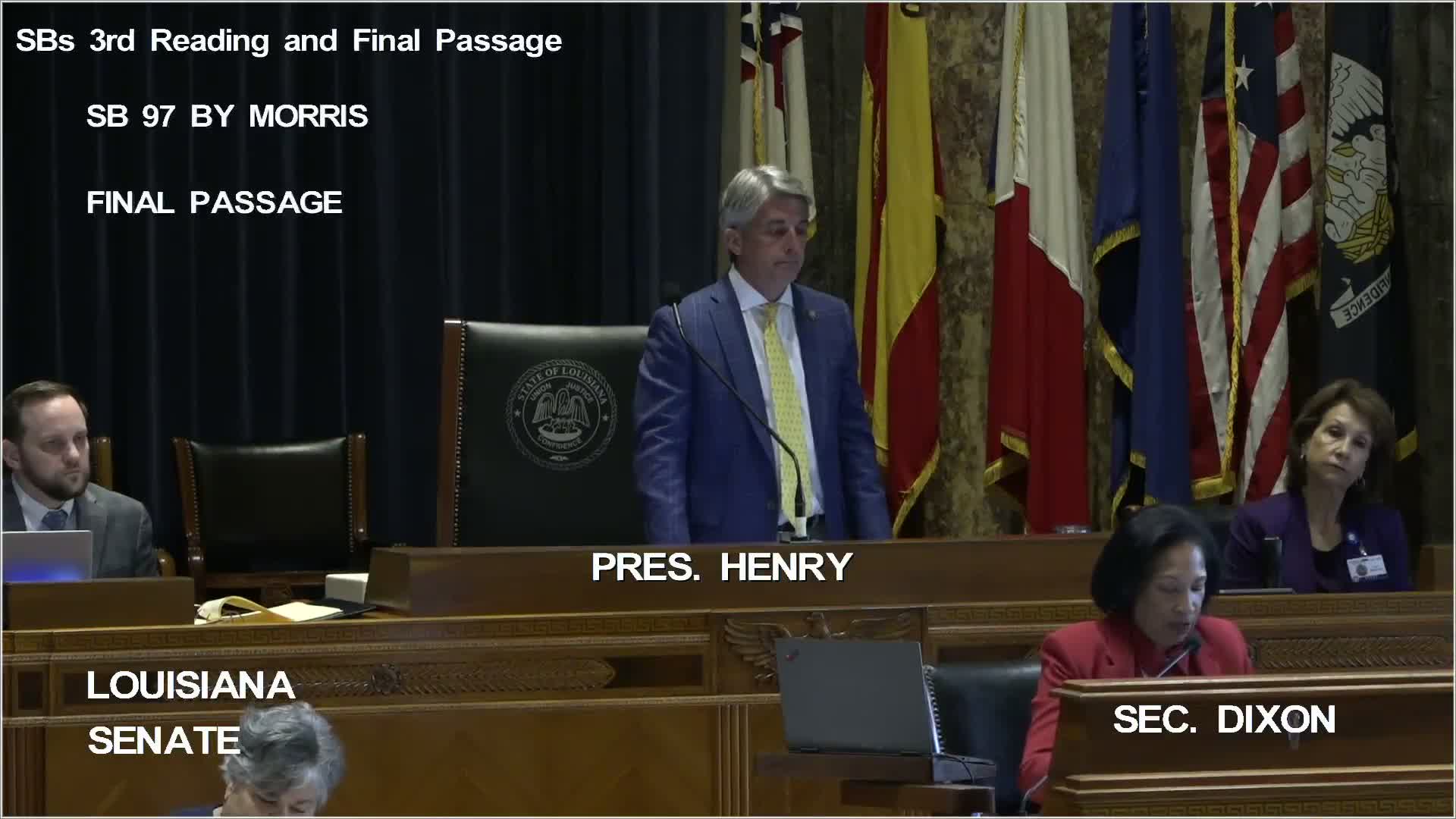
The Louisiana Senate voted to place a constitutional amendment on the ballot that would require written prosecutorial consent before a defendant may waive a jury trial in non‑capital felony cases (SB97) and passed a statutory companion (SB81). Sponsors said district attorneys vetted the change; some senators raised concerns about court efficiency and prosecutorial discretion.
The Louisiana Senate on Wednesday approved a constitutional amendment to require prosecutors’ written consent before a defendant may waive a jury trial in non‑capital felony cases and passed a companion bill to align state criminal procedure.
Senator Jason Morris, sponsor of the ballot measure SB97, told colleagues the change would bring Louisiana “in line with 30 other states” and said the District Attorneys Association asked him to file the proposal. “They felt jury waivers were being used strategically in ways that raised concerns about fairness,” Morris said.
The amendment would prevent a defendant from waiving a jury trial unless the prosecuting authority provides written consent; SB81 would revise the criminal procedure code to require that written consent in noncapital felony cases if voters approve the constitutional change.
Senator Plessis questioned practical effects on court calendars and whether the amendment could slow dockets or give prosecutors greater leverage. “Would this not slow down cases and the dockets?” Plessis asked. Morris said he did not anticipate a large systemwide slowdown and noted the proposal was vetted in committee and would be further reviewed in the House if advanced.
Plessis also asked whether the average voter would understand the change on a ballot; Morris replied the measure would include a parliamentary analysis and public materials explaining the effect. The sponsor reiterated that many other states and the federal system use prosecutorial consent for waiver of jury trials.
The Senate voted to send the constitutional amendment to the ballot; the recorded vote on final passage was 26 yeas and 11 nays. The statutory companion, SB81, passed the Senate separately; the recorded vote on SB81 was 27 yeas and 11 nays. Both measures advanced with the procedural steps necessary to reach voters or the House for further consideration.
What happens next: If the constitutional amendment appears on the ballot and is approved by voters, SB81 would implement the statutory changes required to make criminal procedure consistent with the amended constitution. If voters reject the amendment, SB81’s changes are conditioned on the amendment’s approval.
The Senate took up many other bills during the session; leaders said business will continue at the next scheduled meeting.