Senate committee adopts amendment letting clerks withhold copies of certain gruesome trial images
Loading...
Summary
The Senate and Governmental Affairs Committee on April 1 adopted an amendment to Senate Bill 106 that allows clerks to deny copying of images and recordings entered into evidence that depict autopsies, dead bodies, sexual assaults, juvenile victims or other patently offensive material. Supporters said the change protects families from viral social-media sharing; some senators urged clearer judicial review procedures.
The Senate and Governmental Affairs Committee adopted an amendment to Senate Bill 106 on April 1 that would allow clerks of court to withhold copies of certain images and recordings entered into evidence in criminal prosecutions.
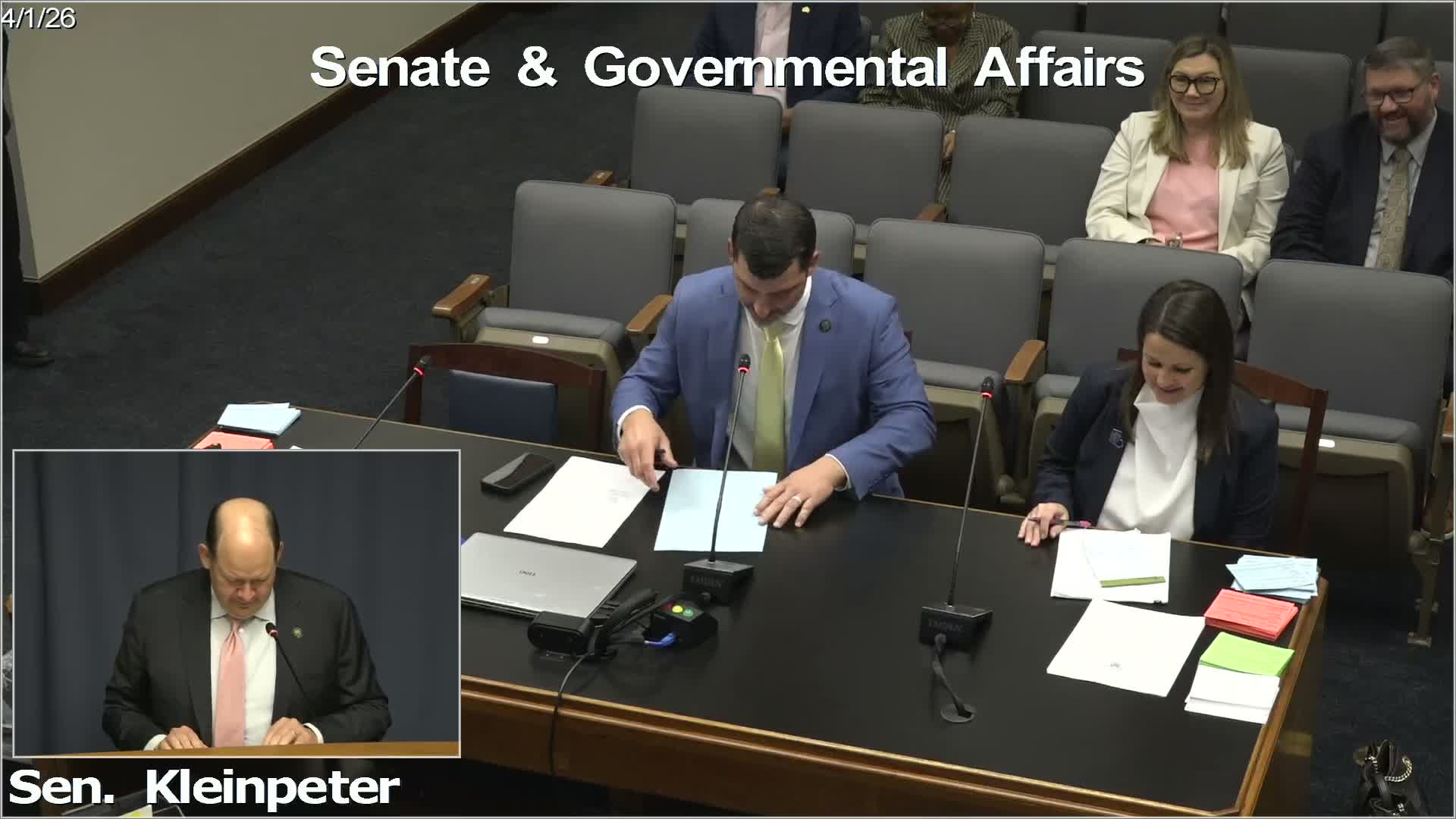
Senate sponsor and the bill’s author told the committee the goal is not to strip press access but to prevent “bad actors” and social-media users from obtaining and posting gruesome material for clicks and revenue. The sponsor offered amendment set 15 98 to specify categories of material a clerk may refuse to copy, and the committee adopted the amendment by unanimous consent.
Amanda Gross East, clerk of West Baton Rouge Parish, told the committee clerks regularly receive public requests for trial images and sometimes need authority to deny copies. “We always have allowed the public to view these files, to come in our office, look at the coroner's photos,” she said, adding that families can be harmed when autopsy photos or videos of violent crimes turn up on social media.
Senator Carter said she supported the bill’s purpose but worried the amendment places interpretive authority with clerks rather than judges. “I'm not familiar where clerks have, like, interpret evidence,” Carter said, noting evidentiary interpretation has traditionally been a judicial function and suggesting the committee work on a mechanism for judicial review.
Scott Surmer of the Louisiana Press Association told senators custodians already make access determinations under existing law and that the suggested language is workable. “That language is mine. So I'm okay with the idea that they're gonna have to do that,” Surmer said, describing custodians’ routine role deciding whether records are public.
Witnesses and several senators noted two checks on clerk discretion: (1) the statute’s narrowly written categories in the amendment and (2) the ability of an aggrieved requester to seek judicial review. Senator Miller summarized the redress option: if someone “feels aggrieved by the decision of the clerk, they do have an ability to have that redress through the court.”
After discussion the chair asked for objections to adoption of amendment set 15 98 and, seeing none, the amendment was adopted. The sponsor then moved to report Senate Bill 106 as amended; the motion passed by unanimous consent.
The committee recorded a green card in support from Sheriff Kevin Cobb (Louisiana Sheriffs Association) and noted a white card for information from Steven Procopio. The bill will proceed from committee with the adopted amendment.
The measure raises a balance between transparency in open trials and protection of victims and families from dissemination of graphic material. Senators asked staff and the sponsor to refine the process language that routes disputes to the district court for review. The committee’s action was by unanimous consent and no roll-call vote was recorded.