Get Full Government Meeting Transcripts, Videos, & Alerts Forever!
Get email alerts on the Early Childhood Safety topic
No spam. Unsubscribe anytime.
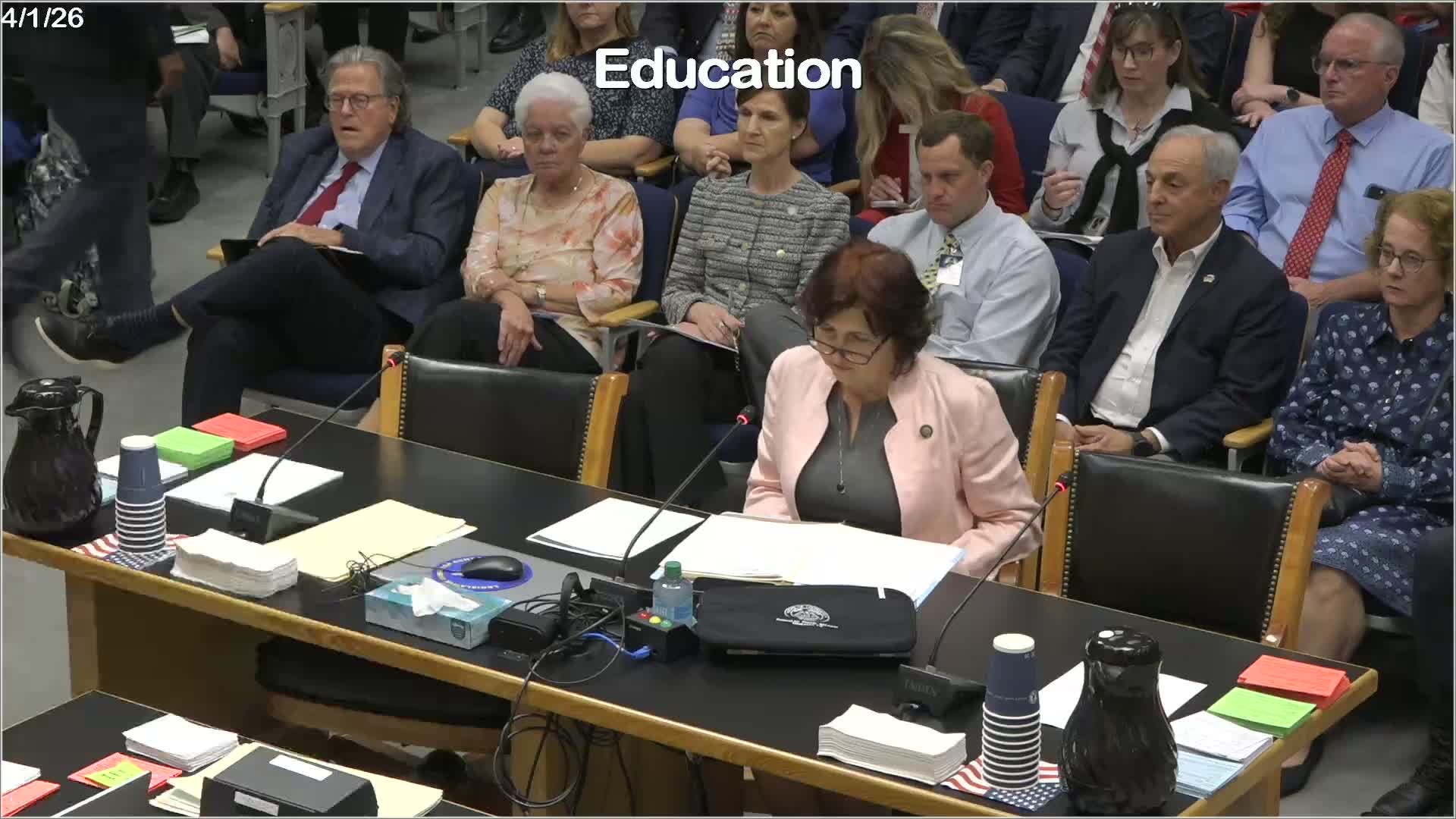
Senate committee advances bill to replace pre-K licensure with targeted monitoring after hours of testimony
Summary
The Senate Education Committee reported SB 441 favorable after hearing hours of testimony about replacing full licensure for some pre-K programs with a BESE-monitored safety regime, with supporters urging accountability and opponents warning of regulatory creep, higher costs and risk to small providers.
Senator Mizell’s bill to shift some public and nonpublic pre-kindergarten programs from a full licensure regime toward a BESE-administered monitoring model moved out of the Senate Education Committee on April 1 after extended testimony and questions from committee members.
The bill, Senate Bill 441, would keep criminal-background checks and set statutory minimums for supervision, staff-to-child ratios and basic bathroom/toileting procedures, while exempting certain pre-K programs from the full licensing rules imposed after Act 409. The measure also includes a requirement that parents receive an enrollment acknowledgement distinguishing licensed centers from monitored, nonlicensed pre-K programs.
Supporters of the bill, including the author, said SB 441 is designed to balance child safety with preserving the character and mission of private and faith-based schools. “We thread the needle between respecting that we have a role in the safety of our children and the respect of the missions of the private schools,” Senator Mizell said in opening remarks. LDOE staff told the committee the department expects to use positions funded after Act 409 to conduct the annual, unannounced monitoring visits the bill requires. “Our estimates are that we'd be able to use that staff, that additional staff that you all gave us last year to satisfy the monitoring for all the public and non public pre-K programs,” Ashley Townsend of the Department of Education said.
Opponents — a coalition that included parish and diocesan school leaders, childcare providers, accreditation representatives and parents — urged revisions or outright rejection. Several private-school principals and heads said their programs already meet rigorous accreditation and health-and-fire inspection standards and that the bill’s monitoring would, in practice, operate like licensing. “We are not a daycare center,” Jessica Dwyer, principal of Saint Francis Xavier Catholic School, told the committee. Small childcare-business owners cautioned that duplicative or unfunded requirements would lead to closures and reduced access for working families.
Parents and victims’ advocates pressed the committee for stronger, enforceable consequences. Major Roger Williams, whose pre-K–age daughter was assaulted at school two years ago and whose family helped push earlier legislation known as Charlie’s Law (Act 409), delivered an emotional plea to preserve and strengthen safeguards. “The system failed our daughter,” he said, and urged immediate, clear accountability and defined thresholds for action when violations occur.
Committee members repeatedly questioned whether the bill as written would swallow the exceptions it creates — that is, whether monitoring with a statutory checklist would evolve into a licensing regime in practice. Think-tank testimony warned of precisely that risk. The Department of Education countered that SB 441 explicitly removes many licensing obligations (director qualifications, facility square-foot requirements, duplicated background-check processes, licensure fees and incident-reporting regimes that apply to licensed centers) and limits LDOE’s yearly visits to a narrow list of safety standards in statute.
Lawmakers also discussed the definition of summer camps and who must be licensed for camp operations; the bill restores a prior camp definition and would bring some summer programs serving 3– and 4-year-olds into coverage while preserving licensing for programs that serve infants and toddlers.
After the day’s testimony and an exchange of closing remarks urging compromise and further work on amendments, Senator Mizell moved SB 441 favorable. The chair called for objections; hearing none, the committee reported the bill favorable by voice vote. The committee did not record individual roll-call votes on the measure.
Next steps: the bill is expected to move to the Senate floor where members may offer additional amendments. Supporters signaled willingness to continue negotiations with school leaders, childcare providers and advocates.