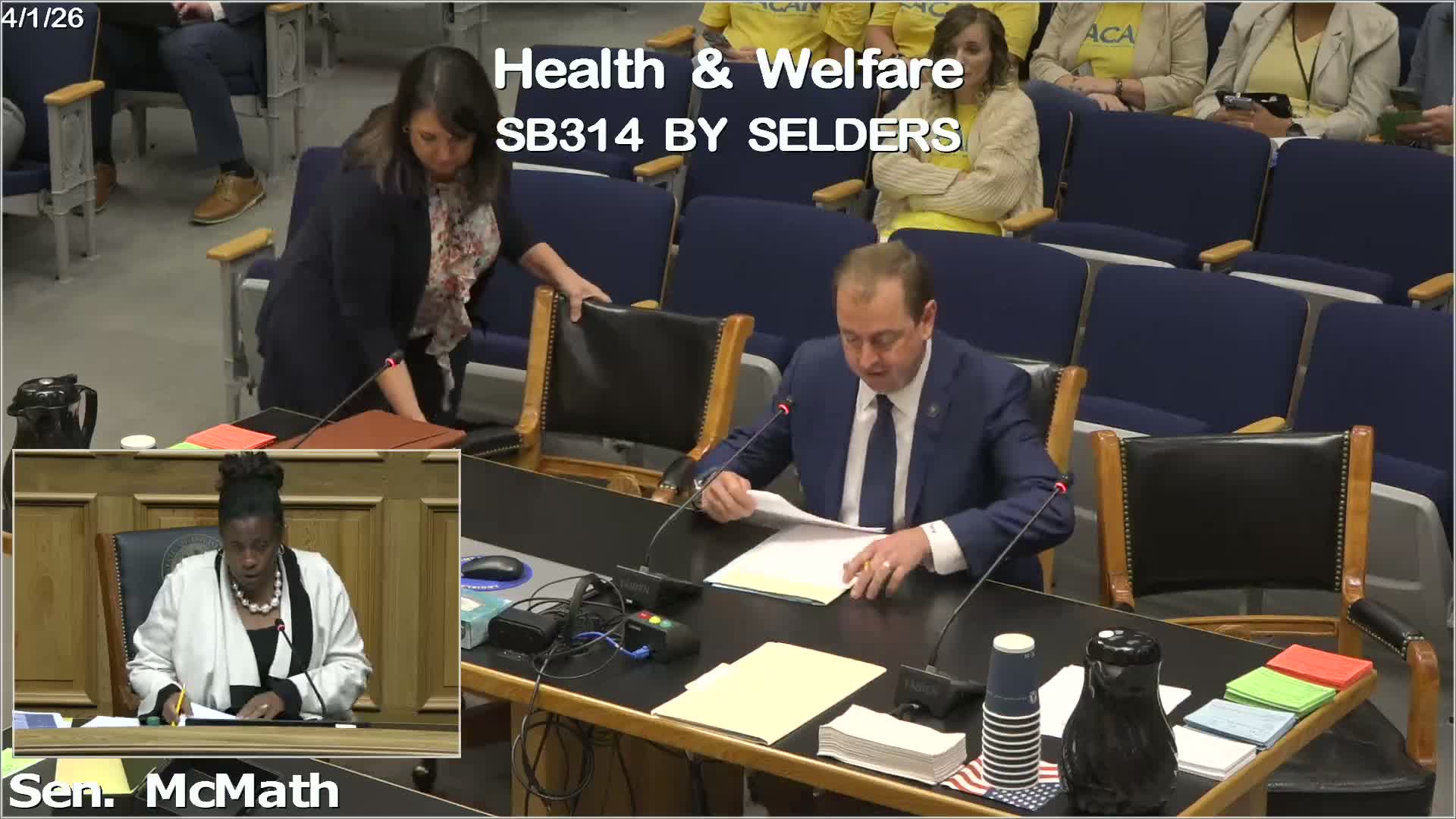
Senate committee advances bill to issue emergency alerts for missing people with disabilities
Loading...
Summary
The Senate Health & Welfare Committee on April 1 reported SB 34 as amended to codify and expand wireless emergency alerts for missing children and adults with disabilities. Parents and search‑and‑rescue groups urged the change after recent drownings; the measure passed committee by voice vote.
The Senate Health & Welfare Committee reported Senate Bill 34 as amended on April 1, advancing a proposal to codify and expand the state’s emergency‑alert system so local law enforcement and the state can quickly notify the public when children or adults with disabilities go missing.
The bill, introduced by Senator Sellers, would place missing people with certain intellectual or developmental disabilities within the state’s alert framework (alongside Amber and silver alerts) and create criteria for a targeted wireless emergency alert meant to speed community searches. Supporters emphasized that many missing people with autism elope toward water and that faster alerts can change search tactics.
Advocates described local tragedies to make the case. "If an alert had been issued, he might still be here to this day," Krisha Poole, a parent from New Orleans East, told the committee, describing a child found drowned near a neighborhood lagoon. Josh Gill, incident commander for the United Cajun Navy, said his group has completed dozens of rescues and two recoveries this year and that 71% of their successful searches for people with special needs located them near water. "When that alert comes out, it changes our response immediately," Gill said.
Legislative staff explained an amendment (set 651) the sponsor accepted that sets criteria for a new level‑2 endangered missing‑child advisory applied to some children with disabilities, expands silver alerts to include certain adults with disabilities, and requires local agencies that can issue local alerts to do so while giving state police authority to issue alerts where needed. The amendment also preserves the wireless emergency‑alert capability and clarifies when an alert is local vs. statewide.
Supporters at the hearing included the Arc of Louisiana and multiple family advocates, who urged training for first responders on how to approach nonverbal individuals and reduce sensory overload during searches. "These are not just numbers. These are children," Poole said.
No opposition speakers were recorded at the committee hearing. The committee reported SB 34 favorable as amended by voice vote; the sponsor asked staff to circulate a coauthor sheet following the meeting.
The bill now moves to the next step in the legislative process; committee testimony emphasized implementation details (criteria for alerts and first‑responder training) that lawmakers and advocates said will be critical to the bill’s effectiveness.