Senate committee advances bill to fold Lafitte levee board into regional West Bank authority amid lawsuits and funding concerns
Loading...
Summary
The Senate Transportation committee voted to report SB 56 favorably to move the Lafitte Area Independent Levee District under the Southeast Louisiana Flood Protection Authority West Bank, with supporters saying regional oversight will improve operations and critics warning the change could complicate existing claims against the local board.
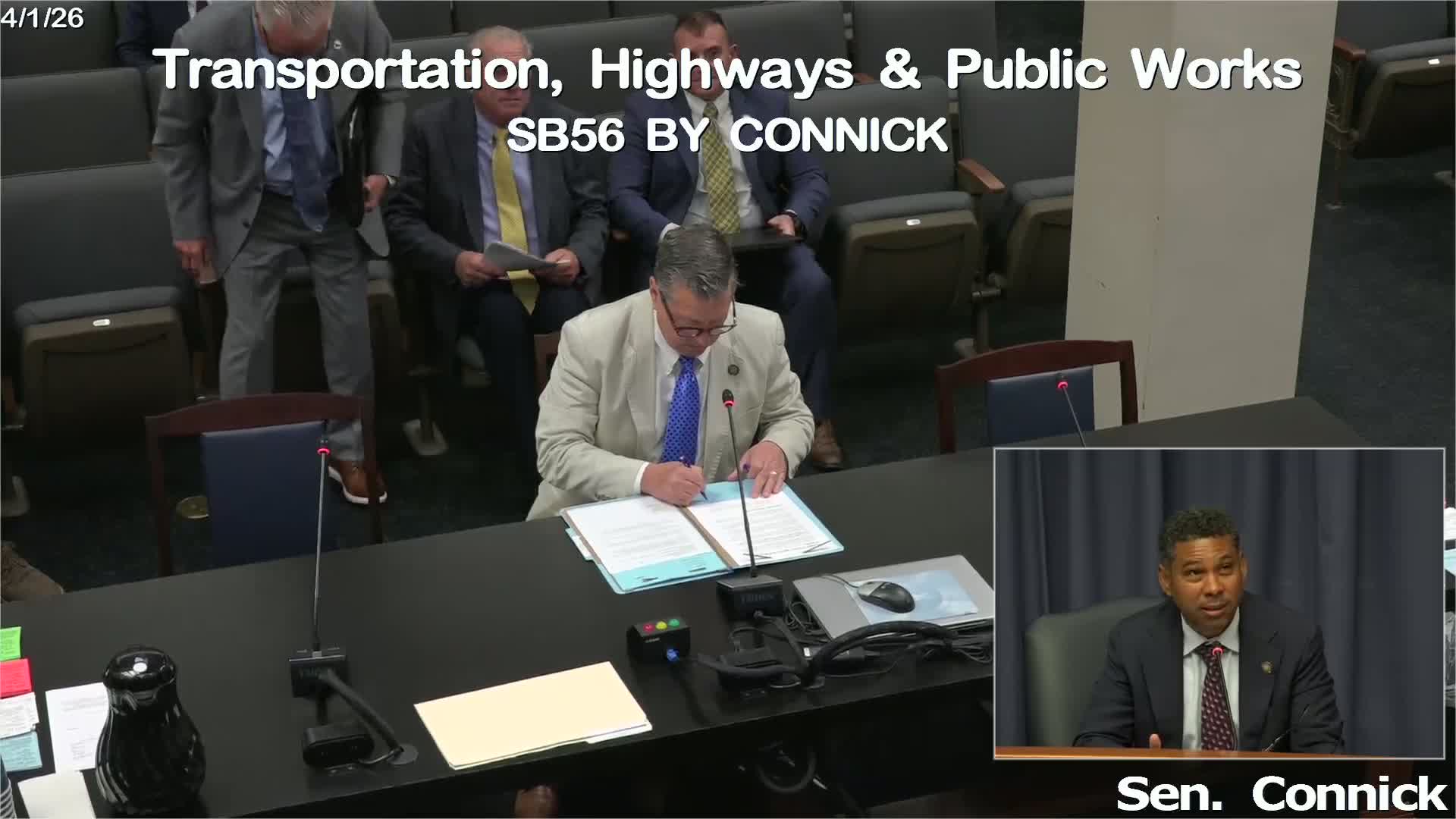
Senators on the Senate Committee on Transportation, Highways and Public Works voted to report SB 56 favorably after extended testimony about shifting governance of the Lafitte Area Independent Levee District into the Southeast Louisiana Flood Protection Authority West Bank.
The bill, as described by the committee chair, would integrate the small Lafitte district into the regional West Bank authority starting Aug. 1, 2026, expand the West Bank board from seven to nine members and require professional qualifications for several seats. The author said the move is intended to strengthen technical oversight, coordination and fiscal stability for long-term flood protection.
Carrie Laricella, president of the Lafitte Area Independent Levee District, told senators the district is effectively insolvent and struggling to deliver basic maintenance. "For us when a hurricane gets in the Gulf, our stomachs drop," Laricella said, describing steep post-storm costs, rising insurance and a small tax base that produced roughly "$180,000 or $200,000" in revenue while annual costs have run far higher. She said the district inherited more than $1 million in debt and has laid off staff, sold equipment and is relying on outside help to work through past-due invoices.
Scott Burke, board president of the Southeast Louisiana Flood Protection Authority West, described the regional authority's capacity to manage operations. "We maintain 80 miles of flood protection ... We perform this work with a $10,000,000 operating budget and 55 employees," Burke said, adding that the authority protects what he described as "$41,000,000,000 in property and 250,000 people" on the West Bank. He and Jesse Noel, regional director for the authority, said they have helped the Lafitte board assess books, prioritize payments and could administer emergency operations and maintenance if the transfer occurs.
Michael Haire, executive director of the Coastal Protection and Restoration Authority (CPRA), told senators CPRA works with roughly 34 levee districts statewide and that improving governance and technical expertise at the district level would aid project delivery and operational resilience.
Opponents and affected landowners raised concerns about existing litigation and compensation for property damage tied to past projects. Attorney Andrew Wilson, representing claimants who sued the Lafitte board, said contractors appointed by the board entered private property, drove piles and damaged docks and foundations. "They destroyed his dock," Wilson said, and he argued the bill, as drafted, could dissolve the local board while leaving unresolved obligations and judgments tied to prior conduct.
Another speaker described a federal judgment related to work on a property and said state project funding (through CPRA) had not set aside funds to pay property claims. Those speakers asked for amendments to ensure existing claims and obligations would be addressed if the district is absorbed into the regional authority.
Chairman Connick closed by saying the lawsuits arose from the former board's conduct and that the current bill's purpose is to improve oversight and protect residents; he also said state agencies and the attorney general would be consulted on how claims and land acquisitions might be handled. The committee moved the bill favorably without recorded opposition.
Next steps: SB 56 was reported favorably by the committee and will proceed in the legislative process; stakeholders told the committee they expect to continue negotiating statutory language addressing obligations and judgments.