Maine House rejects broad online‑privacy bill after marathon debate; business groups had urged changes
Loading...
Summary
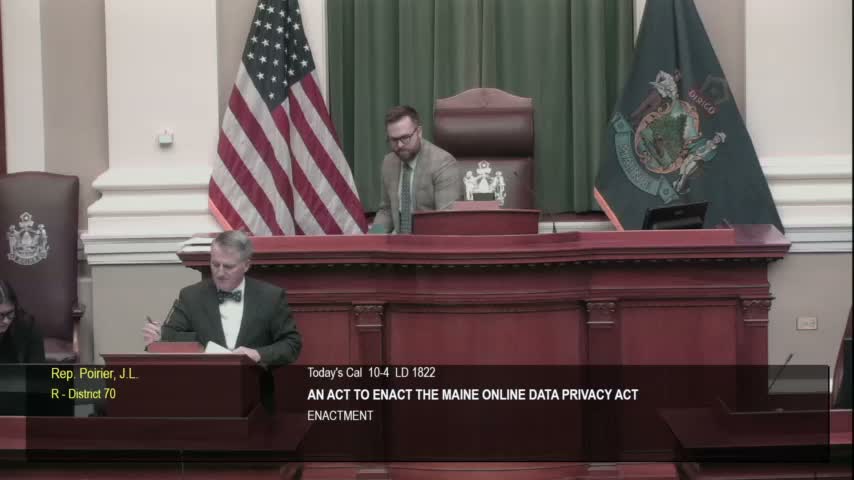
The House considered LD 18 22, a wide‑ranging consumer data‑privacy proposal restricting some targeted advertising and expanding consumer rights. After extended arguments on both sides and a roll‑call vote, the bill failed on final passage.
The House debated LD 18 22, a proposed consumer‑data privacy law that would limit certain targeted advertising uses of personal data and expand consumer rights to access, correct and delete personal information. Proponents called it a necessary check on pervasive data harvesting and surveillance pricing; opponents — a coalition of hundreds of small and large businesses — warned it would hinder digital marketing, hurt startups and put Maine firms at a competitive disadvantage.
Representative from Falmouth (bill sponsor) summarized the consumer‑protection rationale: she said the bill would give Mainers clearer rights to understand and control what personal data is collected about them and would provide narrow opt‑out rights for sale or profiling for targeted advertising. "Consumers will have the right to understand what personal data is being collected," she said, and described exemptions for small businesses and nonprofits.
Business leaders and several House members disputed the bill’s claims about necessity and impact. Representative Collamore (Pittsfield) said more than 300 Maine businesses had submitted a letter warning the measure would disrupt marketing tools that small employers use to reach customers, while Representative Ducharme argued the proposal could undercut R&D‑driven startups and local commerce. Supporters countered that the bill leaves many standard, low‑risk uses intact and that stronger privacy rules are needed to protect consumers and curb surveillance pricing.
A final roll‑call vote failed to enact LD 18 22 (recorded tally: 68 in favor, 80 opposed). Supporters said a revised, narrower approach should be considered; opponents called for a different model used in other states that they said balances privacy and business interests.
Next steps: With final passage defeated, proponents may return with narrower or differently scoped privacy proposals; business and civil‑liberty groups signaled continued negotiation over a consumer‑privacy framework.