Panel approves amendment to let OJJ use secure video for some review hearings while keeping six‑month in‑person checks
Loading...
Summary
Senate Bill 396, authored by Senator Cloud, was amended March 31 to preserve mandatory in‑person juvenile review hearings every six months while allowing more frequent secure video conferences; OJJ testified the change would reduce transports and staff hours, while advocates urged caution to protect counsel access and in‑person oversight.
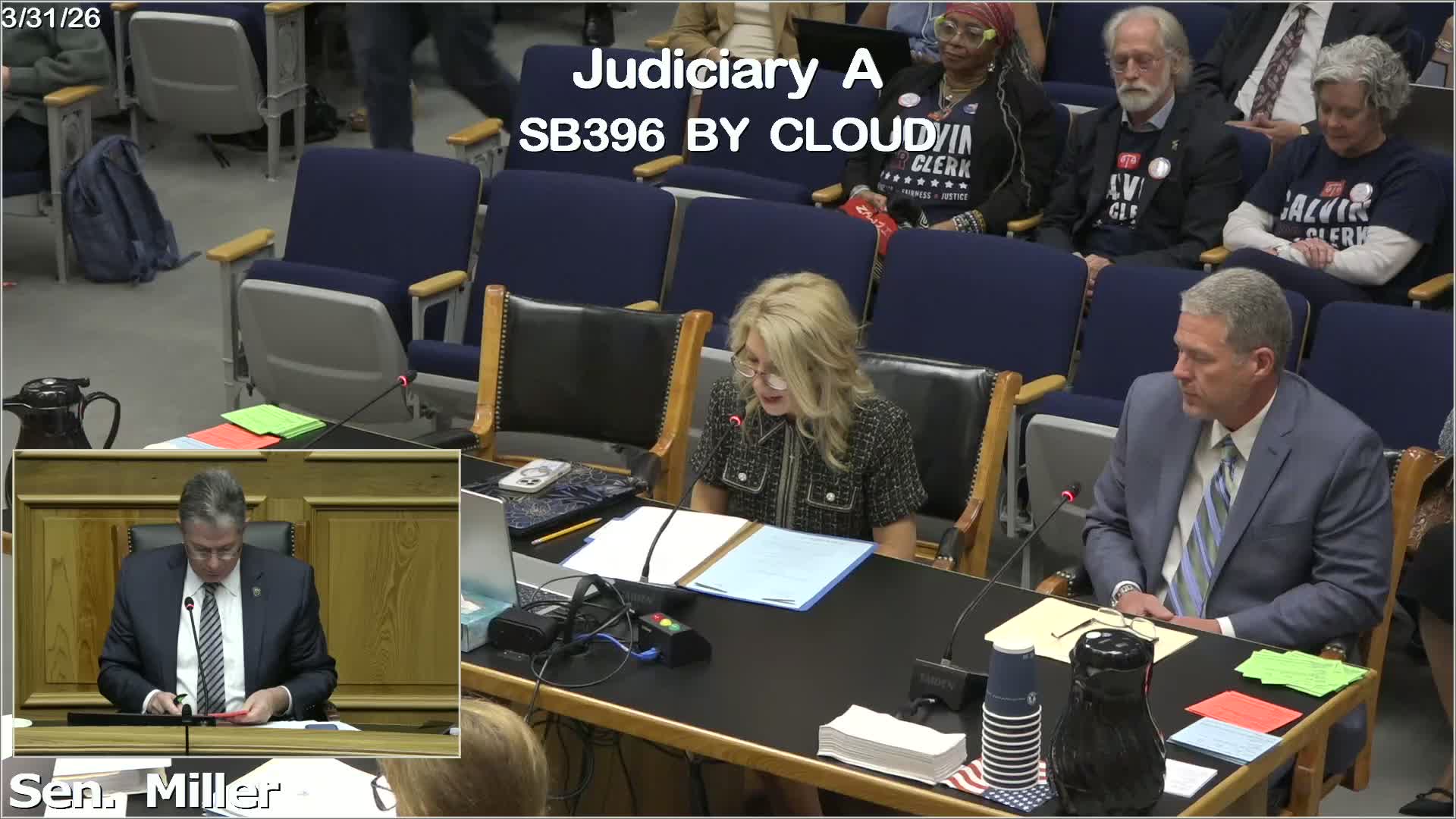
Senate Bill 396, presented March 31 by Senator Cloud, would permit children in the custody of the Office of Juvenile Justice to participate in some required review hearings via secure video conference rather than being physically transported to the committing court. Senator Cloud offered an amendment—adopted by the committee—that preserves an in‑person requirement every six months while allowing virtual hearings more frequently if the court and stakeholders agree.
Jason Starnes, undersecretary for the Office of Juvenile Justice, told the committee OJJ’s transportation burden is significant: an annualized sample suggested more than 4,600 transports and roughly 20,000 staff hours consumed by court‑related movement, increasing mileage, staff backfill and security risk when youth must travel long distances. Starnes said the amendment keeps the statutory six‑month in‑person review while granting the courts and OJJ flexibility to use secure video for additional, shorter check‑ins.
Several child‑advocacy and defense witnesses urged caution. Sam Marrone of the Louisiana Center for Children’s Rights said in New Orleans in‑person hearings are often the only time defense counsel, judges and families see a child’s demeanor and that those observations are critical to measuring rehabilitation. Robin Guillen, whose research focuses on caretakers of incarcerated juveniles, said families without reliable transportation can face 22‑hour public‑transit trips to get to facilities such as the Swanson Center in Monroe; she and others urged protections for family contact and secure attorney‑client communication.
Senator Cloud said she heard those concerns and would continue to work with stakeholders to ensure privacy and adequate safeguards; the committee then voted to report SB396 with amendments.
The committee directed further work on operational details—private consult rooms, secure lines for confidential attorney‑client conversations and procedures to ensure judges can see and assess the child during virtual reviews—before the bill advances.