Lifetime Citizen Portal Access — AI Briefings, Alerts & Unlimited Follows
Committee advances clerk‑consolidation bill despite fierce local opposition and warnings about election and operational risks
Loading...
Summary
Senate Bill 256 would merge Orleans Parish’s separate civil and criminal clerks into a single office — a change sponsors say reduces redundancy but critics say would nullify recent local elections, imperil records, and lack a transition plan or fiscal analysis.
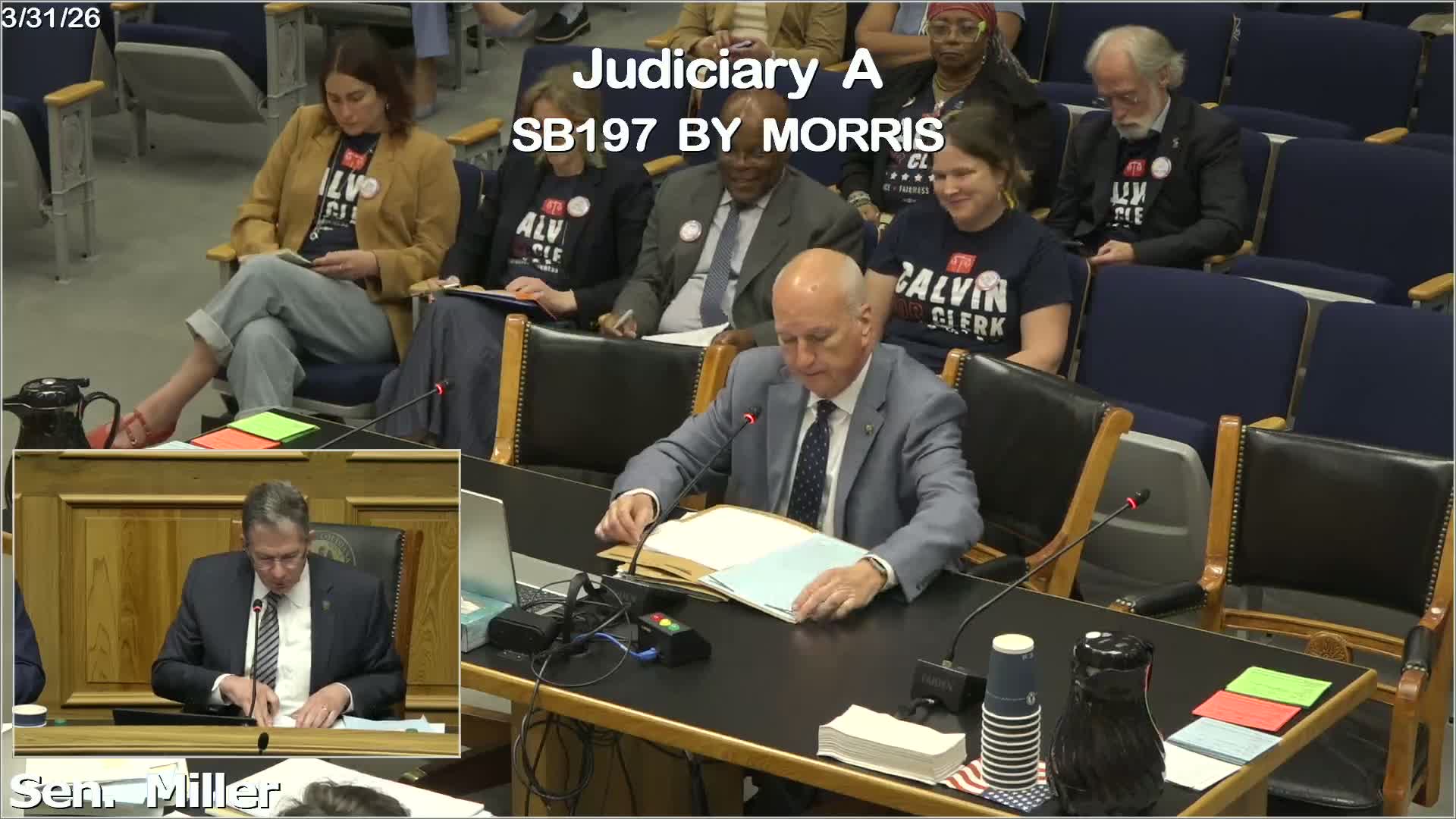
The Senate Judiciary committee voted to report Senate Bill 256, which would consolidate the civil and criminal clerk offices in Orleans Parish, after a packed hearing in which clerks, judges, civil‑rights groups and the newly elected criminal clerk, Calvin Duncan, urged the panel to defer the measure.
Sponsor Sen. Morris argued Orleans is the only parish with separate civil and criminal clerks and that a consolidated office would reduce duplicate administrative overhead and save money. He said the current arrangements lead to state subsidies for criminal court operations while the civil clerk retains filing fees.
Civil Clerk Chelsea Richard Napoleon told the committee that Orleans is unique: court receipts and statutory fee distributions differ from other parishes and the current 50/50 split between civil clerk and court means civil filing revenue cannot simply be reallocated without a full funding plan. She warned the bill would reduce the clerk’s retained share, grant judges new removal powers over deputy clerks, and lacks clear transition language on minute clerks, elections duties and responsibilities for administering elections.
Calvin Duncan, the newly elected criminal clerk who campaigned on reform after being wrongfully imprisoned and later exonerated, said the consolidation would nullify the city’s democratic choice and deprive New Orleans of a local mandate for record‑keeping reform. The ACLU and dozens of local lawyers and community members urged senators to protect the electoral mandate, warned consolidation could disrupt the upcoming primary and congressional ballots and said the bill contains no fiscal note explaining implementation costs — including case‑management migration and training.
Several local attorneys and transition‑team volunteers said merging two different case‑management systems and office staffs across two courthouses would require multi‑million‑dollar investment and substantial planning time; witnesses described the bill’s effective date as too near and said no transition timetable or cost estimate accompanies the draft.
Despite the objections, the committee voted to report SB 256 favorably to the Senate floor. Sponsors and committee members said technical fixes and follow‑up will be required if the bill proceeds; opponents say the committee’s action takes an extraordinary step of overriding a recent local election and risks years of disruption to court operations and public trust.
The bill is now on the Senate calendar; the full Senate will decide whether to advance the consolidation and whether to add transition funding or implementation safeguards.