Senate committee adopts amendment to cut Orleans judges and sends bill to floor after heated testimony
Loading...
Summary
The Senate Judiciary committee adopted an amendment to Sen. Morris’s bill that trims Criminal District Court judges in Orleans Parish from 13 to 9, after judges, clerks and civil‑rights groups warned the move lacked complete data, risks slowing dockets and could reduce judicial diversity.
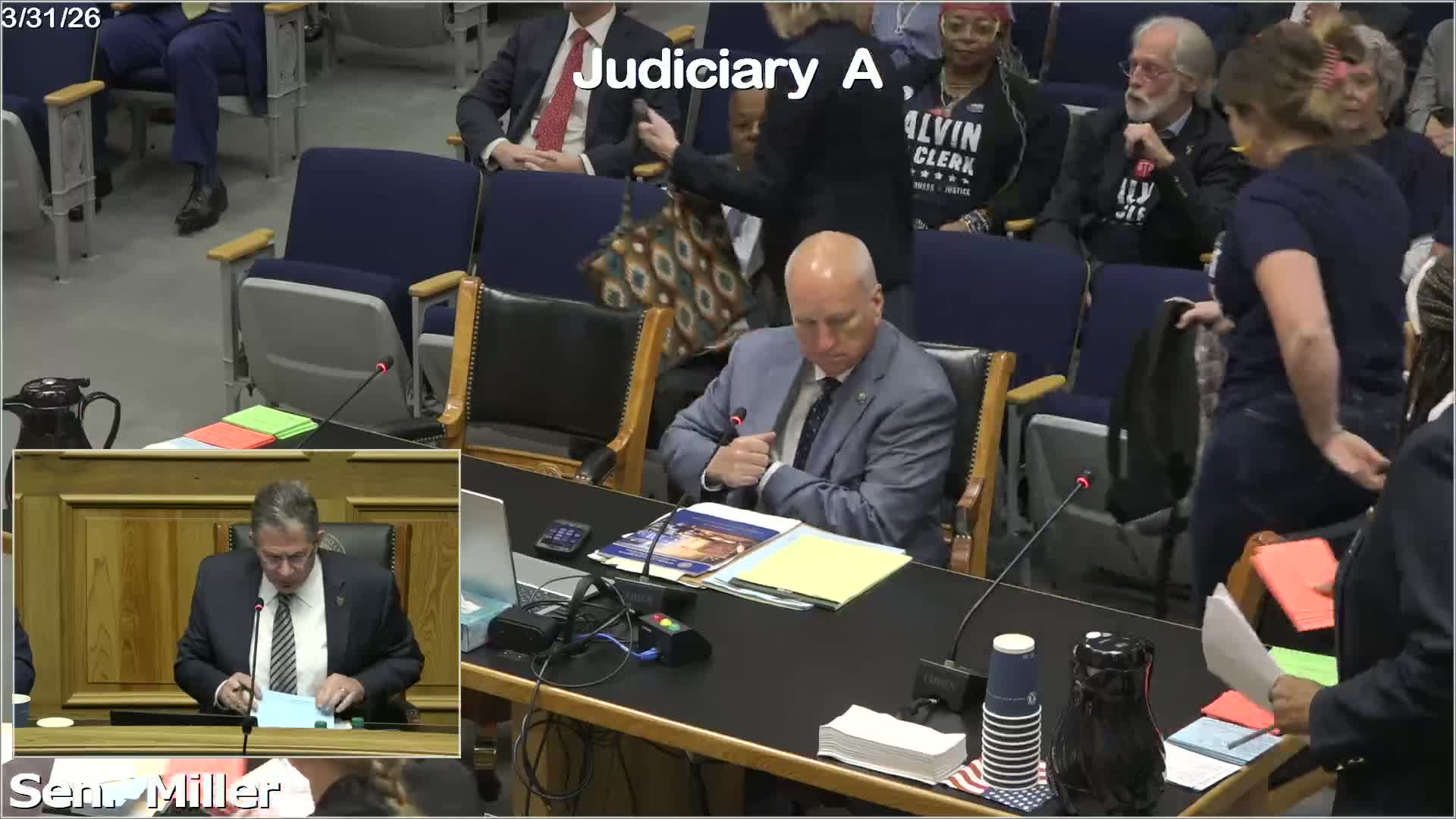
Senators on a Judiciary Committee voted to report Senate Bill 217 to the full Senate with amendments after a contentious hearing that drew judges, clerks and civil‑rights advocates to oppose immediate reductions in Orleans Parish judgeships.
Senator Morris, the bill’s sponsor, said the measure is intended to “right‑size” trial courts in Orleans Parish and save state and city money by cutting what he described as excessive judgeship counts relative to population and filings. He proposed amendment set 15, which reduces Criminal District Court judges from 13 to 9 and eliminates specified municipal/traffic divisions. The committee adopted that amendment by roll call and later reported the amended bill to the floor.
Opponents — including senior judges from Orleans’ civil and criminal benches — told the committee that the parish’s dockets include unusually complex civil trials (mesothelioma, large commercial disputes) and violent‑felony dockets that produce a far higher share of jury trials than other parishes. Chief Judge Kern Reese and others said the county’s expedited‑trial rules and consolidated filing practices make simple per‑capita comparisons misleading and that abrupt removals would reassign heavy caseloads to fewer judges, slowing jury trials and post‑trial work.
Paul Senz and Joseph Landry, municipal and traffic judges, said their court was not included in the weighted caseload study the sponsor cited and that municipal dockets include specialty and diversion work that consumes significant staff time. They pointed out previous voluntary consolidation in Orleans took years of planning and outside technical assistance.
Civil‑rights groups and civic organizations, led by Alana Odoms of the ACLU of Louisiana, urged the senators to consider how targeting Orleans might affect bench diversity and local representation. Several speakers said Orleans has one of the state’s most diverse benches and warned the bill could be viewed as singling out the parish rather than implementing a statewide, standardized judicial‑workload review.
After hours of questioning about study methodology, fiscal calculations and contingency plans for handling redistributed dockets, the committee approved reporting the bill to the full Senate with the adopted amendments. The committee’s action does not itself change law; it sends the amended measure to the Senate floor for further debate and a floor vote.
The next step is consideration by the full Senate, where the bill may be debated further, amended or passed. The committee hearing record shows widespread disagreement among judges, practitioners and civic groups about whether existing studies provide enough basis for the change.