Get Full Government Meeting Transcripts, Videos, & Alerts Forever!
Get email alerts on the Tax Policy topic
No spam. Unsubscribe anytime.
DeSantis urges homestead property‑tax ballot measure, outlines protections for existing residents
Summary
Governor DeSantis said he plans to push a homestead property‑tax elimination to the ballot that would require a 60% approval threshold; he framed the change as relief for primary residents, discussed revenue growth and proposed state offsets for local governments.
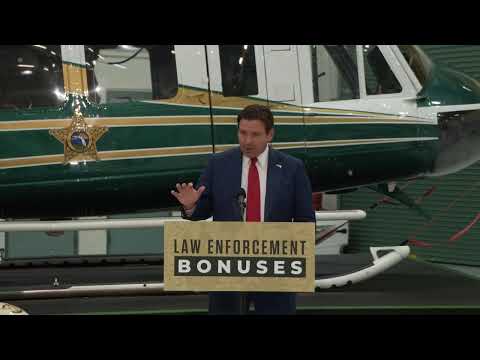
Governor DeSantis told attendees in Collier County that property‑tax relief for primary residences will be a priority and that he expects it to go to voters as a ballot amendment requiring a 60% approval threshold.
DeSantis said growth in local property‑tax revenue has been substantial since he took office and argued the state can pursue a constitutional amendment to provide ‘historic’ relief for primary homesteads. “It It needs 60% of the vote,” he said, describing the supermajority requirement for constitutional amendments.
He presented several figures on local property‑tax revenue growth, saying local governments collected about $32 billion in property tax revenue when he took office and that the total has since grown to roughly $60 billion, with a projection of about $84 billion by 2031 on the current trajectory. Those figures were cited by DeSantis at the event.
Design and fiscal approach: DeSantis said the amendment would be structured to avoid incentivizing people to move to Florida solely to claim the exemption; he described possible phased or ‘reverse grandfather’ rules so new arrivals would not immediately receive benefits. He also said he would use surplus funds and targeted grants to offset revenue losses and offered to replace what he characterized as rural counties’ homestead revenue losses, describing a 100% replacement in his remarks.
Why it matters: DeSantis framed the measure as broad relief for homeowners and as a political motivator: he said the proposal could drive turnout and that many legislators support significant relief, though he acknowledged the measure must meet constitutional thresholds and voter approval.
Procedure: DeSantis said the measure will likely be prepared for the ballot process and that special legislative sessions (already expected for redistricting and budget items) would be used to move related budget elements.
What wasn’t decided: The governor outlined design principles and possible offset mechanisms but did not present final legislative language or a formal bill at the event. Details such as exact fiscal‑offset mechanisms and the measure’s final text remain to be drafted and approved through the constitutional and legislative process.
Next steps: DeSantis urged residents to contact state legislators to support putting the amendment on the ballot and said he would be active in promoting the proposal.