Committee approves broader livestreaming requirement for state boards and commissions
Loading...
Summary
The committee reported House Bill 6-15 favorable as amended, expanding live streaming and video‑archive requirements for certain state boards and commissions, while members and local officials warned about unfunded mandates for small volunteer boards.
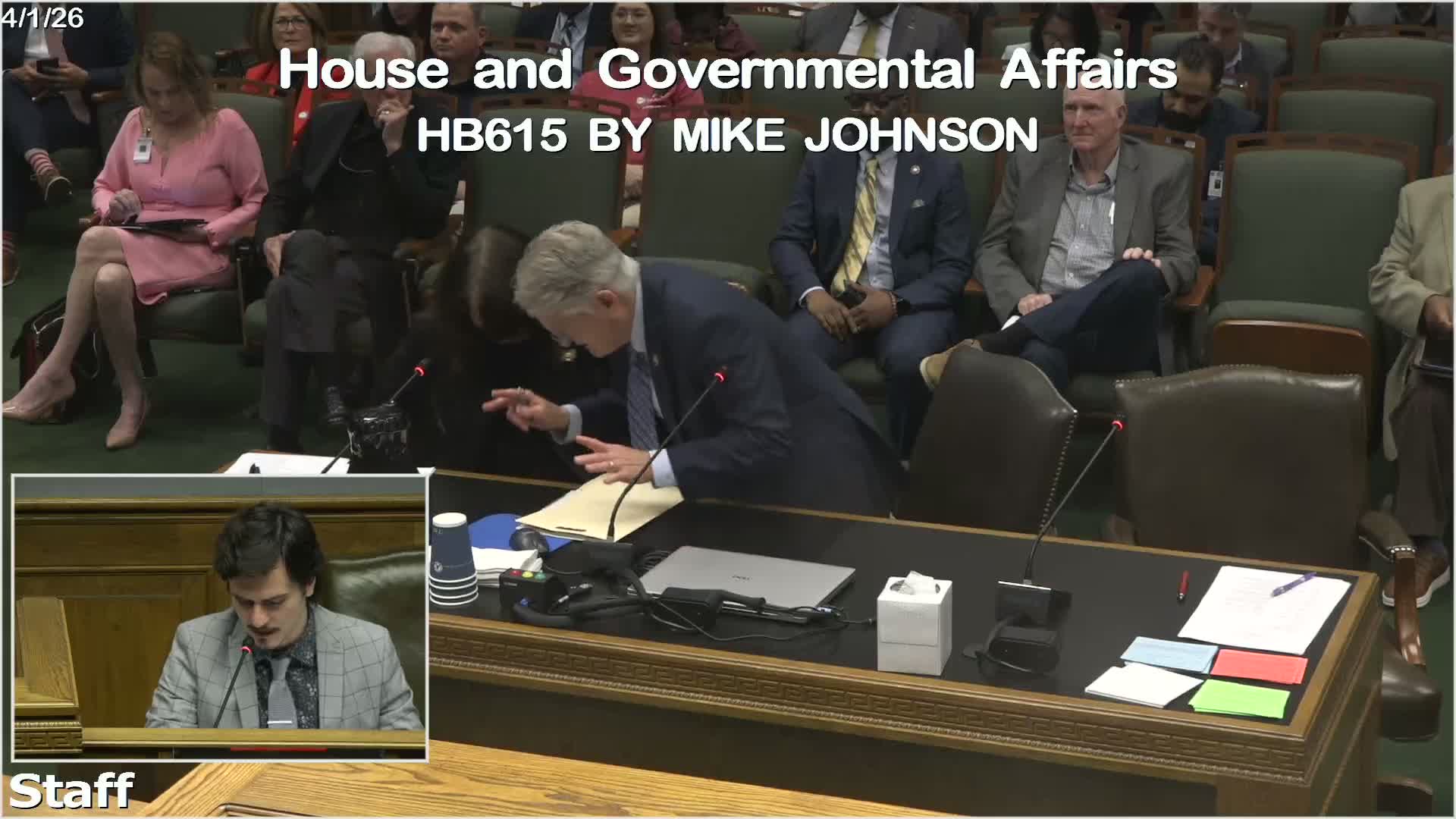
Speaker Pro Tem Johnson’s proposal to require live video broadcast and a minimum online archive of meetings for boards with the authority to tax, promulgate rules, or impose fines was reported favorable as amended on April 1 after extensive debate.
Laurie Adams of the Pelican Institute described the plan as “bringing those laws into modernity,” noting it would expand an existing requirement that already applied in some localities and would preserve executive session protections and a technical‑failure exemption. “The public's business should be conducted in public,” Adams said.
Opponents, including the Police Jury Association and representatives of parish governments, warned that the measure as drafted could act as an unfunded mandate for small, volunteer boards and some taxing authorities that lack staff and internet access. Guy Cormier of the Police Jury Association said small recreation or drainage commissions might not have employees or websites and that archiving and preservation impose costs that should be addressed in the bill.
The committee accepted drafting edits that explicitly add the word "video" to specified lines and added technical clarifications about preservation windows. With those changes and a commitment by the author to work with local stakeholders, the committee reported HB 6-15 favorable as amended by unanimous consent. The bill’s supporters said the requirement is generally inexpensive (many bodies use free platforms such as YouTube) but acknowledged some local concerns about implementation and archiving logistics.