Get Full Government Meeting Transcripts, Videos, & Alerts Forever!
Get email alerts on the Community Development topic
No spam. Unsubscribe anytime.
Brookfield board accepts community center feasibility study, directs staff to analyze bond options and capital trade-offs
Summary
After reviewing a final feasibility study estimating a 33,600 sq ft community center at about $25 million, the Committee of the Whole directed staff to pursue detailed bond-counsel analysis and present trade-offs with other capital needs (streets, alleys) before any referendum decision; a $13–15M funding gap was identified for an early referendum option.
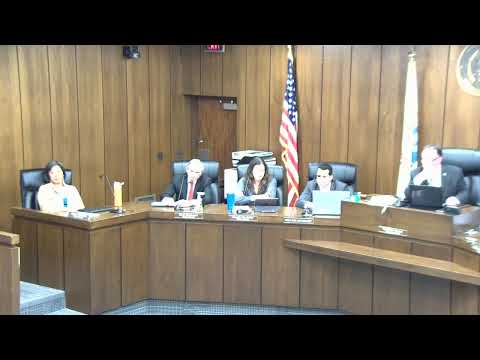
The Village of Brookfield Committee of the Whole accepted the final community center feasibility study on Monday and directed staff to produce more detailed funding scenarios, including consultations with bond counsel, before asking voters to consider any referendum.
Staff presenter Stevie summarized the study’s findings: a proposed 33,600-square-foot facility with current construction cost estimates of $25,000,000 and an escalation allowance that could add roughly $2,000,000 by 2027. The study’s survey work showed roughly half of respondents were willing to pay the modeled referendum amounts; about one-third expressed dissatisfaction with current recreation opportunities. According to the study, the business pro forma aims for the facility to recover 100% of operating costs by its third year.
Stevie outlined three next-step options presented to the board: accept the study and take no immediate action; accept the study and direct staff to pursue outside funding (grants, donations) up to a specified minimum; or accept the study and prepare for a bond referendum. Staff noted that an earliest practical referendum scenario could surface in 2027 but that bonding capacity at that time would likely cover about $12,000,000 — leaving a $13,000,000 to $15,000,000 gap requiring alternative funding or a later/refined strategy.
President Garvey and several trustees emphasized competing capital needs, including ongoing street and water-main projects and a long-standing backlog of alley paving. Garvey warned that existing bond obligations and required ongoing maintenance funding make an immediate full referendum complex and urged the board to consider opportunity costs. “If we make a decision to focus on a referendum for Parks and Recreation Center, it would be to the exclusion of other projects going forward,” he said.
Some trustees argued the center fills a real community gap for indoor recreation and urged staff to bring detailed bond scenarios so the board can weigh trade-offs. Others asked for a single, comprehensive presentation comparing the center’s timeline and costs with the village’s other major capital obligations.
Rather than selecting a funding path at the meeting, the board reached consensus to direct staff to consult bond counsel, develop additional bond-issuance scenarios (including debt-service and tax-impact modeling), and provide a clearer view of how the center would interact with other capital needs and debt capacity. Staff said they would also identify possible outside funding sources, grant opportunities and the potential sequencing of projects so trustees can make an informed choice about if and when to pursue a referendum.
The board asked staff to include financial details about outstanding bond issues, debt maturity dates, and estimated costs for alley and street programs to understand the opportunity cost of a referendum. Staff said they would return with those analyses and recommended next steps.