Get Full Government Meeting Transcripts, Videos, & Alerts Forever!
Get email alerts on the School Funding Equity topic
No spam. Unsubscribe anytime.
Committee tables bill that would remove 10% post-reassessment revenue authority; advocates warn of harm to low-wealth districts
Summary
Representative Mike Smith’s HB 245 — which would remove the statutory 10% post-reassessment revenue authority but allow up to 10% to restore revenue if a district projects a loss — was debated and tabled after unions and district officials warned it would exacerbate inequities and strip millions from vulnerable districts.
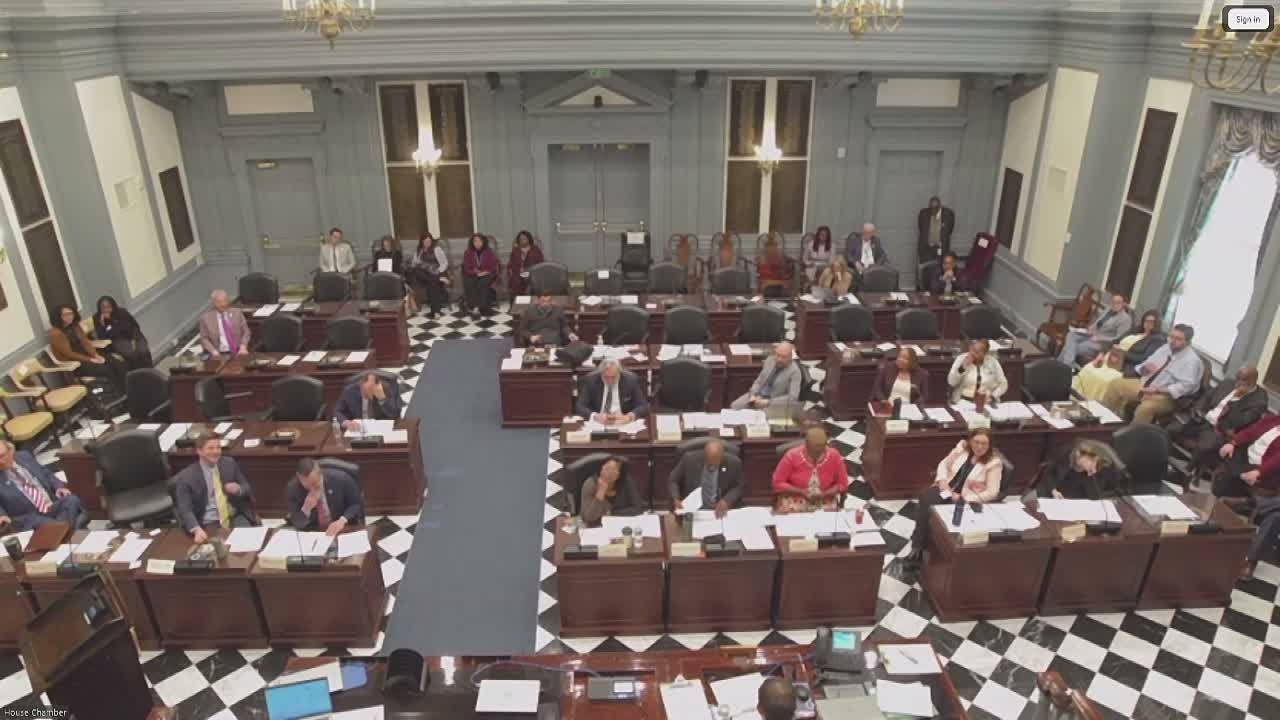
The House Education Committee also considered HB 245 on March 20 and voted to table the bill after lengthy debate and public comment. The bill would remove a long-standing statutory 10% post-reassessment revenue authority but allow districts that can demonstrate a projected revenue loss to take up to 10% to restore revenue-neutral positions.
Representative Mike Smith described the bill as "simpler" than prior versions, emphasizing that it would not be retroactive and is intended to ensure transparency and avoid automatic increases tied to reassessment. "This removes the 10%," he said, "but if a district is going to be a projected revenue loss, they're allowed to still take up to 10% to make sure that they're in a revenue neutral position."
Opponents — including teacher and district representatives — said removing the tool entirely would deepen long-standing funding inequities. Taylor Hawk (Delaware State Education Association) told the committee HB 245 would turn back nearly $38 million in current district funding and make it harder for districts to keep up with rising costs. Jennifer Dahlgarn, vice president of the Christina Education Association, said the 10% has been “a critical tool” for districts facing chronic underfunding.
Representative discussions echoed earlier concerns about appeals timing, the referendum system and differences across counties. Some members called for more collaborative drafting with the Public Education Funding Commission and district stakeholders before statutory changes are made. After public comment and floor discussion, the committee took a roll-call vote on a motion to table HB 245; the motion carried.
With both bills tabled, members thanked stakeholders and adjourned. Sponsors said they were open to further meetings with CFOs, county officials and the PEFC to seek workable, less disruptive language before returning to committee.