Get Full Government Meeting Transcripts, Videos, & Alerts Forever!
Get email alerts on the School Support Services topic
No spam. Unsubscribe anytime.
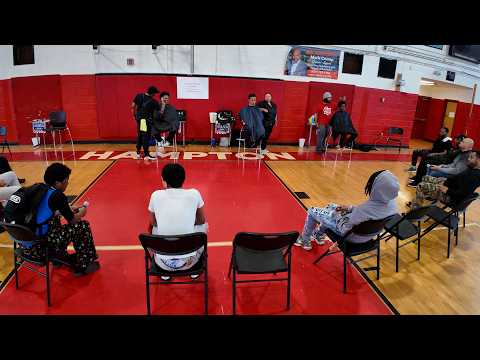
After-school haircut sessions give freshmen free cuts and a place to talk
Summary
Organizers described a twice-monthly after-school program where licensed barbers and volunteers offer free haircuts and informal conversations to freshmen, averaging about 40 students per session and using vouchers to ensure access.
Students and organizers described an after-school program that pairs licensed barbers and volunteers with freshmen for free haircuts and informal conversations intended to help students connect and address everyday concerns.
A student said, "Freshmen are just coming in, like, they're just being introduced to stuff." The student said many new students do not know the right people to talk to and that the program aims to create safe spaces for those conversations.
A presenter described how cutting hair became a bridge to building relationships. "Cutting hair, it can be lucrative, but it's also a way to bond and learn the people in your community," the presenter said, adding that the events combine short haircuts with opportunities for students to raise issues they are facing.
Organizers cited specific school-day pressures that the program addresses. A presenter said some students were being instructed to remove hoodies in hallways and felt uncomfortable because they had not had haircuts or could not afford them. The presenter noted that a Success 101 teacher, "Mister Jackson, was a licensed barber," and that he and other volunteer barbers began staying after school to offer haircuts and to listen to students' concerns.
"Mister Jackson is definitely the person and all these other barbers will help you," a meeting participant said, noting that the adults provide both grooming services and a space to talk about conflicts or other issues.
Organizers said the sessions run twice a month on Tuesdays from 3:15 p.m. to 5:00 p.m., and are currently averaging about 40 students who stay after school. They reported providing roughly 40 to 45 haircuts per event and using vouchers so students who miss a haircut can get priority at the next session. The presenter described prior events that featured four or five barbers doing quick haircuts, question-and-answer segments guided by note cards, and a meal at the end.
Participants called the program "cons cut some conversations" and invited students who "need a good talk" or a haircut to attend. Organizers framed the effort as a low-cost way to reduce barriers, build trust between students and adults, and address small-but-frequent needs that can affect attendance and comfort at school.
There were no formal motions, votes, or policy changes recorded in the presentation; organizers presented the program details and invited participation.