Lifetime Citizen Portal Access — AI Briefings, Alerts & Unlimited Follows
Michigan panel hears testimony on bills to license pediatric extended care centers and seek Medicaid payment
Loading...
Summary
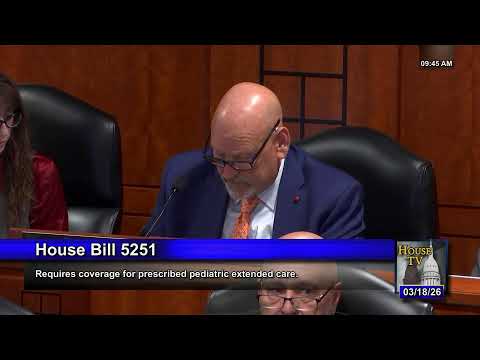
The House Health Policy Committee heard testimony on House Bills 5251 and 5252 to create licensed prescribed pediatric extended care centers (PPECs) and to align Medicaid payments. Sponsors and providers described staffing, licensing fees, LARA oversight and potential benefits for medically complex children; parents urged passage.
The House Health Policy Committee heard testimony on bills that would create a licensed structure for prescribed pediatric extended care centers, or PPECs, and establish Medicaid payment pathways for services provided in those facilities.
Representative Rogers, a sponsor, told the committee the bills (House Bill 5251 and House Bill 5252) would establish nonresidential, daytime centers for medically complex children that provide nursing care and other medical services so families can work while children receive coordinated care. "These centers ... serve medically complex children," Rogers said, describing requirements in the licensing bill for a medical director, a nursing director with experience in the field, minimum staffing levels and monthly staff development.
The sponsor said the legislation sets out plans of care that include medical, psychological and educational needs and requires coordination with schools. Rogers also described an initial licensing fee of $2,000 and a $500 annual relicensure fee built into the bill to fund implementation. On oversight, Rogers said LARA (the state licensing agency) would carry out licensing and inspections, similar to how the state inspects hospitals and skilled nursing facilities; some operational details would be set by rule.
Provider witnesses told the committee that PPECs are an established model in other states. Jody Rogers, a doctor of nursing practice with more than 20 years of PPEC experience, said PPECs combine skilled nursing and developmental services with parental education and that the model can improve outcomes and increase access. "These kids are able to learn their conditions much earlier," she said, describing a triad of services — nursing and medical interventions, developmental interventions and parental education — that yields better long-term outcomes.
Jody Rogers also cited a budgetary claim: "33% of the entire Medicaid budget is going to the cost of the children most of the time in the first couple years of their life," and argued that creating community-based PPECs can reduce higher-cost hospitalizations over time. The witness acknowledged that daily PPEC care is costly but said some states have seen savings from concentrating services in a facility rather than duplicative home visits.
Anne Marie Ramsey, a University of Michigan School of Nursing faculty member and coordinator of the pediatric home ventilator program at C.S. Mott Children’s Hospital, told lawmakers that shortages of specialized nurses keep children in the hospital longer and that a coalition of hospitals and community stakeholders supports PPECs as one of several strategies to address discharge barriers and workforce shortages.
Parent testimony underscored the day-to-day family impact. Aaron Fast described arranging and retaining qualified private caregivers and high out-of-pocket costs. He said his son’s social and developmental progress improved when he accessed center-based services. "We have 7 employees in our office. And of the 7, 3 of us either have a child or grandchild who would benefit directly from this program," he told the committee.
During questioning, members asked whether the model would require new state dollars or mirror existing payment structures such as waivers; Representative Rogers said the bills do not add new dollars but would move spending through existing systems and that HB5252 addresses how Medicaid dollars could pay centers. Committee members also pressed for clarification on immunization requirements and whether religious exemptions would be permitted; the sponsor did not have a ready answer and said the committee would follow up.
No committee vote was recorded on HB5251 or HB5252 during this meeting. Sponsors and witnesses said they would provide additional information to committee members and continue working the bills.
The committee accepted written cards in support from groups including the Michigan State Medical Society and the Michigan Nurses Association. The committee adjourned after excusing absent members.