Get Full Government Meeting Transcripts, Videos, & Alerts Forever!
Get email alerts on the Fire Hazard Mapping topic
No spam. Unsubscribe anytime.
Fire chief warns new state hazard maps could prompt building‑code changes in Desert Hot Springs
Summary
Fire Chief Brian White told the Public Safety Commission that state‑required local fire hazard severity maps expected in March could trigger building‑code changes, escrow inspections and insurance concerns; the city must accept the maps into municipal code within 120 days of release.
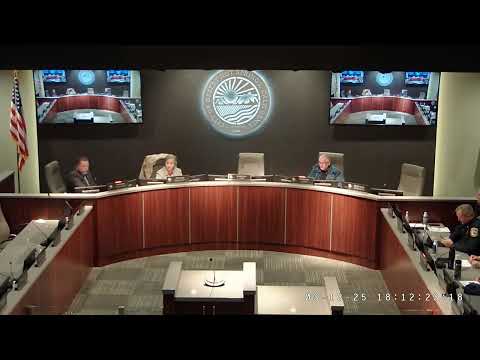
Fire Chief Brian White told the Desert Hot Springs Public Safety Commission on March 13 that state‑mandated local fire hazard severity maps expected in March could force local building‑code adjustments and raise insurance and inspection requirements for residents. The chief said the city will be required to adopt the maps into the municipal code within 120 days of their release.
The maps, Chief White said, are produced using satellite imagery, fuel modeling, weather data and “some of it is artificial intelligence.” He said the mapping process looks at vegetation, fire history and other variables to classify local areas into low, moderate, high or very high fire hazard severity zones. “Those maps are anticipated to be released, within the month of March,” White told commissioners.
White said the classifications could trigger changes to building‑code provisions (including fire‑resistant materials and home hardening measures), require additional inspections during escrow for properties in higher‑risk zones and affect community concern about insurance availability and costs. “Depending on where this lands, there could be significant concern from the community,” he said, and added that final local obligations will depend on the map results and subsequent local code decisions.
White said the maps were developed by Cal Fire under recent state legislative direction and that the city manager’s office, city clerk and city staff are coordinating to meet the mandate. He said staff will likely need to draft an ordinance to adopt the maps into municipal code within the statutory 120‑day window.
On the likely outcome, White offered a tentative assessment but cautioned uncertainty: “I have a guess just based off of doing this for a while that the majority of Desert Hot Springs will fall into, like, a moderate [zone],” he said. He emphasized the final map product will determine any specific legal or regulatory changes.
Next steps: the commission was told maps are expected in March; staff will brief the council and the public and prepare the required ordinance if and when the maps are released.