Get Full Government Meeting Transcripts, Videos, & Alerts Forever!
Get email alerts on the Election Operations topic
No spam. Unsubscribe anytime.
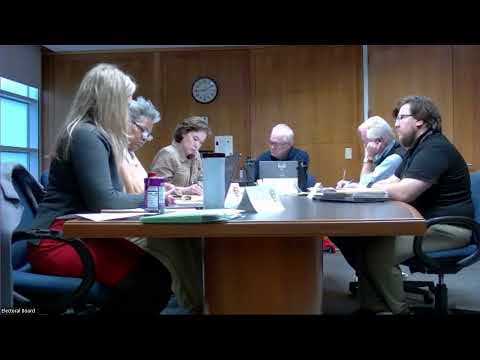
Albemarle County electoral board hears election‑official complaints about early‑voting scheduling, data and procedures
Summary
At its March 12 meeting the Albemarle County Electoral Board heard multiple public comments from chiefs and election officers about scheduling, staffing and data problems during early voting, including complaints that party affiliations of officers were distributed beyond office staff and inconsistent reporting of turnout figures; staff pledged follow‑up and data audits.
At a March 12, 2026 meeting, the Albemarle County Electoral Board heard complaints from election chiefs and officers about early‑voting operations ahead of upcoming elections.
Amber Baker, who identified herself as a PO and assistant chief at Georgetown, told the board that early‑voting schedules were being set ‘‘without any regard to when did you wanna work’’ and said a personnel list that once was limited to office staff is now visible to broader staff and EOs. ‘‘When I signed up, I was told that my party affiliation is only known to the office staff and my chief. It is now known to all BEOs, and it should not be. That's nobody's business,’’ Baker said.
Liz Worgliny, chief at Georgetown, described operations behind the scenes as ‘‘nothing short of chaotic,’’ saying training gaps, frequent last‑minute policy changes and inexperience among some staff had undermined consistency. ‘‘There is disrespect on, I believe, on EOs by office staff,’’ Worgliny said, adding she had seen non‑EO personnel handling ballot labeling and other tasks that chiefs expected to be performed only by sworn EOs.
Board members and staff discussed why absentee‑holder lists from the vendor Verus are marked ‘‘protected information’’ and who may legally be sworn to assist with envelope labeling. The board’s registrar said the list output includes the protective flag; staff explained they had sworn some individuals so they could legally handle the labeled material but several chiefs said they were not informed when the practice changed.
Voter‑registration and same‑day‑registration procedures drew extended attention. Linda Seaman of the Democrats’ voter‑protection team asked what happens to people who register before the statutory registration cutoff but are told to return in five days to vote. The registrar and other board members said the office’s approach this cycle is to require a five‑day wait so the registration is entered in the system and the voter can cast a live ballot at that point; if the registrant cannot return in five days, staff said they have in the past been offered a provisional ballot.
Polling‑place technology problems were also raised. Sherry Stovin, an EO and assistant chief at Brownsville, reported three instances where a driver’s license scan returned the incorrect name and staff had to locate voters by address rather than relying on the scan alone.
The board reviewed early‑voting counts, noting inconsistent figures across reports (examples cited by staff included 453, 417 and 413 for early days) and consolidated early totals of 1,569 for the first several days of voting; staff committed to auditing the reporting scripts and the check‑in/print counts so chiefs can plan staffing. The registrar reported 6,971 absentee ballots mailed in an initial run, with 74 recent returns flagged as undeliverable (55 'returned to sender' and five marked 'temporarily away').
Board members asked staff to standardize procedures and communications, circulate clarified training materials and follow up on the Verus 'protected' labeling, the poll‑pad scanning mismatches, and whether the five‑day waiting period is consecutive days or business days (staff said they would check code and advise the board). Several members also urged targeted chief‑level training and a short addendum clarifying early‑voting differences for chiefs and assistants.
The board did not take binding policy action in the public‑comment portion of the meeting but directed staff to investigate the matters raised and report back at a future meeting. The board scheduled additional training and confirmed several training and L&A testing dates over April.