MOLST advisory council advances MOLST 2 package; seeks PA inclusion, digital-first form and training rollout for 2026
Loading...
Summary
The Department of Public Health’s MOLST Advisory Council reviewed a five-part MOLST 2 package — updated form, policies, training, a narrow statutory fix to permit electronic originals, and a redesigned DPH website — and discussed adding physician assistants to statutory language and practical steps to certify providers in CT TRAIN ahead of a targeted 2026 rollout.
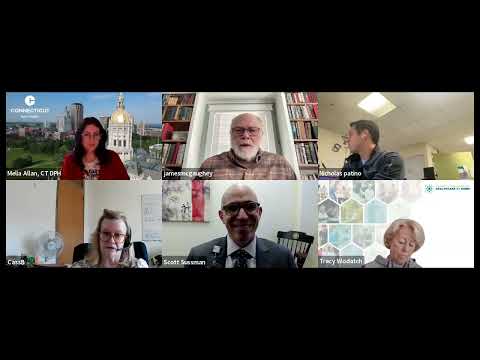
Barbara Cass, senior adviser to the commissioner for long term care, opened the MOLST Advisory Council meeting and said the council is advancing a five-component MOLST 2 package that includes a revised form, aligned policies and procedures, new training, a small statutory fix to permit an electronic original, and a redesigned Department of Public Health website. "All of these things are underway," Melia, a DPH staff member leading the updates, said, noting policies were reviewed recently and communications approval for the new site has been obtained.
The council heard testimony from Nick, who represents the Connecticut Academy of PAs, that the current statutory language permits PAs to sign MOLST forms but stops short of allowing them to determine patient eligibility; he urged adding two words to the statute to include PAs in the eligibility determination. "PAs cannot sign DNR forms right now. It creates lack of access," Nick said, asking that PAs be explicitly included in any future statutory language. Melia said DPH is monitoring the pending legislative change and will align policies and procedures to match the statute once it is finalized.
Council members emphasized practical steps needed for the planned rollout. Dr. Sussman asked whether the group was still targeting 2026 for a go-live; Barbara Cass replied that 2026 remains the target but stressed the timeline is contingent on the statutory proposal passing and on internal DPH reviews. Council members discussed training logistics for large health systems that use their own learning management systems: Barbara Cass said many organizations provide MOLST training via their LMS but do not register learners in CT TRAIN, which prevents DPH from certifying those clinicians in its registry. "They need to create a profile," she said, explaining that DPH requires a CT TRAIN account to link and certify completed trainings.
Melia described planed website and form options: once commissioner-approved, DPH will post two MOLST 2 form versions — a printable PDF and a fillable PDF with digital-signature capability — to accommodate both paper workflows and electronic workflows. Council members urged DPH to confirm with legal counsel whether an electronic signature will satisfy statutory or regulatory requirements and recommended keeping both formats available for providers who prefer paper.
The council also discussed training for school nurses after a recent case at Oak Hill School raised concerns about in-school care for a student with an executed MOLST. Barbara Cass said the pediatric palliative care work group should be engaged and that materials and provider training will be made accessible to school nurses and other community providers.
Votes at the meeting reflected routine procedural business: the council approved the March 3 meeting minutes (moved by Jim, seconded by Rich Kainen; ayes, Dr. Sussman abstained) and later approved a motion to adjourn. The council agreed to continue internal DPH work on policy alignment and to bring a draft regulatory or informational packet back to the group for future discussion.
The advisory council did not take formal action on statutory language; the group is awaiting legislative movement and will update policies, training and the website to reflect any enacted changes.