APD warns forensic-exam provider faces budget crisis; survivors’ services described as fragile
Loading...
Summary
APD officials told the Public Safety Committee that reforms to the Special Victims/sexual-assault response are advancing but that forensic-exam capacity is fragile; Safe Alliance — one of two local forensic providers — faces a budget shortfall that could halt services by May 31, officials said.
APD officials said on April 6 that progress on reforms to the department’s adult sexual-assault response has been significant, but that the system remains vulnerable because of limited forensic-exam capacity and staffing needs.
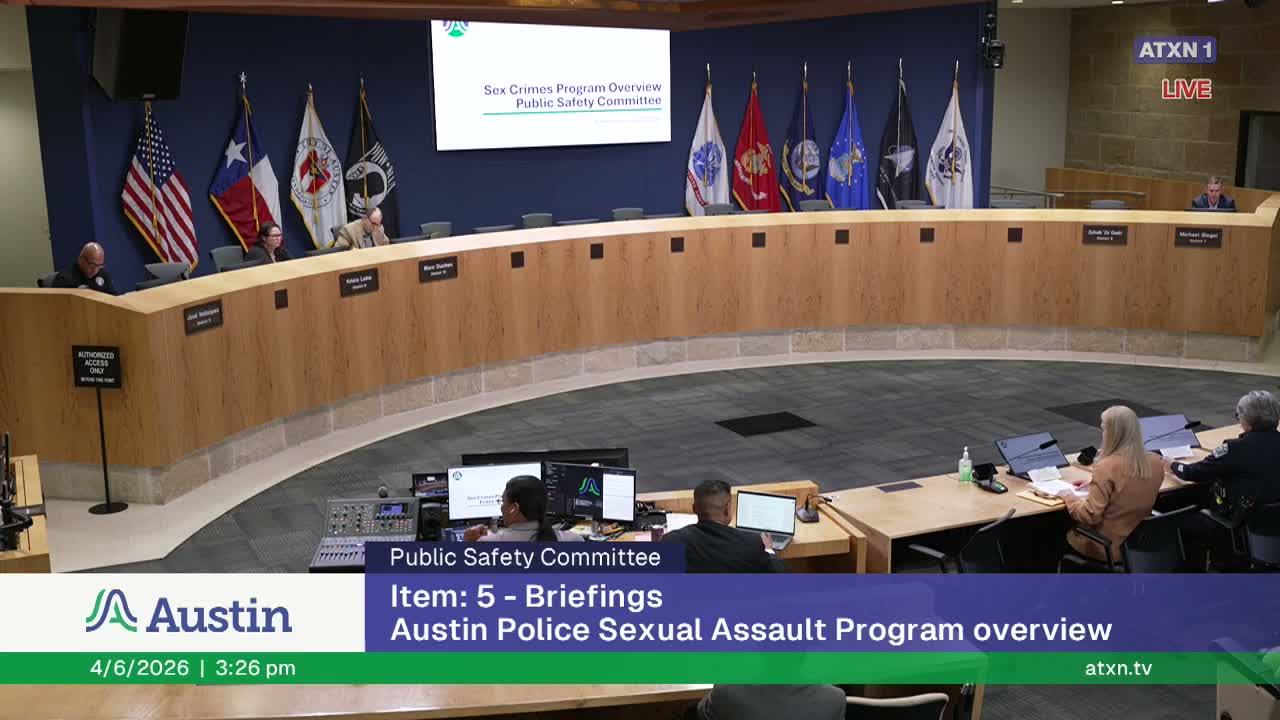
Katrina Clark, victim services and employee wellness manager, and Commander Deanna Lichter briefed the Public Safety Committee on work tied to PERF recommendations and a settlement process called the Collective Sexual- crimes Response Model (CSCRM). They said the CSCRM project is 66% complete across 123 scope items and that APD has implemented policy redesigns, standardized report writing and new survivor-support protocols while building stronger prosecution partnerships that include embedded assistant district attorneys for faster consultation.
“Transparency only works if the underlying data is accurate,” Clark said, describing a recent data-cleanup and an upcoming public-facing dashboard for adult sexual-crimes reporting and outcomes.
Despite the reforms, officials flagged immediate risks. Commander Lichter said the regional forensic-exam system remains fragile: Safe Alliance, one of the two community forensic providers APD relies on, is facing a budget crisis that “could result in services ceasing entirely by May 31.” Lichter said APD and city leaders are working with partners to identify solutions and that Brave Alliance is a second provider that could absorb some workload, but that hospitals are a less-preferred backup because of clinical environment and survivor care concerns.
Officials said improvements include reduced evidence-sharing backlogs, consolidation of title codes to reduce classification confusion, and a second annual external case review that shows improvement and now has moved into remediation. Yet they cautioned that key reform components — training curriculum development, crime-analyst capacity, and victim-services staffing — depend on further funding. Two open CSCRM items tied directly to staffing remain unresolved and will require budget decisions, Clark said.
Council members pressed for contingency plans and budget detail. One council member noted the decline in the percentage of survivors unable to be served at the initial request — from a high in prior years to about 4% after recent adjustments — and asked whether hospitals could fill gaps. Lichter said Brave Alliance could absorb “a large amount” of demand if necessary and that hospitals could be used but are not an ideal, long-term substitute for a staffed forensic-exam program.
The committee was told the CSCRM project includes quarterly reporting to oversight bodies and that APD has already eliminated the evidence-sharing backlog for sexual-assault cases. Officials emphasized the need to institutionalize reforms before formal project structures sunset and flagged the risk that staff turnover could degrade institutional memory.
Next steps: APD will continue work with city leadership and community providers to identify short-term funding solutions and report back to the committee; the transcript records the committee’s request for further budget detail and contingency planning.