Get Full Government Meeting Transcripts, Videos, & Alerts Forever!
Get email alerts on the Housing Element topic
No spam. Unsubscribe anytime.
Ceres council adopts updated housing element to meet state RHNA, opening path to housing funds
Summary
The Ceres City Council on March 24 adopted its sixth‑cycle housing element and a RHNA overlay ordinance after a lengthy presentation by consultant Anastasia Aziz; the city must accommodate 3,361 housing units for 2023–2031 and will submit the plan to HCD for certification.
The Ceres City Council voted March 24 to adopt its sixth‑cycle housing element and a related Regional Housing Needs Assessment overlay after a presentation from consultant Anastasia Aziz of EMC Planning Group. The council approved the initial‑study resolution and the housing element submissions by separate 4–1 votes and adopted an implementing ordinance unanimously.
Aziz told the council that the state assigned the city a RHNA obligation of 3,361 units for 2023–2031, an increase of nearly 1,000 units from the prior cycle. "For series, for the sixth cycle, which runs from 2023 to 2031, series was allocated 3,361 housing units for this period," she said, adding that the allocation is subdivided into affordability categories that include above‑moderate, moderate, low and very low income tiers.
The consultant said state reviewers found the draft to be in "substantial compliance" and that adopting the document and submitting it to Housing and Community Development (HCD) will make the city eligible for state programs and grants that favor compliant jurisdictions. Aziz described implementation programs in chapter 2 of the draft — zoning updates, nondiscretionary approvals for qualifying affordable projects and outreach — designed to remove regulatory barriers and encourage a mix of housing types.
Council members and public commenters asked for clarifications about sites and services. Aziz said the draft counts the West Landing specific plan (2,631 units) and Whitmore Ranch (372 units), along with vacant and underutilized parcels and accessory dwelling units, to reach a site inventory total (about 3,673 units before a state‑required buffer). She noted the state typically asks for a 15–30% buffer; the city used an 8% buffer where allowable because fewer candidate sites met state constraints.
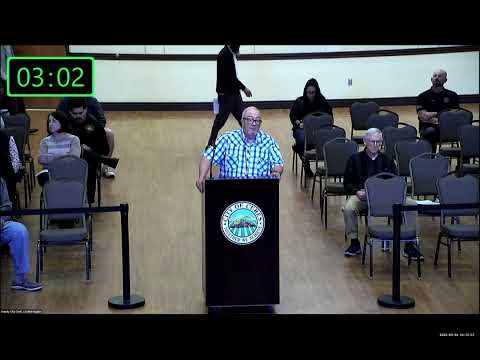
Public commenters raised farmland‑protection concerns and urged higher‑density infill instead of expanding into agricultural land. Milt Treeweiler argued for preserving prime farmland; Aziz and staff said sites in the housing inventory are not under Williamson Act contracts and were vetted in the inventory process.
Council member questions focused on implementation capacity, fees and how the city will track progress. Aziz said the city must file annual reports to HCD on planning entitlements, building permits and certificates of occupancy and that many lower‑income units are typically counted when financed with deed restrictions that preserve affordability for decades. She said some programs will require additional staffing and recommended that the city budget for those needs.
After discussion, the council approved the initial study and the housing element submission (items 16a and 16b) 4–1. City staff said the final HCD certification letter should arrive within two to four weeks after submission. Council also adopted the RHNA overlay ordinance (program 1.11), a staff‑recommended tool to allow qualifying affordable projects to receive by‑right approvals and an expedited review pathway, which the city expects will make sites more attractive to affordable‑housing developers.
What happens next: the city will submit the adopted document to HCD for formal certification, begin the annual reporting required by state law and start work on the implementation programs listed in chapter 2, including zoning code updates and outreach to potential developers and funding sources.