Get Full Government Meeting Transcripts, Videos, & Alerts Forever!
Get email alerts on the Historic Preservation topic
No spam. Unsubscribe anytime.
Commission unanimously grants certificate for 62 High Street after conflict review
Summary
The Bangor City Historic Preservation Commission approved a certificate of appropriateness for 62 High Street (the Mason House) to replace rotted trim, repair a gutter system and add four cornices after reviewing consultant recommendations and finding no disqualifying conflict of interest for the chair.
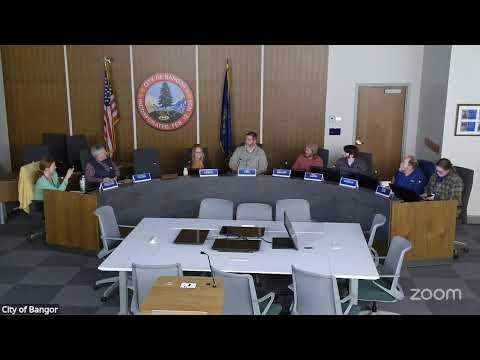
The Bangor City Historic Preservation Commission voted unanimously March 12 to grant a certificate of appropriateness for work at 62 High Street in the High Street Historic District.
The certificate allows the owner, represented by Louie Morrison of Gilpin Holdings LLC, to remove and replace rotted trim boards, repair a nonfunctioning gutter system and add four wooden cornices, after the commission found the application met the standards in the city's historic preservation ordinance.
The decision followed a brief ethics review after Chair Dave King disclosed that his spouse works in Haley Ward's architecture division, the firm that produced drawings referenced by the applicant. “My spouse is directly employed by Haley Ward … and she works in the architecture division,” King said when raising the possibility of a conflict. Commissioners discussed whether a financial tie existed; several members said no payment or contract to the firm had been identified. Member Peter Keebler moved that there was no conflict and the motion passed on a roll‑call vote with Rebecca Krepke, Peter Sachs, Peter Keebler, Katie Coe and Chair Dave King voting yes.
Consultant Mike Pullen told the commission the building is an early 19th‑century structure (identified in the National Register materials as the Mason House) and recommended restoring original details. “The applicant intends to restore these details,” Pullen said, describing original eve trim, box cornice returns and round downspouts visible in historic photographs. He advised matching the historic profiles and returning rake and corner details where feasible.
During questioning, the applicant and consultant described proposed materials and profiles. Louie Morrison said he arranged drawings and samples to match historic appearance and that the new gutters would be aluminum K‑style with round downspouts, while the decorative cornices would be wood to match historic form. “I’ve got some examples of the material…some pictures that show the house in the 1800s,” Morrison said while presenting his packet.
Commission members repeatedly emphasized preservation of masonry and structural soundness in approving the application, noting that the proposed profile and restored details would prevent water from damaging brickwork. After the commission read and voted through the applicable ordinance standards and exhibits, the commission granted the certificate of appropriateness by unanimous vote.
The permit requires that work begin within six months and be completed within one year, and parties were reminded of their right to appeal a decision to the board of appeals.
Action taken: the commission granted a certificate of appropriateness for 62 High Street.