Get Full Government Meeting Transcripts, Videos, & Alerts Forever!
Get email alerts on the Housing topic
No spam. Unsubscribe anytime.
State rep., county officials say housing shortage and SEA 1 require local planning
Summary
State Rep. Doug Miller told the Elkhart County Council the state faces about a 50,000‑unit housing shortfall and urged local housing plans; county officials warned that Senate Enrolled Act 1 changes to local income tax distribution could shift revenues and affect towns, schools and property‑tax credits.
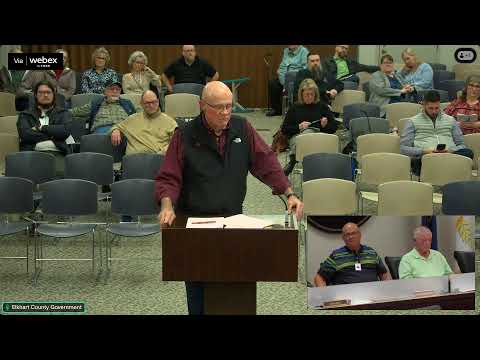
State Rep. Doug Miller told the Elkhart County Council on March 19 that Indiana faces an estimated shortfall of roughly "50,000 housing units" and urged local leaders to prepare housing plans and zoning updates to speed construction.
"We're 50,000 housing units short," Miller said, arguing that the shortage pushes up prices and removes potential buyers from the local market. He urged the county to work with builders, industry and developers to increase supply and recommended exploring manufactured housing and accessory dwelling units as part of the solution.
County officials and council members echoed Miller's concern about how recent state changes to local income tax law under Senate Enrolled Act 1 (SEA 1) could affect funding for infrastructure and schools. An unnamed county official who briefed the council said the legislation will require townships to report activity to the state and gives Elkhart County authority to transfer certain assessor duties to the county, which the official said could save "approximately $500,000 annually." The same briefing said the county expects to adapt its unified development ordinance to meet new statutory reporting requirements.
Council members emphasized distributional impacts. One member noted that SEA 1’s stacking and distribution rules could raise the effective local income tax cap to 2.9% if all components stacked, and that some smaller towns and cities could be "decimated" by changes in how revenues are allocated. Officials flagged two potential effects: the loss of a property‑tax credit embedded in prior law and shifting tax revenue from places that host jobs but not residents to other jurisdictions.
Miller and county officials described infrastructure and redevelopment programs aimed at expanding housing. Miller said the state has invested in transportation and TIF‑backed infrastructure, citing recent awards to Goshen and Elkhart, and he encouraged local governments to coordinate on definitions of property rights and common‑sense regulations that allow housing production while respecting neighborhoods.
Why it matters: Council members said the combined pressure of a statewide housing shortfall and the new tax law make proactive local planning urgent. Several members asked staff and local partners to explore subdivision development supports, redevelopment of existing urban parcels, and ways to broaden access to lots for smaller builders so inventory can increase.
Next steps: Council members said they will continue working with commissioners, mayors and the county attorney to track interim deadlines and to bring appropriate ordinances or nonbinding resolutions back to the council for consideration.