Urbana council debates surveillance ordinance language after police, review boards weigh in
Loading...
Summary
Council heard competing input on a draft surveillance-technology ordinance: commissioners and legal staff asked to protect residents and require documentation before destroying unapproved data; police urged narrow operational exceptions for exigent use, patches and pending approvals to avoid harms to investigations.
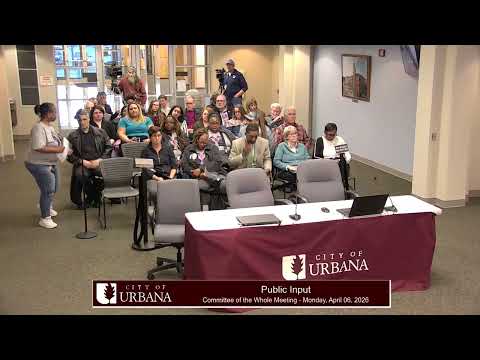
City attorneys, volunteer oversight bodies and the Urbana Police Department spent the Committee of the Whole meeting testing language in a proposed surveillance-technology ordinance that would set approval, reporting and deletion rules for city use of surveillance tools.
"The policy intent is to protect residents from the use of surveillance technology and the data that that would be gathered, with unapproved technologies to the extent that we can," said City Attorney Matt Brushley during a review of revised language intended to prohibit use and disclosure of improperly collected data while adding a pause for legal review when footage may be relevant to prosecution.
Representatives of the Human Rights Commission and the Civilian Police Review Board said they welcome a role in transparency but noted capacity limits. Jane McClintock of the CPRB said the board "welcomes the opportunity to participate in review as relates to the Urbana Police Department and as defined in the ordinance." Anne Panthen, chair of the Human Rights Commission, told council the HRC cannot take on an indefinite workload but can clarify when complaints should be routed.
Police leadership urged narrower operational language and a tiered approval approach to avoid harm to time-sensitive investigations. "Small wording issues can result in large operational impact," Deputy Chief Mike Cervantes told council, arguing that requiring full council approval for software patches, minor functionality updates, or emergency use could delay lifesaving responses.
Police proposed three changes: (1) allow administrative notification rather than full council reapproval for nonmaterial updates and routine patches; (2) permit exigent or emergency use authorized by the chief (or designee) with prompt reporting to council; and (3) allow continued use while council approval is pending if the department submitted required documentation in good faith and no policy violation is identified.
Legal advisors said the ordinance should explicitly preserve evidence when legal duties may require disclosure before deletion. Brushley described a proposed "preservation pending review" step: when improperly collected footage may be relevant to an ongoing criminal matter, the city would segregate the data, obtain legal review and promptly notify the prosecuting authority before taking deletion steps.
Councilmembers asked for precise drafting to avoid unintended conflicts with state or federal law and to make sure the ordinance does not unintentionally bar police from acting in exigent circumstances (for example, to protect life or stop a violent felon). Councilmember Grace noted state law on drone surveillance and said local policy can be stricter but must be clear when exceptions apply.
No ordinance vote was taken. Council directed staff and legal counsel to refine the draft with explicit language on (a) the limited scope of exigent-use authority, (b) the process and timelines for preservation pending review, and (c) clear documentary and reporting requirements so that any use or deletion is auditable.