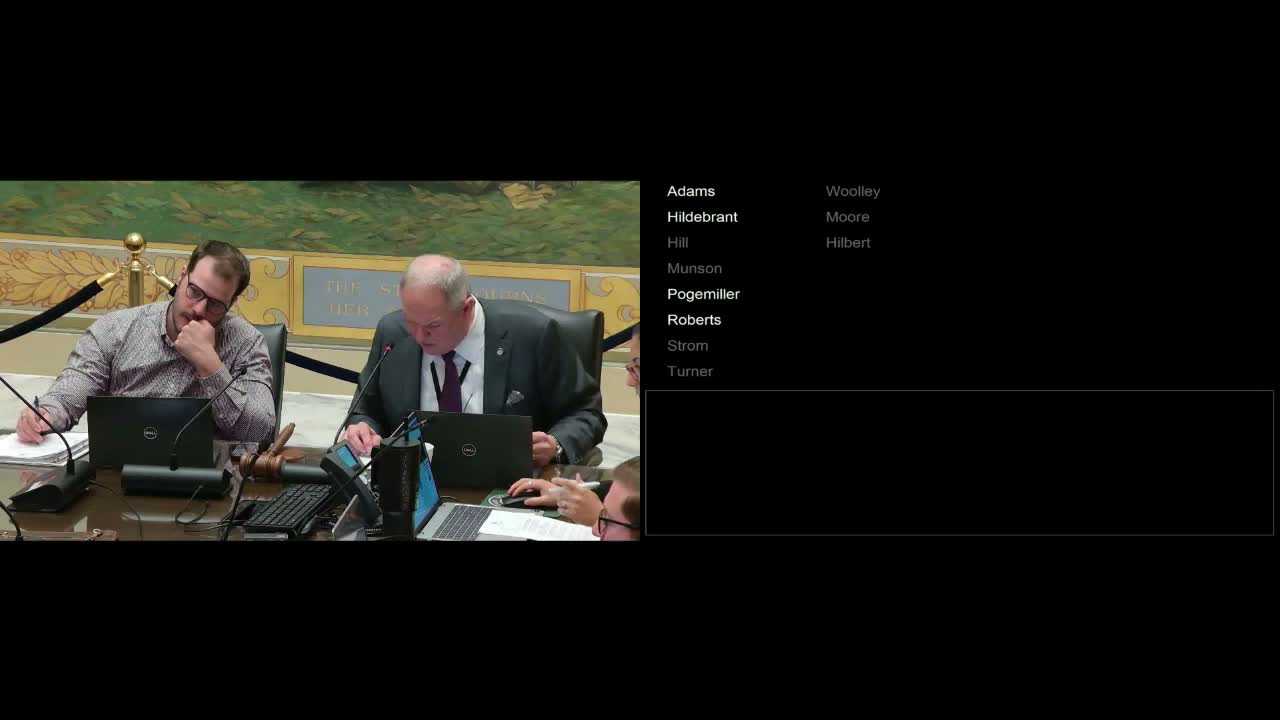
General Government committee advances multiple bills on reporting, schools, tourism and workforce
Loading...
Summary
The General Government committee reported a slate of bills as "do pass," including measures to centralize reporting, guarantee educator association access, modernize tourism retail rules, change fire marshal appointments, expand workforce data authority, strengthen trafficking victim services, restrict certain contract staffing, and move the receivership office under insurance oversight.
The General Government committee met and reported a package of bills to the next stage, advancing legislation on centralized reporting, educator association access, tourism procurement and promotional funds, fire marshal commission appointments, workforce data authority, human-trafficking victim services, limits on contract staff in certain facilities, and a receivership-office realignment.
The most consequential votes included SB 1877, SB 1884, SB 1365, SB 2174, SB 1525 (PCS adopted), SB 1810, SB 1771, SB 1805 and SB 1960. Committee roll calls produced unanimous or strong majorities on several items; tally highlights follow.
SB 1877: centralized reporting — do pass (6–0) Representative Caldwell, sponsor of SB 1877, said the bill would "create a centralized reporting system of all reports" and noted this is the Senate version that would take reporting to the secretary of state. Representative Pogamiller asked how the measure differs from House Bill 3047 and reporting through LOFT; Caldwell said the bills are "very similar in nature and kind" but that this version routes reporting to the secretary of state. The committee reported SB 1877 as "do pass."
SB 1884: educator association access — do pass (6–1) Representative Hassenback described SB 1884 as strengthening the rights of statewide educator associations and individual school employees by ensuring that if one group is given access to employees, other groups must also be allowed access so a "monopoly can't be formed." Members debated whether existing statute already protects in-service access and questioned language about reimbursement to districts for costs incurred; Representative Pogamiller pointed out a statutory provision referencing in-service speaking and asked why new legislation is needed. The committee reported the bill as "do pass."
SB 1365: tourism promotional fund updates — do pass (6–2) Representative Townley said SB 1365 updates statutory language governing the promotional fund, exempts the Oklahoma Tourism and Recreation Department from certain rules governing merchandise for resale sold online and at department retail outlets, and eases procurement so parks and golf courses can keep retail inventory stocked. Questions focused on procurement thresholds; the sponsor discussed $75,000 as an example inventory/pricing threshold. The committee reported the bill as "do pass."
SB 2174: state fire marshal commission makeup — do pass (8–0) Representative May explained SB 2174 would change who appoints members and alter the makeup of the State Fire Marshal Commission. Members discussed volunteer fire department representation and agreed volunteers are represented through their parent organization (OSFA). The committee reported the bill as "do pass."
SB 1525 (PCS): tourism conference contracts and fees — PCS adopted; do pass (6–2) Representative Newton offered a committee substitute that allows the Tourism and Recreation Department to enter into agreements or contracts to support the annual statewide tourism conference and increases a contract authority to $75,000. Newton clarified the potential fee referenced is a registration fee for conference attendees, not an added visitor fee for parks or services. The committee adopted the PCS and reported the bill as "do pass."
SB 1810: human trafficking expert testimony and victim services — do pass (8–0) Representative West said SB 1810 ensures juries may hear qualified expert testimony on the complexities of human trafficking and formally includes trafficking victims in existing victim-service programs. The committee reported the bill as "do pass."
SB 1771: workforce data collection and outside counsel — do pass (5–2) Representative Tedford said SB 1771 expands the Workforce Commission's authority to collect fund- and performance-related data and to hire outside counsel when needed. Members asked where the data would come from and whether K–12 data would be included; Tedford said the bill aggregates existing federal, state and local agency data focused on workforce funding and performance and that the requested counsel authority is already funded in the commission's budget. The committee reported SB 1771 as passed.
SB 1805: limits on contract staff for certain facilities — do pass (6–1) Tedford presented SB 1805 to preclude some group homes and post-adjudication treatment facilities from using contract staffing agencies; supporters cited difficulty securing records from third-party contractors, while opponents warned of potential staffing shortages in some districts. The committee reported the bill as "do pass."
SB 1960: receivership office moved under insurance department — do pass (7–0) Tedford described SB 1960 as a government-efficiency measure that would move the Oklahoma Receivership Office under the Oklahoma Insurance Department to reduce duplication; the sponsor said most states operate this way. The committee reported the bill as "do pass."
Votes at a glance (tallies as announced in committee): SB 1877 (6–0); SB 1884 (6–1); SB 1365 (6–2); SB 2174 (8–0); SB 1525 PCS (6–2); SB 1810 (8–0); SB 1771 (5–2); SB 1805 (6–1); SB 1960 (7–0).
What comes next: All bills reported "do pass" will proceed to the committee of origin or the next floor calendar per legislative process. The committee adjourned, noting it was the last meeting before oversight.
Quotes used in this report are taken verbatim from the committee transcript and attributed to the speakers as recorded.