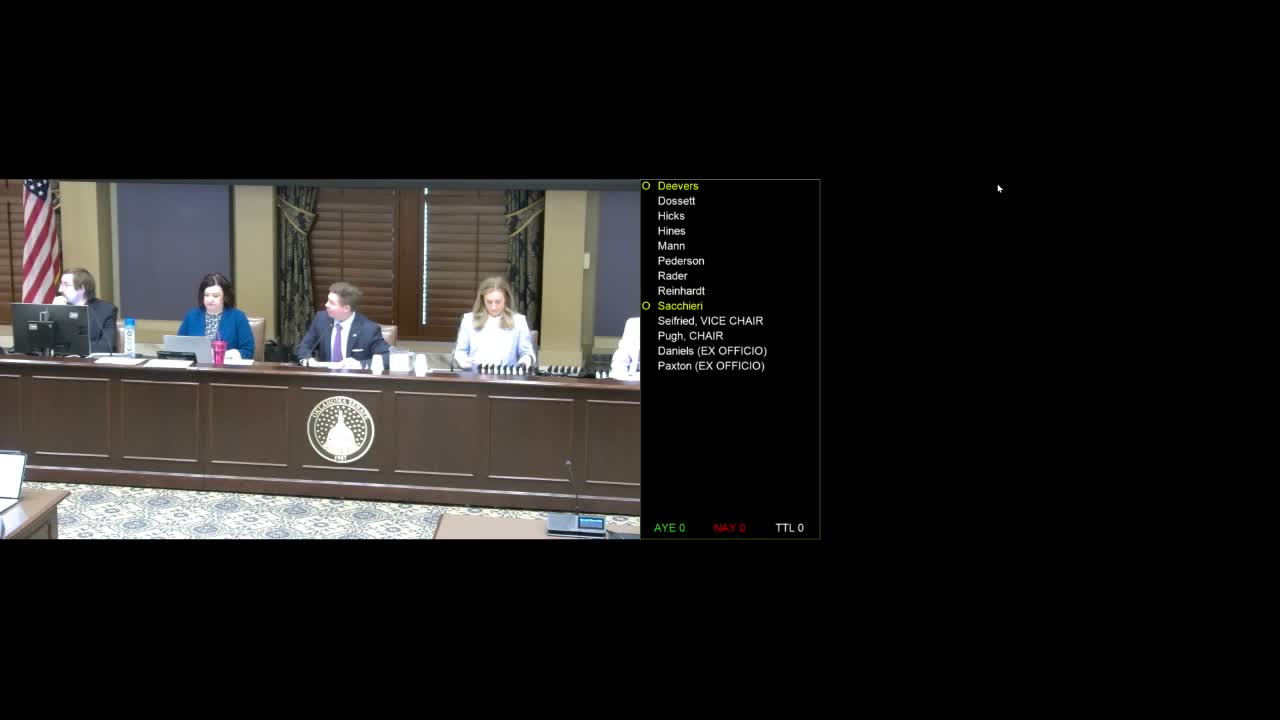
Senate Education Committee advances broad package of education bills, including school-day increase and scholarship cleanup
Loading...
Summary
The Senate Education Committee moved a suite of education bills forward on April 8, 2026, including a conditional increase to the minimum K–12 school days from 166 to 173, technical cleanup to the Opportunity Scholarship Fund Act, and changes to assessment timing and credential labeling; most measures passed in committee votes.
The Oklahoma Senate Education Committee advanced a block of education measures on April 8, moving several onto the full Senate. Committee members approved changes ranging from K–12 instructional days and assessment scheduling to technical fixes for scholarship law and new “credentials of value” labeling for postsecondary programs.
Pro Tem Paxton told the committee that House Bill 3,151 would “take the current requirement of 166 in school and move that from 166 to 173,” and that the increase would take effect in the 2027–28 school year only if the Legislature appropriates an additional $175,000,000 for common education. The committee voted to advance the measure (7 ayes, 3 nays).
Leader Sarah Daniels said House Bill 3,590 is a ‘‘cleanup’’ to the Opportunity Scholarship Fund Act that replaces free-and-reduced-lunch language with a federal poverty level metric and changes the reporting cadence to make the program more auditable. Senator Sarah Hicks pressed for data and accountability, asking, “Is there any Oklahoma specific data demonstrating that students receiving these scholarships perform better academically?” Daniels replied she did not have the report in committee but said the change was intended to increase consistency and auditability; the committee advanced the bill (10 ayes, 2 nays).
Other committee actions included unanimous or near-unanimous passage of bills to extend the sunset for the Oklahoma Advisory Council on Indian Education, require schools to report abuse to outside law enforcement within 24 hours, and create a State Regents-led “credentials of value” process to better inform students about economic returns of degrees and certificates. The committee adopted an amendment to House Bill 4,359 to move statewide assessments for grades 3–8 into the last four weeks of the school year, a change proponents said would preserve instructional time and give testing coordinators flexibility.
Votes at a glance (committee action): House Bill 3,315 — feasibility study on 3‑year degree programs: passed (9 ayes, 2 nays) House Bill 3,590 — Opportunity Scholarship cleanup: passed (10 ayes, 2 nays) House Bill 3,151 — minimum school days to 173 (funding trigger): passed (7 ayes, 3 nays) House Bill 2,959 — reporting abuse to law enforcement within 24 hours: passed (9 ayes, 0 nays) House Bill 2,398 — credentials of value: passed (10 ayes, 0 nays) House Bill 4,359 — move assessment window (amended to 4 weeks): passed (9 ayes, 0 nays) Several charter and teacher pathway bills were also advanced; committee records show a mix of unanimous and split votes depending on the measure.
Why it matters: The bundle of bills would change both operational rules (testing windows, reporting obligations) and longer-term policy (how instructional time and credential value are defined). The discretionary funding trigger for the school‑day increase makes passage of the budget a direct determinant of whether students will experience longer school years. Committee debate centered on auditability and outcome tracking for scholarship programs, and on the evidence tying time-in-school to student achievement.
Next steps: These bills are now positioned for floor consideration and any amendments in the full Senate. The committee chair said additional executive-nomination hearings and scheduling will follow as session moves toward adjournment.