Get Full Government Meeting Transcripts, Videos, & Alerts Forever!
Get email alerts on the AI And Productivity topic
No spam. Unsubscribe anytime.
Economist: AI will raise productivity and change skill demand but not eliminate need for workers
Summary
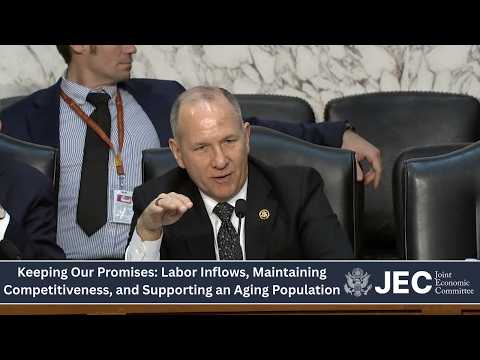
During the Joint Economic Committee hearing, lawmakers asked whether AI-driven productivity could reduce the need for immigrant workers. An economist on the panel said AI will raise productivity and shift the types of skills employers need, increasing demand for workers with specific abilities rather than replacing the need for more workers overall.
A lawmaker asked witnesses whether recent productivity gains — including from artificial intelligence — could by themselves offset a shortfall of workers and reduce the need for immigration.
An economist responding to that question said he is "an optimist about AI," but cautioned that AI will change, not eliminate, labor demand: "I think people will always be a part of the equation, and more people will always grow the pie," he said. He added that AI "will raise productivity, but I think it will increase then increase demand for workers for certain sets of skills."
The economist and the former CBO director both framed current growth as relying on a combination of worker numbers and output per worker. In the hearing, the lawmaker noted recent above-trend growth (he described the past year as "about 2 and a half percent") but said the job market had not tightened as much as expected, prompting questions about whether productivity gains — possibly driven by AI — were substituting for additional hires.
The exchange did not produce a policy decision on AI or workforce strategy; it was a line of questioning about how technological change interacts with demographic trends and immigration-related labor supply.