Lifetime Citizen Portal Access — AI Briefings, Alerts & Unlimited Follows
Sen. Ben Brown presents bill to bar counties from reclassifying single‑family short‑term rentals as commercial
Loading...
Summary
State Sen. Ben Brown told a committee the Senate substitutes for bills "10 66" and "10 88" would prevent county assessors from reclassifying single‑family short‑term rental homes as commercial property (which some assessors have taxed at 32% versus the 19% residential rate). Lawmakers questioned an in‑person consultation requirement and whether a 15‑property cap can be circumvented.
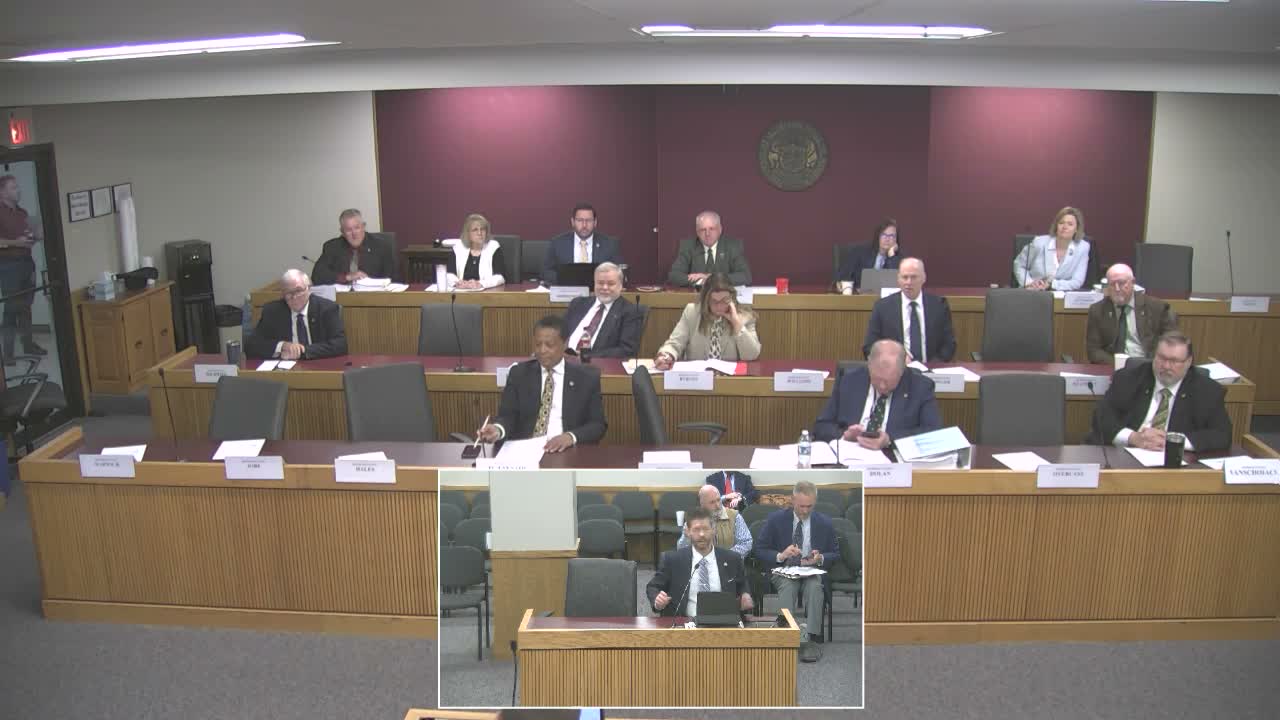
State Senator Ben Brown, sponsor of the Senate substitute for Senate committee substitute for Senate Bills 10 66 and 10 88, told the committee the measures would stop some county assessors from reclassifying single‑family short‑term rental homes as commercial property and imposing a higher tax rate. "This is still a significant financial blow to the owners of these properties," Brown said, arguing Missouri case law and IRS guidance support treating short‑term rentals as residential.
Brown said the bills are intended to provide statewide consistency and cited Moline v. Silver Creek and an IRS reference to residential rental classification (IRS Publication 527) to support the claim that renting a home short term does not automatically transform it into commercial property. He described a compromise limiting the bills’ scope to single‑family homes owned by an individual, partnership or limited liability company and excluding owners with more than 15 short‑term rental properties.
"People deserve fairness and consistency in regard to property classifications in this state," Brown said, and noted versions of the legislation previously passed the House and that similar language had passed other committees unanimously.
Committee members pressed Brown on implementation details. Representative Murphy asked whether the bills would restrict local zoning or licensing; Brown said they would not, describing the measure as neutral on zoning and permitting. Representative Taylor asked how the 15‑property limit would apply and how mixed‑use buildings would be assessed; Brown replied assessors still make classifications and the bill provides a clearer framework that favors residential classification where the use is residential.
Vice Chair Reedy, a former county assessor, supported the bill’s intent but raised a practical concern about a floor amendment that would require an assessor to conduct an in‑person consultation with the owner before reclassifying property. Reedy said that in rural counties, assessors may lack the staff or notice to meet owners in person and asked whether mailed notice could satisfy the requirement. The chair pointed to floor amendment language that says mailings may satisfy the provision; Brown said the in‑person language was added by another senator on the floor and that the committee could consider revising it.
Several witnesses testified. Jim Brown of Dearborn, who described using short‑term rental income to pay for his mother’s care and to keep a multigenerational home in the family, urged support: "This is not a commercial operation. It is not a corporation. It is a home. It's being used in the same way that it always has." Chris Ropey, representing the Missouri Home Vacation Association, also supported the bill, calling it a way to restore consistency and fairness in taxation.
A witness speaking for the Missouri hotel/hospitality trade association opposed the bills, arguing that short‑term rentals can be businesses that collect sales tax and that the 15‑property cap is easily evaded when owners place properties in separate LLCs. The witness offered alternative wording to aggregate ownership by a primary owner to address that concern.
The committee heard no vote on the substitutes during the transcript; the chair thanked members and adjourned the hearing. The committee did not record a formal vote or committee action on either bill in the provided transcript.