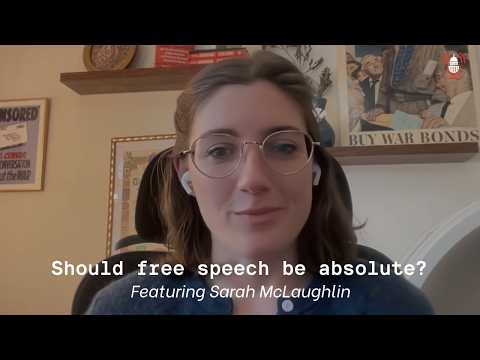
Sarah McLaughlin: U.S., Europe differ on limits to hateful speech and U.S. faces rising domestic threats
Loading...
Summary
On the Transatlantic podcast produced by the Commission on Security and Cooperation in Europe (Helsinki Commission), Sarah McLaughlin of FIRE said European laws that criminalize some hateful speech diverge from U.S. First Amendment protections, and warned of growing U.S. threats to free expression in higher education and online.
Sarah McLaughlin, a senior scholar at the Foundation for Individual Rights and Expression (FIRE), told the Commission on Security and Cooperation in Europe podcast that the United States and many European countries take fundamentally different approaches to hateful and offensive speech.
"Things like incitement to imminent lawless action, true threats" are exceptions to First Amendment protection, McLaughlin said, but she argued the U.S. tradition treats speech rights as innate and narrowly limited by government action. By contrast, she said, "a number of European countries because of what they dealt with in World War II have criminalized Holocaust denial." Those criminalizations reflect different legal and historical choices, she said.
Why it matters: McLaughlin said the divergence affects transatlantic cooperation on online speech policy and public debate. She cautioned that while some U.S. critics abroad are correct in noting differences, critics with questionable domestic records (she cited recent U.S. administration actions) weaken the U.S. case.
McLaughlin also warned about domestic practice she said undermines free speech: administrative subpoenas aimed at identifying anonymous critics, pressure on universities over campus speech, and deportation threats for viewpoint-based expression. "The first amendment is a limit on government power," she said, arguing that government efforts to punish speech now could be used against political opponents later.
She addressed a high-profile exchange in which commentators such as JD Vance criticized European speech rules, saying Vance "is correct on that front" about some European policies but that his own association with domestic illiberal practices undercuts his credibility abroad. "It looks like the doctor needs to heal himself here," she said.
On whether bans reduce hateful conduct, McLaughlin said evidence is mixed and punitive bans can push ideas underground rather than eliminate them. "If you just pretend something isn't there, it doesn't go away," she said, adding that public debate can be a longer-term remedy.
McLaughlin urged caution on proposals that would broadly reshape internet access or anonymity, including age-verification regimes, saying anonymity remains vital for people to criticize governments without risking reprisal.
The episode concluded with McLaughlin directing listeners to FIRE's website, fire.org, for more information and resources.