Senate committee hears proposals to reestablish citizen review panels for children in out‑of‑home care
Loading...
Summary
Sen. Robert Myers’ SB 123 would create state and local citizen review panels to examine case plans for children placed outside the home; supporters argued panels would improve permanency planning and public confidence while OCS said current state panels exist but do not conduct case‑specific reviews.
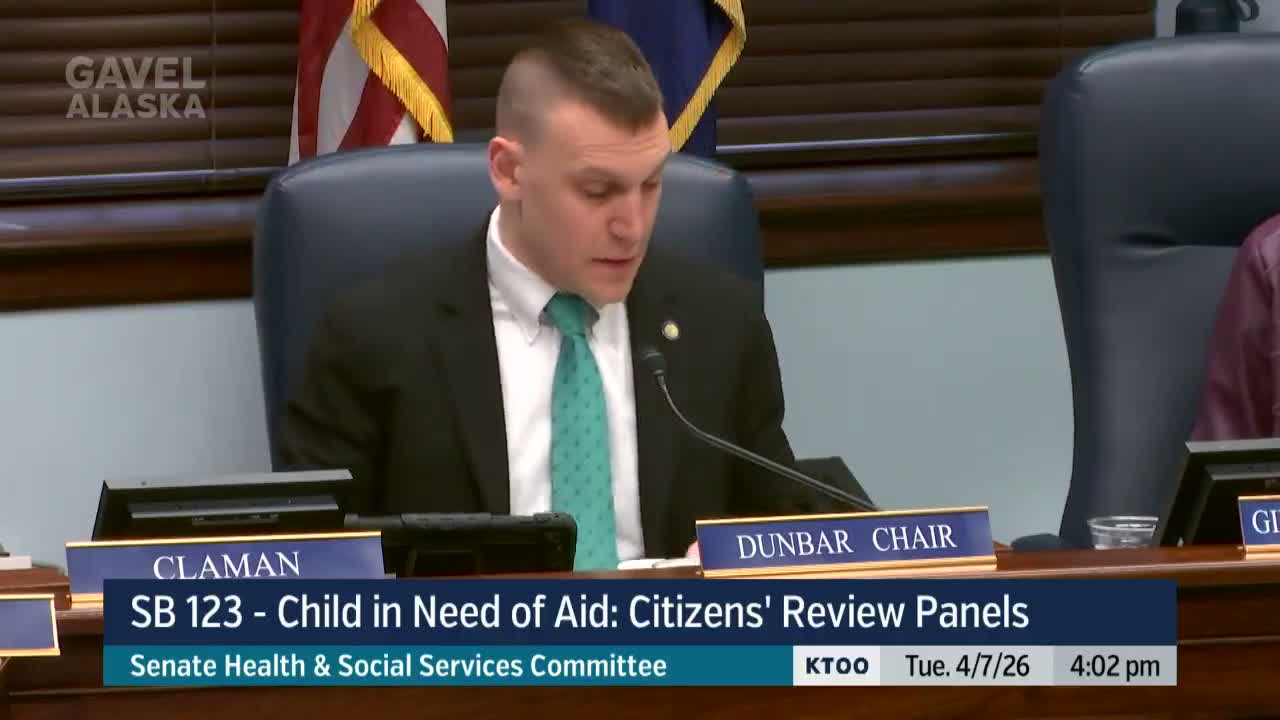
Senate Bill 123 would reestablish a state citizen review panel and create local judicial district panels to review case plans for children placed outside the home, the sponsor told the Senate Health and Social Services Committee at an initial hearing.
Senator Robert Myers, sponsor of SB 123, said the measure is intended to add a layer of public accountability and help families navigate prolonged out‑of‑home placements. "This bill grows out of that history and from the concern that permanency planning should be more than a process on paper," Myers said, adding that panels would be advisory and would not replace courts or the Office of Children’s Services (OCS).
Aaron Rabock, staff to Senator Myers, summarized the bill’s structure: a state panel with oversight duties and annual reporting, local panels with appointment rules and confidentiality protections, meeting procedures and expense rules, civil liability protection for panel members, a statutory repealer of prior citizen review statutes, staggered terms and a sunset date (06/30/2032).
Scott Calder, testifying from Fairbanks, recounted personal experience with the child‑welfare system and urged the committee to consider broader case review authority than currently exists. Calder provided historical reports and suggested panels could supply policymakers with meaningful data and include parents in the review process.
Kim Guay, director of the Office of Children’s Services, told the committee a citizen review panel already exists to meet federal CAPTA obligations but does not conduct case‑specific reviews; she said public hearings are available and encouraged volunteers to join the statewide CRP panel.
Committee members pressed the sponsor for clarifications on the bill’s 60‑day notification language and whether emergency placements would be excluded; Senator Myers said the aim is to focus review on cases with significant time out of the home and to promote clear, expeditious permanency planning.
The committee set SB 123 aside for further consideration after testimony.