Missouri House adopts cross-reporting bill to link animal, child and elder-abuse investigations
Loading...
Summary
Lawmakers adopted a committee substitute for HB 22-92 to require cross-reporting among agencies when companion-animal, child or elder abuse may be occurring; the measure includes training provisions, agricultural exemptions and amendments to clarify enforcement and investigative roles.
The Missouri House on April 1 adopted a committee substitute for House Bill 22-92 requiring cross-reporting when companion-animal abuse, child abuse or elder abuse may be present, aiming to improve detection and response across jurisdictions.
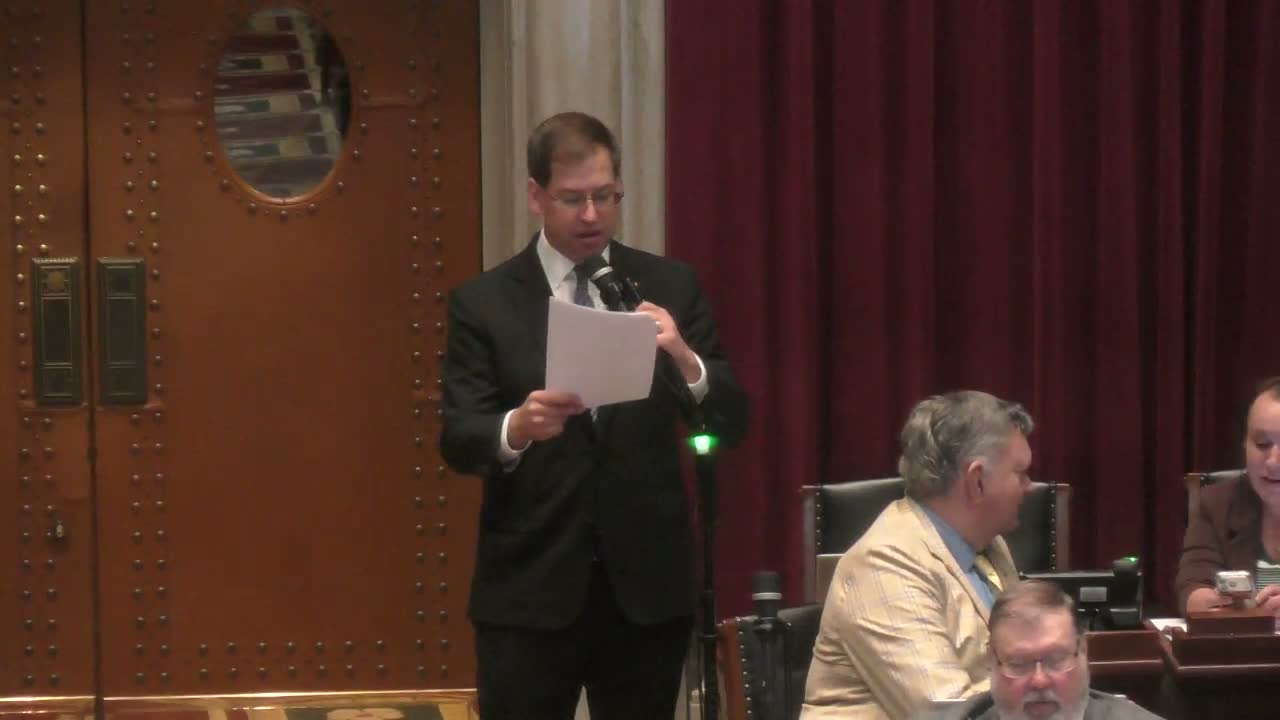
The sponsor, the lady from St. Louis County, opened with statistics cited on the floor linking companion-animal abuse and domestic violence and said the bill simply asks agencies already engaged in reporting to train and work together rather than creating a new department. "We're utilizing the resources we have," she said, noting that 17 states have cross-reporting statutes in place.
Amendments discussed and adopted on the floor clarified penalties, added a provision to criminalize deliberate starvation of an animal in some circumstances and authorized investigators from the Department of Health and Senior Services' Office of Special Investigations (OSI) to assist local law enforcement in elder-abuse investigations when post-certified investigators are available. Supporters said the amendments strengthen enforcement while protecting agricultural operations by excluding production agriculture from the companion-animal definition.
Members asked about who would conduct training and who would pay for it; the sponsor said the state would fund training and that consultations would include state veterinary experts, nonprofit animal-welfare organizations and relevant state agencies. Some representatives urged using the state veterinarian or the University of Missouri College of Veterinary Medicine for professional training rather than relying exclusively on advocacy groups.
The committee substitute was adopted on the House floor and later perfected and printed by voice vote.
What happens next: The adopted substitute will proceed through remaining legislative steps including any conference committee or further committee review required before final enactment or referral to the Senate.