CRA board approves 5-month extension for Sankofa's Glenwood Town Center amid stormwater concerns
Loading...
Summary
The Panama City CRA board voted unanimously April 7 to grant the Sankofa Group a five-month extension to its due-diligence period for the Glenwood Town Center after engineering work identified stormwater constraints and a possible $890,000'1.8 million remediation range tied to FDOT requirements.
The Panama City Community Redevelopment Agency board voted unanimously April 7 to extend by five months the Sankofa Group's due-diligence period for the proposed Glenwood Town Center at MLK Boulevard and 15th Street.
Staff said the extension will allow engineers and the developer to resolve stormwater design issues that emerged during additional analyses. Staff's briefing noted the site's alignment along state-controlled highways requires meeting Florida Department of Transportation stormwater standards; preliminary cost estimates for solutions ranged from approximately $890,000 to $1.8 million.
Pedro Gassant, representing the Sankofa Group, told the board the new modeling changed the site plan and that his team sought time to refine designs while keeping to commitments made in the original agreement. "We will continue to abide by the commitment that we made, which will ensure that you have at least 20% of those units affordable that we're providing on-site," Gassant said, adding he did not intend to ask the city to pay for stormwater work at this time.
City engineer Stacy Rausch said she and staff had engaged FDOT to determine whether extra capacity in FDOT ponds could be shared. Rausch told the board FDOT replied it did not have capacity for the full 155,000 cubic feet the development would require but might be able to offer partial capacity; further modeling and permitting would be needed to confirm options.
Russ Rodney, project manager for Anchor Engineering, described constraints that raised costs: a higher groundwater table than expected and a prevalence of wet ponds near the site, which limits the feasibility of lower-cost surface treatment and increases the likelihood of more expensive underground storage or land acquisition.
Board members debated whether the developer should have discovered the FDOT constraints earlier and whether the city should demand financial assurances for additional time. One member suggested the buyer could "buy time" (for example, paying a monthly fee) since the developer was out of the original due-diligence period; others said granting time may preserve momentum toward securing a neighborhood grocery store.
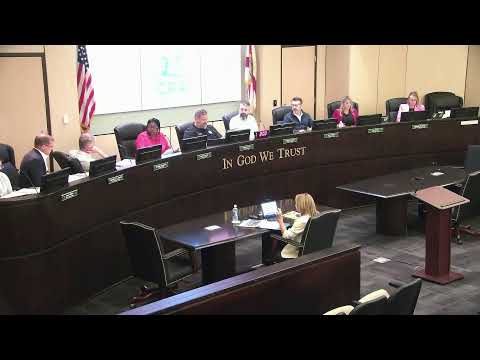
After deliberation, the board approved staff's recommendation to extend the due-diligence period by five months to allow additional engineering evaluation and community engagement. The vote was recorded by roll call: five in favor, none opposed.
Next steps: staff and the developer will continue engineering work and FDOT coordination; the board said it expects to reassess progress at the end of the extension period.