Get Full Government Meeting Transcripts, Videos, & Alerts Forever!
Get email alerts on the Instruction topic
No spam. Unsubscribe anytime.
Instructional coach and teacher model —everyone does everything' engagement strategies for Jamestown board
Summary
At a board-education session, instructional coach Stephanie Wall and teacher Adora Pringle demonstrated turn-and-talk, choral reading, paraphrase passports and precision partnering as ways to increase middle-school student participation and belonging.
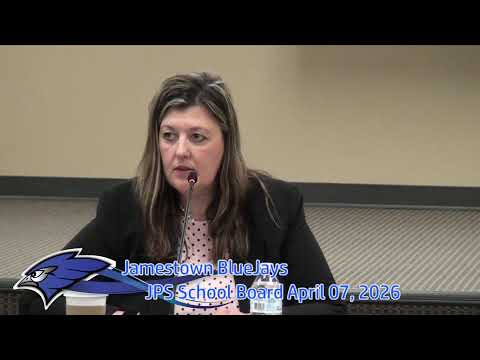
Stephanie Wall, instructional coach, and Adora Pringle, a middle-school social studies teacher who also teaches one section of Spanish, led the board through a hands-on demonstration of classroom-engagement strategies during the April 7 meeting.
Wall described the programmatic principle "everyone does everything," explained learning targets and led the board in a short turn-and-talk exercise and a choral read. She said teachers intentionally set visible expectations for what engagement looks and sounds like so students can meet those expectations; example classroom prompts included clear voice-level guidance and explicit cues for participation.
The presenters modeled a paraphrase-passport exercise (students paraphrase a partner's comment before sharing) and discussed "precision partnering," a tactic in which teachers pair students strategically based on needs or strengths (for example, pairing an EL student with a peer who can use Google Translate or pairing readers at different levels to scaffold discussion). Wall said these methods can be adapted for English learners and special-education students through visuals, iPad supports and more explicit modeling.
Board members described the session as highly engaging: "It was very engaging for us board members as well," Jamie said, and Aaron asked how the strategies were adapted for EL and special-needs students. The presentation concluded with a reflective exit activity the presenters use with students to assess participation and learning.
The board expressed appreciation for the demonstration and noted it gave members a practical view into everyday classroom routines and expectations.