Get Full Government Meeting Transcripts, Videos, & Alerts Forever!
Get email alerts on the Energy Infrastructure topic
No spam. Unsubscribe anytime.
Residents press Port Canaveral commissioners to reject proposed LNG plant at Barge Canal after hearing from counsel and proposers
Summary
Port Canaveral heard a lengthy presentation and public comment on an unsolicited proposal by Chesapeake Utilities and Berkshire Hathaway Energy to develop an LNG liquefaction facility on about 50 acres of port land at the Barge Canal. Legal counsel urged deliberation, the proposer scheduled a Feb. 18 community meeting, and scores of residents urged rejection over safety, health and evacuation concerns.
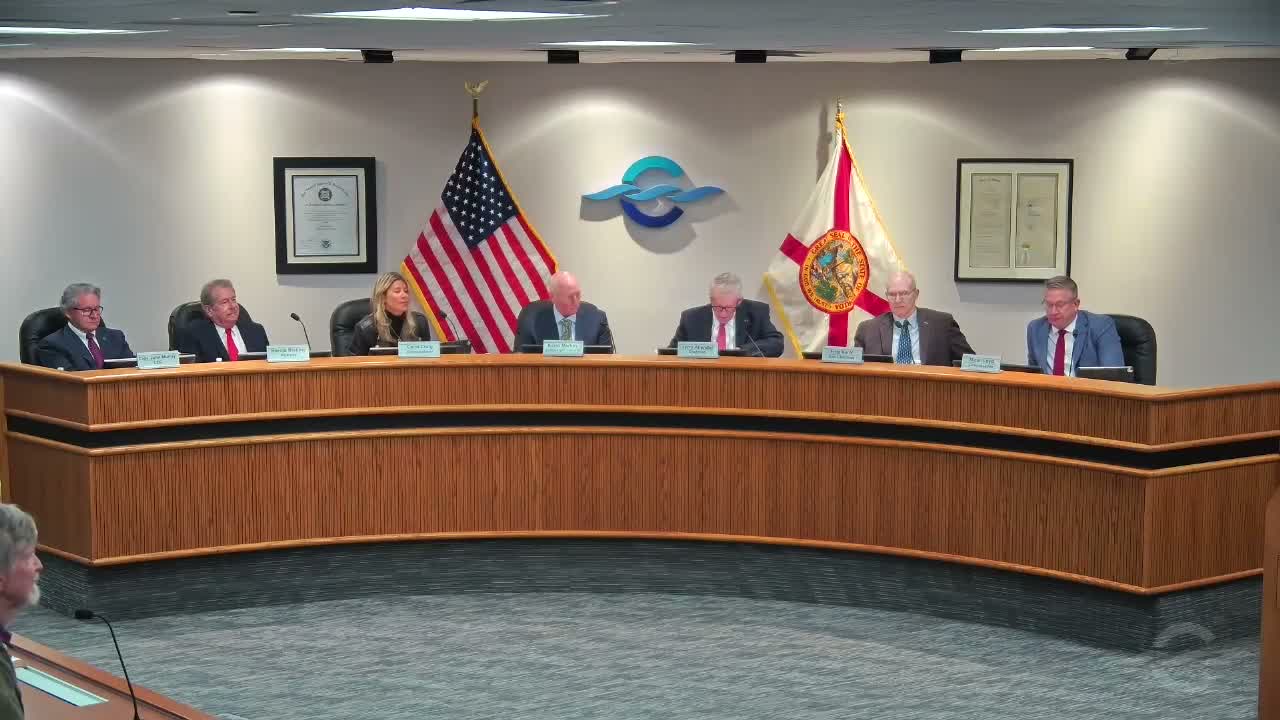
Port Canaveral commissioners spent more than two hours on Jan. 28 hearing a presentation and an extended public‑comment period about a proposal to acquire roughly 50 acres on the south side of the Barge Canal for an LNG liquefaction facility.
Gabe (staff) introduced the proposers — Chesapeake Utilities Corporation and Berkshire Hathaway Energy Group — and said the proposing team has launched a website (www.canaverallng.com) and will hold a public "listen and learn" open house on Feb. 18, 2026. Staff also said the port is taking written public input and set a contact channel for comments. (The port’s published contact and project pages were displayed to the board.)
Mark Dunbar, outside counsel for the authority, told the five commissioners that the board is acting as a fiduciary for port assets and that Florida law provides no single statutory checklist for unsolicited offers. "You have an unsolicited proposal in front of you," Dunbar said, and urged the board to answer three core questions before any sale or lease: whether the land is strategic to the port’s long‑term needs; whether the proposed LNG use is strategic for port tenants and the community; and, if the property is surplus, whether an open competitive process would produce a better outcome. Dunbar recommended transparent discussion "in the sunshine" and said the commission can, and often should, take time to solicit alternatives.
Representatives for the proposing team emphasized community engagement and safety. Victoria Priceling of Chesapeake Utilities said LNG is "non‑toxic, non‑corrosive and nonexplosive in its liquid state," described LNG as a refrigerant process and urged residents to attend the proposer's Feb. 18 meeting and submit comments.
Many residents urged the board to reject the site. Speakers repeatedly cited the proposed site's proximity to neighborhoods, schools and a planned hospital, and raised concerns about: potential air emissions (VOC, particulate matter, benzene), water and lagoon risks, and evacuation constraints if State Road 528 became impassible. Multiple commenters cited past U.S. incidents at LNG facilities and warned that vapor clouds or fireballs could reach neighborhoods. Jonathan Shrift, a certified planner, told the commission that best‑practice safe‑distance guidance for large LNG facilities is measured in miles, and said the proposed site lies well within those buffers for homes and wildlife habitat.
Others asked the commission why a hazard analysis or safety assessment would not be required as a condition before a land sale; Joel McPherson called selling before completing a hazard analysis "a shift of risk onto the surrounding community." Residents also questioned whether projected truck traffic and local evacuation capacity had been fully evaluated. Several commenters urged remote siting or competitive bidding instead of negotiating a sale for this specific use and location.
Port staff and counsel answered procedural questions: Dunbar said permitting and environmental reviews are likely and that some issues — for example, the county comprehensive plan — are a county responsibility rather than within the port’s legal authority. He also noted the political realities of administration transitions and advised focusing on the board’s fiduciary duties.
No formal vote or disposition of the proposal occurred. Commissioners asked staff to continue analysis and hear public input; the proposers will host the Feb. 18 open house to collect questions and input, and the port has made project information available online. The record at the meeting shows a continuing public process rather than an immediate decision.
What’s next: the proposers’ open house on Feb. 18, 2026, and continued staff briefings to the commission. The proposers’ information site and the port’s comment channels remain the primary public avenues for input.