Senate rejects proposal to move deer registration online after lawmakers warn of revenue, sampling and small-business impacts
Loading...
Summary
Senators debated a proposal to shift deer registrations online; critics said it would cost about $256,000 in annual revenue and bias biological sampling while harming rural tagging-station businesses. The majority report failed on a roll-call vote, 4–26.
The Maine Senate declined to advance a bill that would have changed deer registration procedures to an online system, after lawmakers raised concerns about lost revenue, sampling bias for wildlife data, and negative effects on local tagging-station businesses.
Senator Baldacci of Penobscot told colleagues he would vote against the majority motion. He said committee testimony showed the bill would lead to an estimated $256,000 per year in lost revenue and that moving to online, self-registration risks biasing harvest-sample data used by wildlife biologists. "Experience in other states suggests online self-registration may bias samples towards larger deer," Baldacci said, adding those biases could make biological monitoring "costlier and less efficient."
Senator Garen and Senator Timberlake argued the change would harm small-town tagging stations and the rural traditions around harvest tagging. "Tagging stations to local small towns in rural Maine are a pretty important place where people come after they shoot their deer," Timberlake said, stressing the role those stations play in community fundraising and local commerce. Garen warned that hunters would not submit to biological sampling if convenience and tradition were removed.
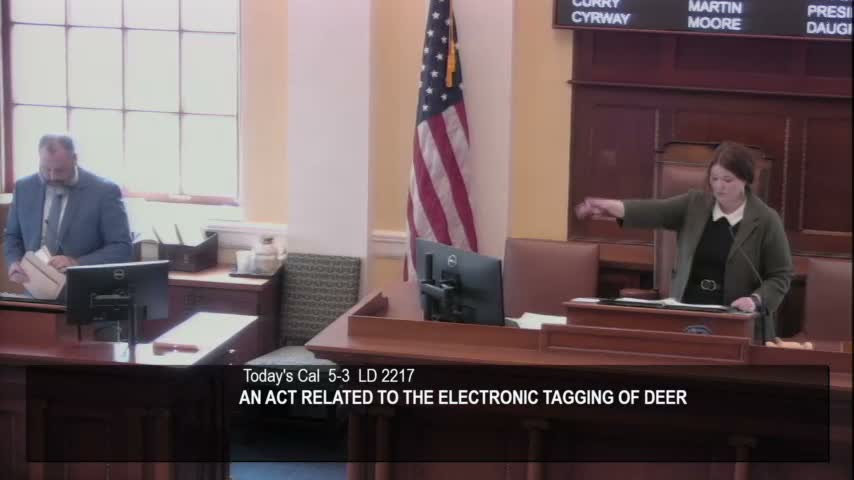
After debate, the pending question on acceptance of the majority-ought-to-pass report failed by roll call: 4 senators in the affirmative and 26 in the negative.
Why it matters: Lawmakers framed the vote as weighing modernization and convenience against the integrity of biological data, revenues tied to licensing, and the economic and cultural role of tagging stations in rural communities. Supporters of the bill argued modernization could streamline processes; opponents warned of unintended consequences for wildlife management and small businesses.
Next steps: The majority report failed on the floor; any future changes to registration procedures would require new or revised legislation and further committee work before another floor vote.