Get Full Government Meeting Transcripts, Videos, & Alerts Forever!
Get email alerts on the Cannabis Policy topic
No spam. Unsubscribe anytime.
Hours of testimony as committee hears sweeping hemp‑regulation bill; no vote taken
Summary
Senate Bill 250, which would codify a new federal hemp definition and tighten controls on intoxicating hemp‑derived products, drew hours of divided testimony. Law‑enforcement and prosecutors largely favored codifying the federal definition; small businesses, farmers and retailers warned the bill would eliminate most current products and harm jobs. The committee did not vote and will revisit the measure next week.
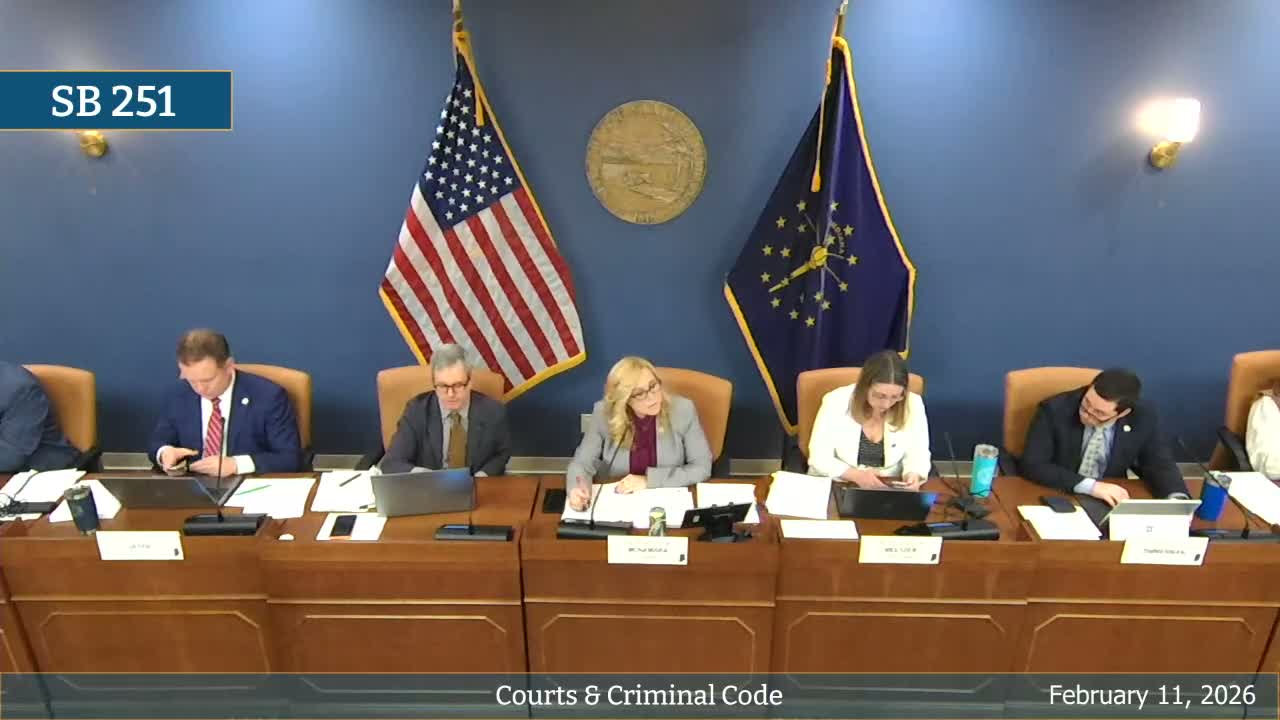
The committee held an extended hearing on Senate Bill 250, a comprehensive bill to align state law with a new federal definition of hemp and to impose licensing, packaging and potency limits on hemp‑derived products. Members heard dozens of witnesses representing law enforcement, prosecutors, farmers, processors, retailers and industry trade groups.
Sponsor Senator Freeman described the bill as a public‑health and regulatory response to a marketplace that has outpaced existing law. "It closes the farm bill loophole, brings us into compliance with the federal definition on hemp," he said, and argued the bill creates a licensing scheme and age limits to protect consumers.
Law‑enforcement groups, the Indiana Sheriffs Association and the Indiana Association of Chiefs of Police, testified in support, saying clearer statutory definitions would help enforcement and protect youth. "We really want clarity on what is lawful and what is not because it's really hard to enforce laws that you don't understand," Chief Kyle Pruett said.
Industry witnesses and small businesses offered sharply different testimony. Meredith Barnett, a Hancock County hemp farmer, said the draft would eliminate nearly all compliant products and impose high licensing fees that would devastate small farms and processors. "SB 250 does not ban hemp outright, but it layers requirements that would eliminate compliant farmers and manufacturers by design," Barnett said. Rob Theodoro, a Lafayette retailer, warned that a strict THC weight cap would wipe out most products and force businesses to relocate.
Trade groups urged a regulatory approach that preserves low‑dose hemp products and implements testing, labeling and retail controls; some industry witnesses supported Representative Bartels' amendment that would regulate products under a liquor‑style licensing model. Prosecutors and the Attorney General's office argued that codifying the federal definition is necessary to close a loophole and to avoid the unintended legalization of intoxicating THC products without a regulated framework.
The chair said the committee would not vote on SB 250 that day and would revisit the bill next week; members and stakeholders agreed to continue negotiating amendments.
Next steps: No vote was taken. Sponsors and opponents plan to continue working on amendments before the bill returns to committee.