Lifetime Citizen Portal Access — AI Briefings, Alerts & Unlimited Follows
Committee advances doxing bill with drone and railroad clarifications
Loading...
Summary
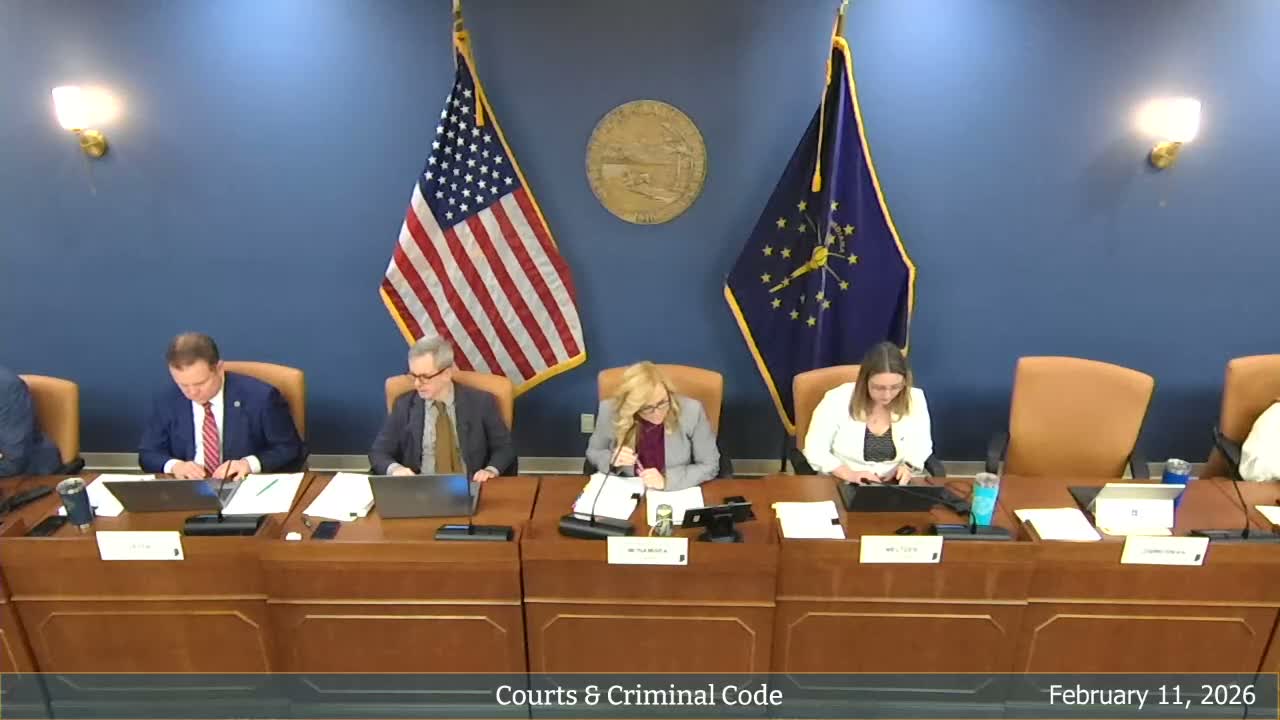
The House Courts and Criminal Code Committee moved Senate Bill 140 as amended after members added drone-related language and narrowed the definition of personal information for certain railroad crew; the measure passed by unanimous recorded consent and a subsequent roll call.
The committee approved amendments to Senate Bill 140, a measure addressing doxing and related intimidation offenses, and advanced the amended bill toward a floor vote.
Representative Zimmerman offered Amendment 3 to import language addressing unmanned aerial vehicle conduct into the remote aerial harassment provision, making it an offense to fly a drone into a structure or to disperse a substance from a drone without the other person's consent. "This adds some language from Representative Culp's bill concerning the use of drones," Zimmerman said, describing the change as a clarification rather than a new policy.
Representative Gore presented Amendment 5 to limit what counts as "personal information" when victims are publicized after a railroad fatality, saying crew members who appear in police reports have faced threats. Gore said the amendment seeks to avoid overly broad redactions that would obscure useful investigatory facts for federal inquiries.
Committee members discussed concerns about definitions and scope — including whether "railroad crew" might unintentionally sweep in non‑crew executives — and the chair agreed to a technical chair's amendment removing a separate clause containing physical descriptors to keep the amendment germane for second reading.
Members took the amendments by consent and then voted to move the bill as amended. The roll call read by the clerk showed a unanimous recorded tally for the motion; the chair held the vote open for a member who was temporarily absent.
Next steps: The committee advanced the amended SB 140 for further consideration; the chair said the amendment‑and‑second‑reading process would allow any remaining technical cleanups if members identify drafting problems on later readings.