Get Full Government Meeting Transcripts, Videos, & Alerts Forever!
Get email alerts on the Charter Schools topic
No spam. Unsubscribe anytime.
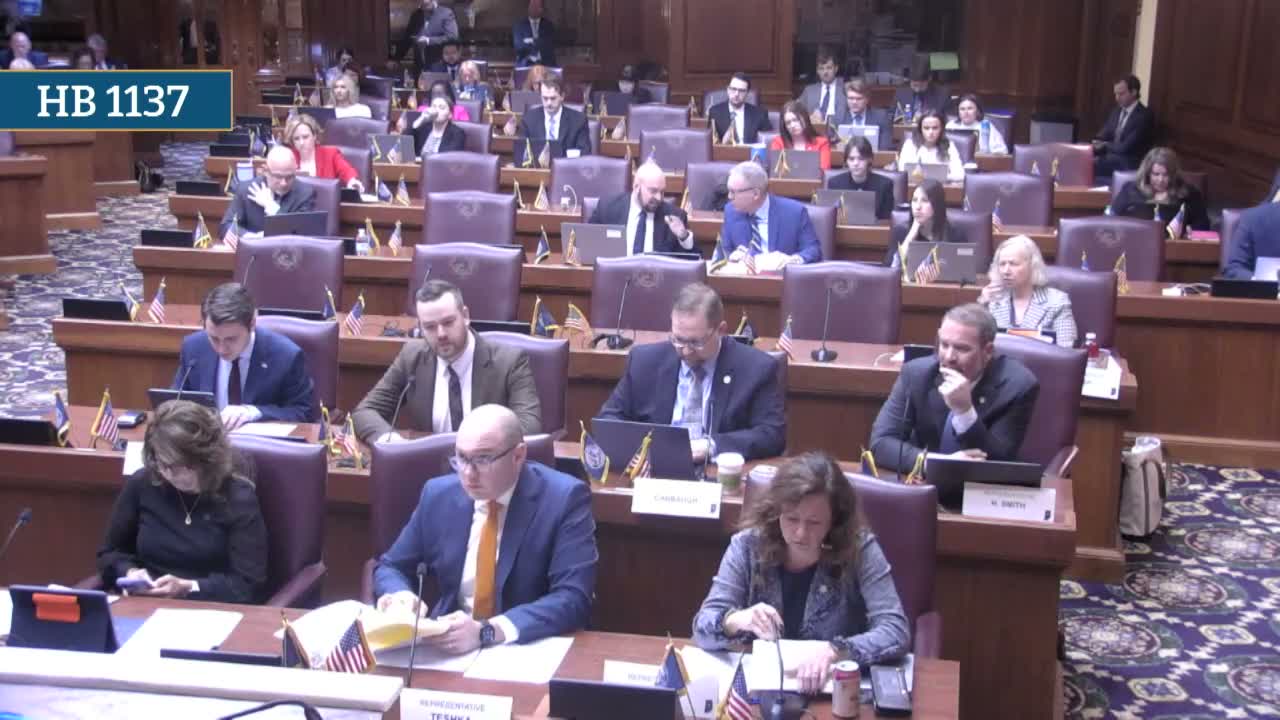
Committee advances HB 11‑76 after heated debate over charter expansion and scholarship rules; amendment removing SGO income cap passes
Summary
HB 11‑76, covering innovation network agreements, voluntary school conversions, math notification timelines and changes to scholarship/grant administration, passed the committee 9–2 after debate and a contentious amendment (No. 4) expanding SGO eligibility passed 9–2; teachers’ groups warned of fiscal and oversight risks.
Representative Teschka presented House Bill 11‑76 as a set of technical updates and options to encourage regional charter collaboration, create a voluntary conversion pathway for districts to convert schools to charter status, require earlier parental notification for math interventions, and change administration of career (CSA) and education savings accounts (ESA) to retain unspent funds within the programs.
The sponsor said the bill would: allow a charter to enter innovation network agreements with more than one district to support micro‑school models and replication; enable voluntary conversion earlier than the current failure‑triggered process; require parent notification within 15 days for students identified as falling behind in mathematics; and make CSA/ESA funds non‑reverting to expand scholarship access.
Testimony divided sharply. The Indiana State Teachers Association (John O'Neil) and the American Federation of Teachers (Joel Hand) warned the committee the package could erode local control, create fiscal inequities with traditional public schools, and add administrative duplication. "Taken together, it signals an expansion of charter and charter‑like governance models at the expense of traditional public schools, local control, and fiscal transparency," O'Neil said.
Advocates for choice and charter networks argued the measure expands collaboration and local flexibility. The Institute for Quality Education and the Indiana Charter Innovation Center both supported the bill’s innovation network changes and the proposal to move toward earlier, preventative interventions in math instruction.
A contentious amendment (No. 4) to relax income limits for Scholarship Granting Organizations (SGOs) was initially taken by consent but later pulled, debated and then passed by roll call 9–2. That vote prompted several speakers to register opposition and to say they had not understood the full consequences when consent was first offered.
Representative Teschka said the bill trusts local school boards to make voluntary choices and that the measures are intended to remove technical barriers and improve access to career and scholarship programs. After sponsor remarks and debate, the committee voted to send HB 11‑76 from committee as amended with a do‑pass recommendation (vote recorded as 9–2). No enactment date was specified in committee testimony.
What comes next: The bill advanced out of the House Education Committee with amendments. Opponents said they would continue to seek changes in subsequent steps to address accountability, fiscal transparency and equitable treatment of traditional public schools.