Get Full Government Meeting Transcripts, Videos, & Alerts Forever!
Get email alerts on the School Nutrition topic
No spam. Unsubscribe anytime.
Rep. McGuire pushes bill to remove select additives from school meals, adds menu‑transparency requirement
Summary
Rep. McGuire and public‑health advocates urged passage of HB 11‑37, which would ban a short list of chemical additives from school meals, require online ingredient listings, and phase in changes for the 2728 school year; industry witnesses warned of unintended impacts on preserved protein products.
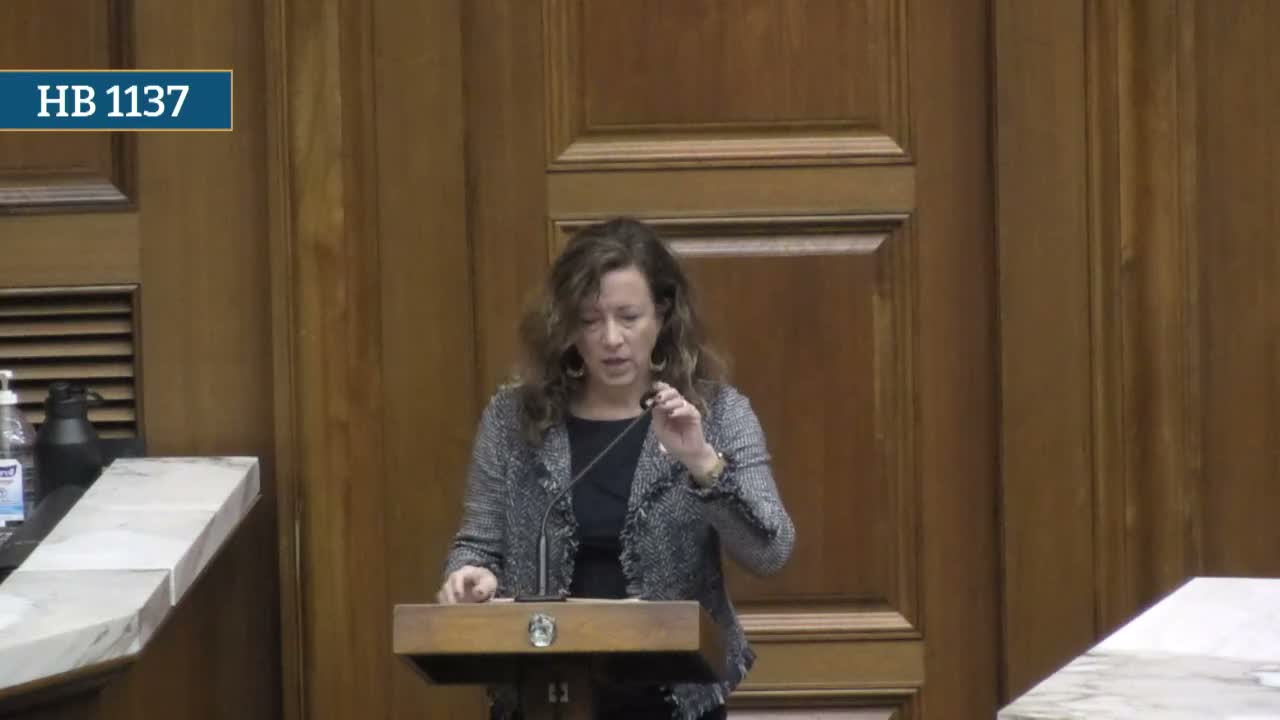
Representative McGuire introduced House Bill 11‑37 on behalf of students’ health, arguing that a rising burden of childhood chronic disease is driven in part by ultra‑processed foods in school meals. The bill would prohibit a targeted list of up to 13 additives deemed to have no nutritional benefit and require schools to post breakfast and lunch menus with links to ingredient lists online; changes would not take effect until the 2728 school year, she said.
The bill’s sponsor framed the measure as a measured, prevention‑focused step rather than an outright ban on school lunches. "This bill does not ban school lunches," Representative McGuire said, noting the legislation focuses on removing “the most concerning chemical additives” and gives districts time to adjust.
Scott Faber, policy director at the Environmental Working Group, testified in support and summarized scientific and regulatory concerns, saying FDA review of many synthetic dyes and other additives dates back decades and that some evidence links these chemicals to behavioral and developmental effects. "Let's do what the scientists say is best for our kids and end the use of these particular toxic chemicals in food offered at school," Faber said.
Department of Health representatives told the committee they are conducting a statewide evaluation of diets, additives and ultra‑processed foods and supported the bill’s transparency provision. Rachel Sportwood, the department’s chief of policy for health and family services, told the panel the department welcomed menu‑posting language because it would help public health evaluation and align with the administration's priorities.
Industry witnesses urged a more nuanced approach. Josh Trani of the Indiana Pork Producers Association opposed the bill in its current form, arguing that a static list of prohibited additives could unintentionally restrict nutrient‑dense foods preserved for safety and shelf life, such as processed pork products that rely on BHT for preservation. "Any approach that doesn't take into account the type of foods being processed and the reasons for that processing isn't considering the full picture," Trani said.
Supporters replied that alternatives exist and cited examples of major retailers and other states that have removed certain additives. Cindy Long of the Indiana Association of School Principals said the bill’s extended implementation timeline and the requirement that menus and ingredient lists be posted online were practical and would allow schools and vendors to adapt without service disruption.
The committee did not take a final roll‑call vote on HB 11‑37 during this hearing. Sponsors said they expected to prepare amendments during the week to refine definitions and implementation details, including replacing any statutory definition of "ultra‑processed" with a specific list of prohibited ingredients to avoid conflicts with future federal definitions.
What comes next: The sponsor said she would circulate amendments to specify the prohibited ingredients and that the Department of Health would work with stakeholders on implementation and data collection. No effective date beyond the stated 2728 school‑year phase‑in was finalized in committee.