Get Full Government Meeting Transcripts, Videos, & Alerts Forever!
Get email alerts on the Education Aba Transition topic
No spam. Unsubscribe anytime.
Panel advances bill to let ABA providers support students during school transition
Summary
The House Education Committee approved HB 1102 (10-0), which creates a 30—90-day transitional access period for board-certified behavior analysts or registered behavior technicians to work with students entering school from ABA centers, with criminal-history checks and no new cost to districts.
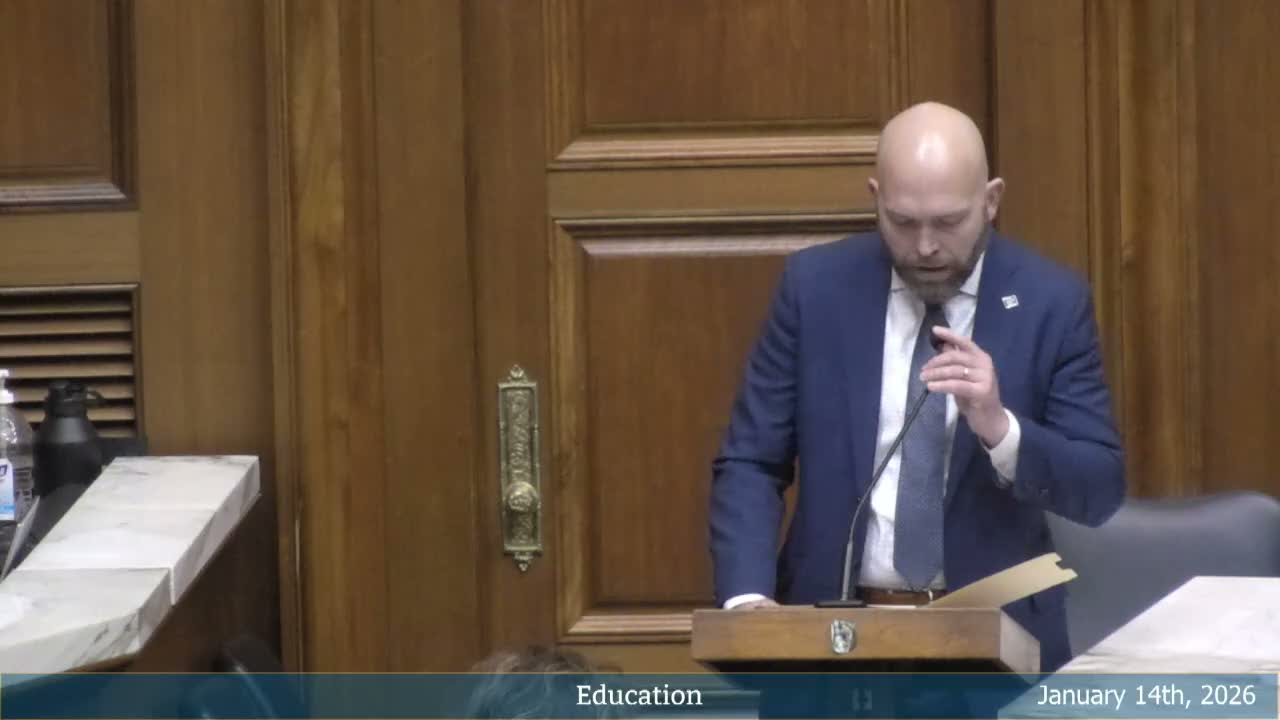
Representative Green urged the committee to support House Bill 1102, saying the measure implements a recommendation from the governor's Applied Behavior Analysis working group to smooth transitions for students with autism who move from center-based ABA therapy into K—12 classrooms. "This is a practical measure that reflects our shared values," Representative Green said during his presentation.
Supporters told the committee that abrupt disruptions to ABA services at school entry can cause regression and behavioral crises. Rachel Deaton, director of training and legislation at the Autism Society of Indiana, said HB 1102 allows schools, families and qualified ABA professionals to collaborate at parents' request and aligns services with a student's IEP or 504 plan. "This bill provides a thoughtful balanced approach," Deaton said.
Other witnesses offered similar testimony: Jessica Hartman, a board-certified behavior analyst and former special-education teacher, said transitions are "one of the most fragile and high-stakes moments" in a child's education, and that the bill would preserve crucial clinical data and continuity of care. Tom Krishan of The Arc of Indiana emphasized that the bill is narrowly focused on transitional access, requires expanded criminal-history and child-protection checks for providers, and preserves school authority over educational programming.
Representative Green said the measure sets a minimum transitional access period of 30 days and a maximum of 90 days unless a school or clinician agrees otherwise. Providers must supply an expanded criminal-history check at their expense; the bill also provides civil immunity for schools that act in good faith under the law. Representative Green said the services are clinical in nature and are expected to be billed to family insurers or other payers, not to school budgets.
After testimony and questions, the committee moved and passed the bill 10-0 on a roll call vote. The Chair said the bill will proceed according to the committee's schedule.