Get Full Government Meeting Transcripts, Videos, & Alerts Forever!
Get email alerts on the Higher Education Governance topic
No spam. Unsubscribe anytime.
Panel approves bill to give Ivy Tech regional boards more data and role in campus plans, 7–3
Summary
The Education Committee approved HB 1408 (7–3), which would require campus-level strategic plans, regular performance dashboards, and expanded regional-board roles while preserving state board authority. Ivy Tech officials testified the amendment largely codifies existing practice.
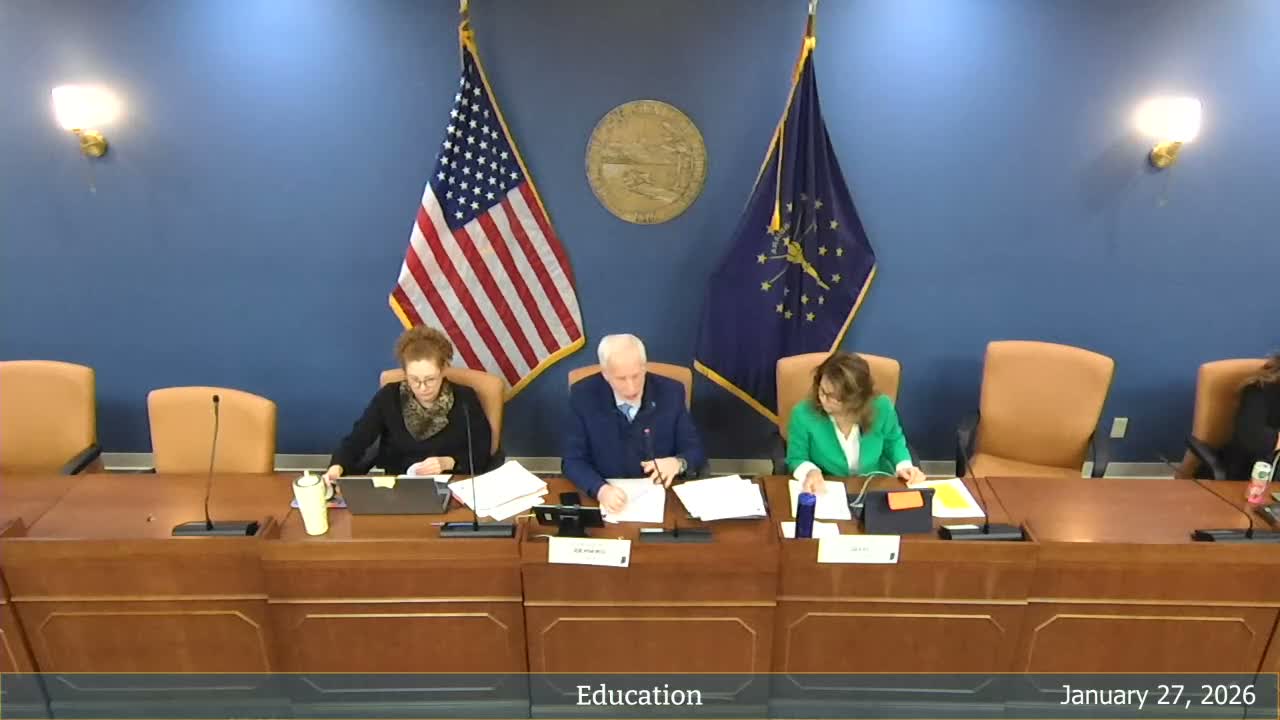
The House Committee on Education voted to pass HB 1408 as amended on a recorded vote of 7–3 after testimony from college and workforce leaders.
Proponents, including Jason Cloth (Golden Mean Advisors) and Aaron Williams (state and campus board trustee), told the committee the bill is intended to strengthen campus-level strategic planning and data transparency at Ivy Tech, Indiana’s statewide community college system. Cloth said the proposal would establish campus strategic plans with measurable goals for enrollment, completion, job placement and wages and provide regional boards with performance dashboards and participation in chancellor searches.
"This bill gives regional boards the information, authority, and accountability structures they need to drive campus performance, while preserving everything that makes the statewide system work so well," Jason Cloth told the committee.
Ivy Tech officials told the panel the amendment largely codifies existing practice and preserves the state board and president's ultimate authority. An Ivy Tech representative said the college awards nearly half of the state's postsecondary credentials, emphasized recent gains in completions, and cited affordability and state support (including a figure that 87% of graduates leave without debt).
A committee member spoke against the bill on philosophical grounds, arguing state statute is an inappropriate mechanism to lock in institutional practices. "This is another example of where this body ... is trying to run our higher education institutions," one representative said while explaining a 'no' vote.
The committee conducted a roll call and recorded a 7–3 vote in favor of passage as amended. With the vote the bill moves forward in the legislative process.