Get Full Government Meeting Transcripts, Videos, & Alerts Forever!
Get email alerts on the Religion In Schools topic
No spam. Unsubscribe anytime.
Committee advances bill allowing Ten Commandments to be kept in school libraries after amendment
Summary
After amendment, the House Committee on Education approved HB 1086 (8–3), which adds the Ten Commandments to a statutory list of 'protected writings' and permits schools to post copies while prohibiting teachers from reading the Ten Commandments aloud to students. The measure drew sustained testimony from civil liberties groups, faith leaders and educators.
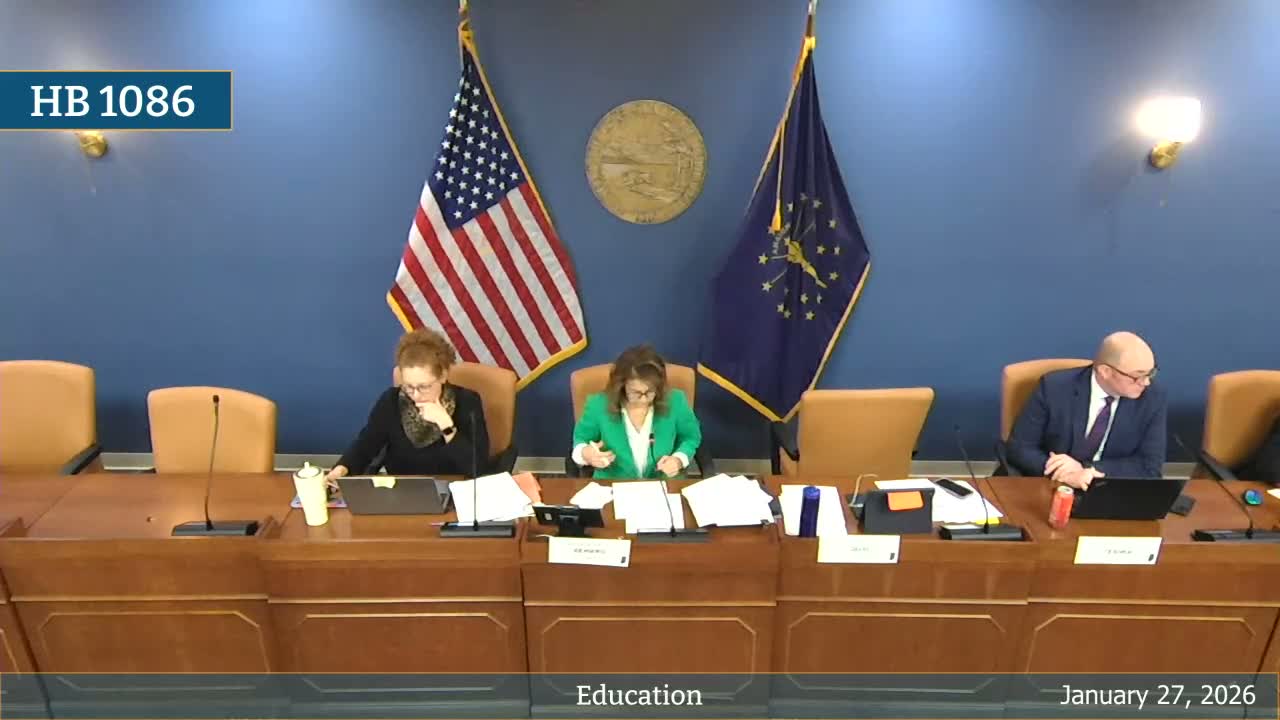
The House Committee on Education voted to pass House Bill 1086 as amended, moving a measure that would add the Ten Commandments to a statutory list of "protected writings" in the Indiana Education Code.
The amendment adopted by the committee narrows the original proposal: it removes a state-level mandate to display the text and prohibits principals or teachers from reading the Ten Commandments aloud when students are present, while allowing a copy to be maintained in a school library and permitting students to reference the text in classwork.
Supporters described the change as modest and respectful of local control. A proponent and religious advocates argued the Ten Commandments reflect longstanding moral and historical traditions. "The Ten Commandments have been around for thousands and thousands of years," a representative of the Indiana Family Institute said in testimony, framing the proposal as support for civic values.
Opponents, including civil-rights and interfaith groups, urged the committee to reject the bill. "Posting the Ten Commandments in classrooms encourages students to read, reflect upon, and potentially obey them," Samantha Bresnahan of the ACLU of Indiana told the panel, citing Stone v. Graham and arguing that classroom displays risk state endorsement of religion.
Academic and faith leaders also raised practical and pedagogical concerns. Rev. Dr. Tim McNinch, an Old Testament professor, warned the committee that the bill does not specify which version or translation of the Ten Commandments would be authorized and cautioned that mere posting without interpretation turns sacred texts into a symbolic endorsement rather than an educational tool.
The committee heard personal testimony both for and against the measure. Zachary Parrish of the Secular Education Association argued opponents would likely see the amendment as a vehicle for establishing a test case in court, while Yaqub Saada of the Indian Muslim Advocacy Network presented survey findings describing bias and discomfort experienced by Muslim students and warned the change could deepen those harms.
In the recorded vote, the committee approved the bill, 8–3; several members explained their choices on the record. Committee discussion and the adopted amendment left discretion to local school leaders on posting while explicitly barring teachers from reading the Ten Commandments aloud in front of students.
The committee’s action sends the amended bill to the next stage of legislative consideration. The measure’s supporters called the change a compromise; its opponents signaled potential legal challenges and urged lawmakers to pursue value-based education through curriculum and teaching rather than statutory displays.
The committee adjourned after taking additional, separate consent items later in the session.