Get Full Government Meeting Transcripts, Videos, & Alerts Forever!
House committee hears sharply divided testimony on bill to create Indianapolis Public Education Corporation
Summary
House Bill 1423 would create an appointed Indianapolis Public Education Corporation to manage transportation, facilities and a unified accountability system inside IPS boundaries. Supporters said it would expand coordinated transportation and operational efficiency; opponents warned it would strip locally elected power, concentrate tax authority and leave special‑education funding and bondholder issues unresolved.
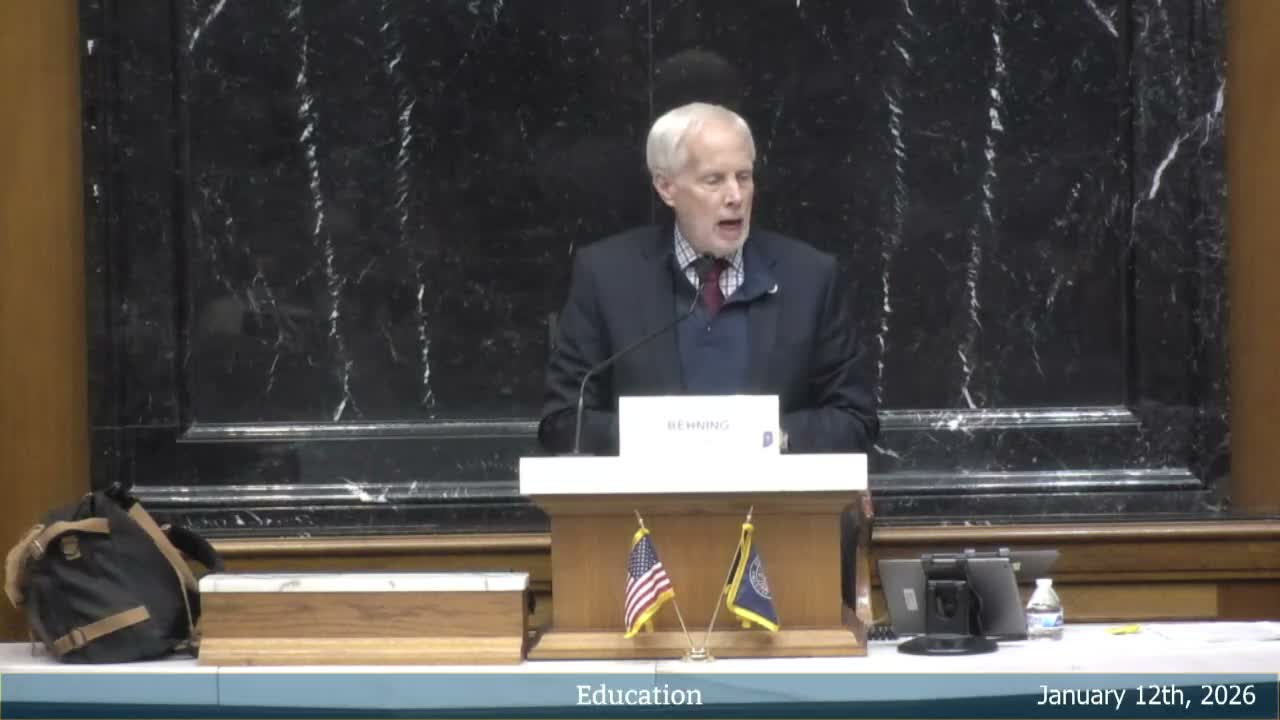
House Education Committee members on Monday heard three hours of testimony on House Bill 1423, a follow‑up to House Enrolled Act 1515 that would establish an Indianapolis Public Education Corporation to run transportation, facilities and a single performance framework for all public schools within the IPS geographic boundary. Committee members and dozens of public witnesses described the bill as an attempt to resolve fragmented services for district and charter schools, and as a risky centralization of authority.
The bill, drawn from the Indianapolis Local Education Alliance (ILEA) report, would create a nine‑member municipal corporation board appointed by the mayor that would oversee unified transportation, facilities management, a common enrollment system and a single school performance framework across district and charter schools in the IPS boundary. Michael O'Connor, who served as the ILEA project manager, told the committee the recommendations grew from 10 ILEA meetings, extensive public comment and an attempt “to develop a unified facilities and transportation plan that supports all students within the IPS district.” He said where the ILEA could be specific, the draft legislation “is a very good reflection” of the recommendations, but that fiscal issues—particularly property‑tax distribution, bondholder equity and debt associated with buildings—require further expert analysis.
Why it matters: proponents and opponents framed the bill…
Already have an account? Log in
Subscribe to keep reading
Unlock the rest of this article — and every article on Citizen Portal.
- Unlimited articles
- AI-powered breakdowns of topics, speakers, decisions, and budgets
- Instant alerts when your location has a new meeting
- Follow topics and more locations
- 1,000 AI Insights / month, plus AI Chat