Get Full Government Meeting Transcripts, Videos, & Alerts Forever!
Get email alerts on the Consumer Protection Repossession topic
No spam. Unsubscribe anytime.
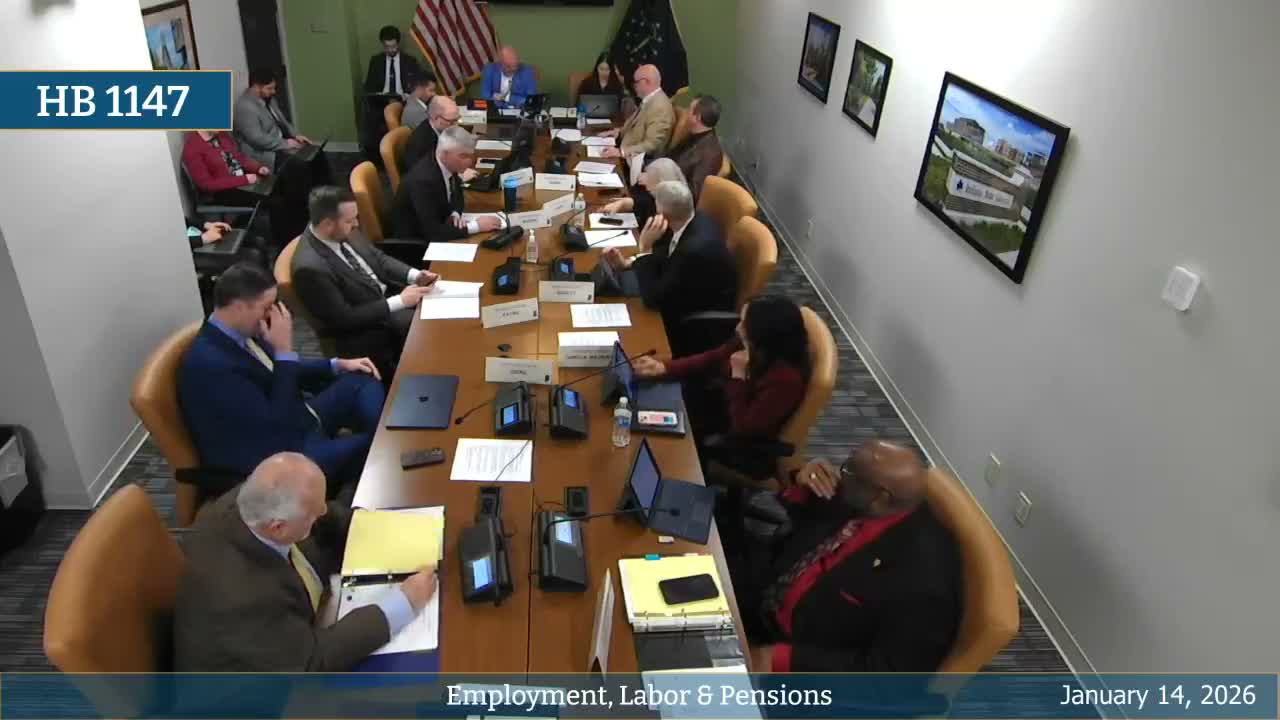
Repossession licensing bill held for further work after questions on fees, LPRs and storage
Summary
House Bill 12‑72, which would create licensure and oversight for repossession operators and regulate license‑plate‑reader use and storage/inventory of recovered personal property, was discussed at length and held for additional work after stakeholders and members requested clarifications on fees, notice requirements and technology access.
Representative Sean Quiler presented House Bill 12‑72 to establish licensure, training and oversight for collateral recovery (vehicle repossession) operators. Quiler said the measure aims to protect consumers and address risks when repossessions occur in driveways, parking lots or late at night, and to require professional standards and auditability when industry operators use license‑plate‑reader (LPR) technology.
Carrie Summers of the Indiana Credit Union League testified with concerns about two provisions: that a "reasonable fee" for storing collateral is not explicitly defined and that the bill currently requires the lienholder to issue certain notices rather than the licensee; Summers said those points should be clarified.
Industry witnesses including Steve Brown (Lenders Recovery Service) and Todd Case (Indiana Professional Repossessors Association) supported licensure and described current industry practices such as body cameras, property inventories and storage periods. Todd Case described safety risks for repossession agents and urged regulation to eliminate "fly‑by‑night" operators; he also asserted that many firms already follow training standards and that licensure would create accountability. Case stated, as testimony, that "Last year, 54 repossession agents were killed in line of duty"; that figure was presented as testimony and was not verified during the hearing.
Committee members asked detailed questions about insurance, how the LPR systems and databases operate, who may obtain the devices and the mechanics of property inventory and certified notice. Credit union testimony said banks as lienholders should not necessarily be required to issue certain notices and questioned how a reasonable fee would be set. The committee did not vote on the bill and held it for further work and clarification.
Next steps: The committee held HB 12‑72 for additional drafting and review; lawmakers asked staff to provide clarifications on fee language, notice requirements, and the scope of technology access and oversight.