Get Full Government Meeting Transcripts, Videos, & Alerts Forever!
Get email alerts on the Redistricting topic
No spam. Unsubscribe anytime.
Redistricting proposal sparks split testimony on rural representation and malapportionment
Summary
Representative Yoakam introduced a draft bill to require certain counties to redraw county commissioner districts to approach equal population; public testimony split between residents citing extreme malapportionment in some counties and county associations warning strict population‑only rules could dilute rural representation.
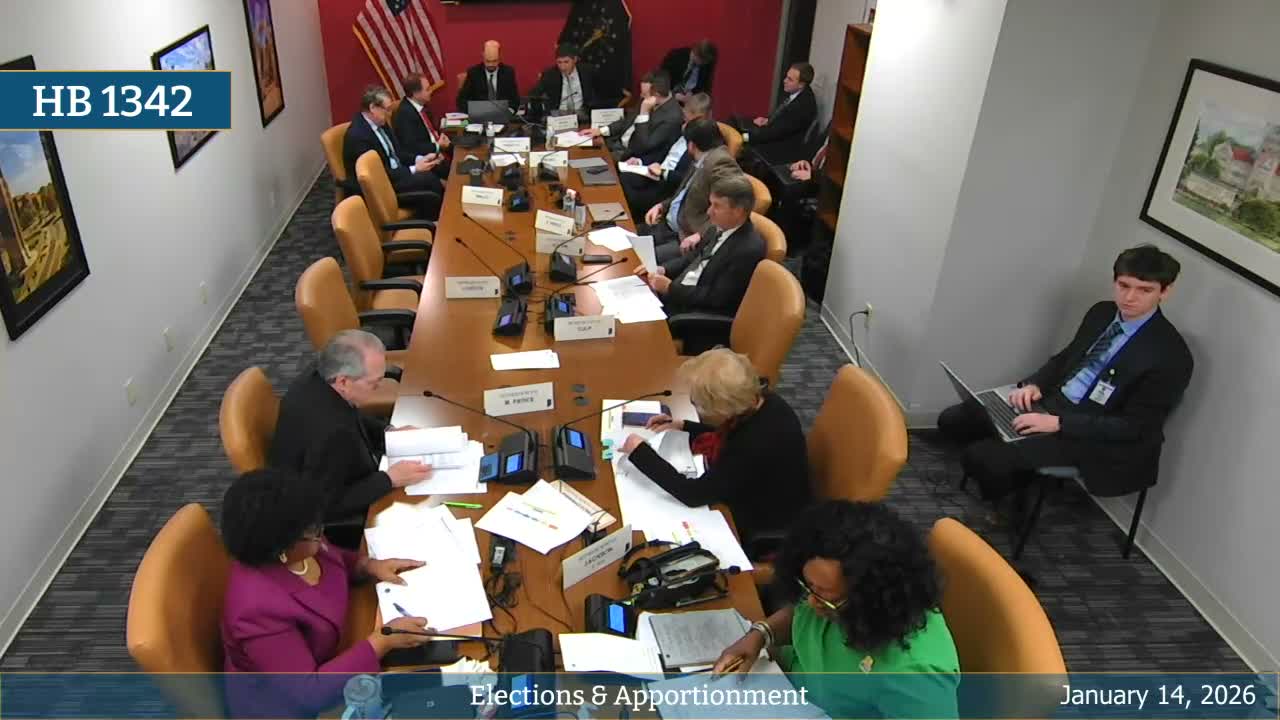
Representative Yoakam presented House Bill 13‑42, an initial draft that would require certain counties to redraw county commissioner districts no later than a specified date to reduce large population deviations between commissioner districts. The sponsor said the goal is equal representation and acknowledged the measure is in early draft form and will be refined with input.
Public testimony highlighted both the problem and competing policy choices. David Shelton, an election administrator, and residents from Clay County described commissioner districts in some counties with extreme variances — one example given was a district with about 17,000 residents versus two other districts of roughly 4,200 and 4,800 — which witnesses said diminishes candidate pools and local voice for smaller districts.
Opponents included the Indiana County Commissioners Association, the Association of Indiana Counties, the Johnson County commissioner, and the Indiana Farm Bureau, who warned that basing commissioner districts strictly on population would undercut geographic and service‑area considerations (roads, drainage, rural needs) and risk concentrating commissioners from urban centers. They urged a balanced approach — requiring counties to consider population without mandating rigid population‑only redistricting or very narrow thresholds.
Speakers debated acceptable deviation thresholds (participants referenced 10% as a commonly cited judicial benchmark, while some suggested higher tolerances to avoid splitting precincts). Common Cause warned that court precedent has treated deviations above 10% skeptically and cautioned against statutory language that would invite litigation.
Representative Yoakam closed by inviting stakeholders to work with him on an acceptable compromise; the committee adjourned without taking a vote on the measure at this hearing.
What happens next: The bill remains under discussion; sponsors and associations signaled willingness to negotiate threshold language and documentation requirements for counties that adopt larger deviations.