Get Full Government Meeting Transcripts, Videos, & Alerts Forever!
Get email alerts on the Municipal Elections topic
No spam. Unsubscribe anytime.
Committee advances bill letting municipalities opt to move elections to even‑numbered years
Summary
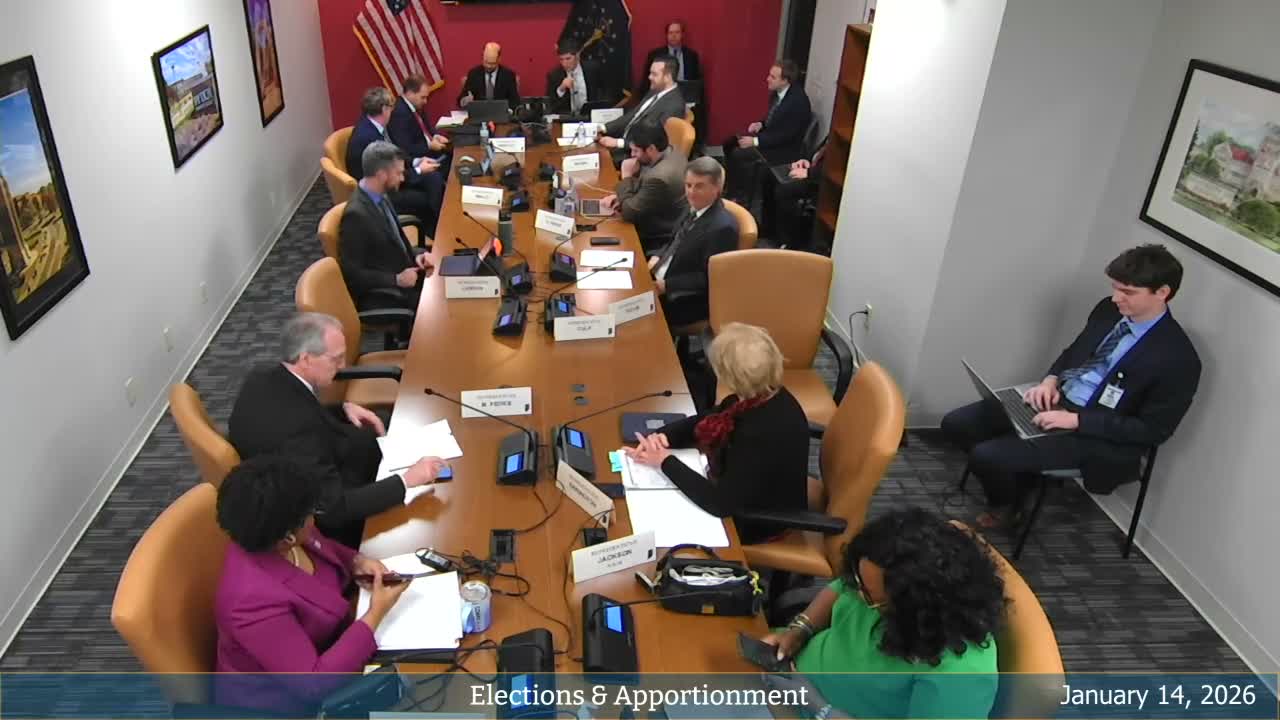
The House Elections & Apportionment Committee advanced House Bill 1055 on a 9‑3 vote after testimony from municipal officials and the Secretary of State’s office that allowing municipalities to shift elections to even years could save costs and increase turnout; opponents urged caution to preserve local election visibility.
Representative Meltzer introduced House Bill 1055, saying the measure would let any municipality choose — by ordinance following Indiana Code 3‑10‑6.5 — to move local elections into even‑numbered years. "This bill simply allows municipal elections to move to even years if the municipality chooses to do so by following the procedure that's laid out in Indiana code 3 10 6.5," he told the committee.
Meltzer framed the change as a local option to reduce election costs and ease staffing pressures. He cited Shelbyville’s recent municipal election bill of nearly $70,000 as an example of rising local election costs and said the bill would "give[] local elected officials...a tool in their toolbox" rather than force a change.
Members pressed proponents on turnout and voter attention. Representative Matt Pierce asked whether municipal contests could get "lost in the noise" of larger ballots in even‑numbered years; Meltzer replied that the measure is permissive. "The word is may. It's not a shall," Meltzer said, adding that municipalities could keep odd‑year elections if they believe it preserves voter focus.
The Secretary of State’s office supported the bill. Kagan Prentice said the office’s study showed higher turnout and a lower cost per vote when municipal elections are moved to midterm or presidential years and that many small towns had already adopted midterm cycles. The office emphasized local control while backing the option for all municipalities.
Amy Krieg of AIM (Indiana Association of Municipalities) testified in opposition on behalf of many municipal members, arguing that while turnout can rise in even years, the “quality” of voter engagement for hyper‑local issues can suffer. Rhonda Cook, representing the mayor of Lawrenceburg, said low municipal turnout in her city motivated support for the option: "I have campaigned and knocked on thousands of doors to have only like 16 to 18% of the population turn out to vote," she said.
After closing remarks from the sponsor, the committee moved the bill and, by roll call, recorded nine votes in favor and three opposed. The chair announced House Bill 1055 passes the committee 9 to 3 and will move to the floor for further consideration.
What happens next: The committee report sends HB 1055 to the full House calendar; municipalities would still need to pass local ordinances spelling out term lengths and transition timing if the law becomes effective.