Get Full Government Meeting Transcripts, Videos, & Alerts Forever!
Get email alerts on the Pensions topic
No spam. Unsubscribe anytime.
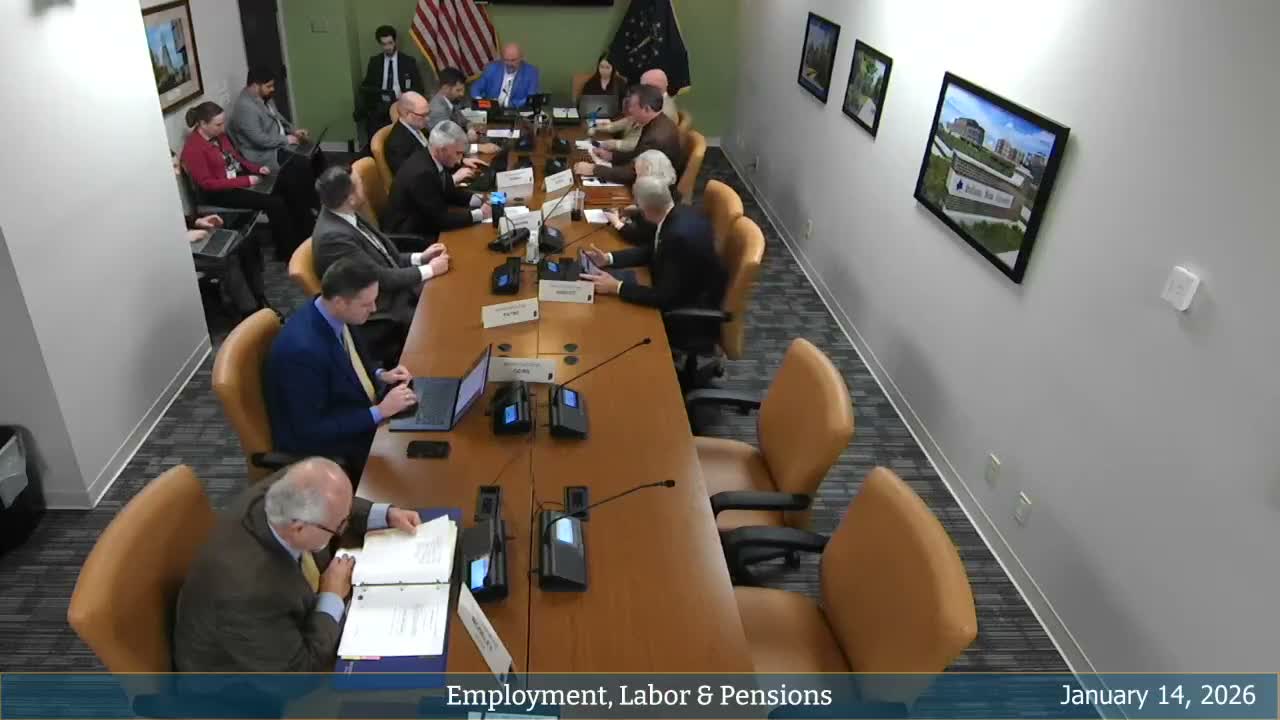
Committee advances one‑time '13th check' for retired public employees, 13‑0
Summary
The committee voted 13‑0 to advance House Bill 11‑45, which would authorize a one‑time supplemental payment for multiple public retirement systems using supplemental reserve accounts; supporters said it costs under $70 million and needs no general fund appropriation.
Representative Karakoff offered House Bill 11‑45 to authorize a one‑time "13th check" for specified retired public employees, including members of the Public Employees’ Retirement Fund, the Teachers’ Retirement Fund, excise police, gaming control officers and conservation officers. "This bill has passed 30 out of the last 35 years," Karakoff said, asking the committee to advance it to Ways and Means.
Jessica Love, executive director of the Retired Indiana Public Employees Association (RIPIA), testified that supplemental reserve accounts were established to fund 13th checks and currently hold substantially more than needed. "According to the fiscal analysis, the cost is less than $70,000,000 while uncommitted balances exceed $272,000,000 across the SRAs for the affected funds," Love said, urging passage without a general fund appropriation.
Jeff Wells of the Indiana Conservation Officers FOP Lodge 201 said conservation officers and excise police rise in support of the bill. Several other retiree groups also voiced support in brief testimony.
The committee recorded a 13‑0 voice vote to advance the bill. Committee discussion emphasized that the language change on page 3, section 3 simply aligns retired conservation officers with state police provisions; the dollar amounts remained those previously approved. The chair called the roll and the clerk announced the 13‑0 result.
Next steps: The committee advanced HB 11‑45 to Ways and Means and, if approved there, the bill would proceed to the Senate. The bill’s fiscal analysis and testimony indicated the payment is intended to be made from supplemental reserve accounts and does not require a general fund appropriation.