Get Full Government Meeting Transcripts, Videos, & Alerts Forever!
Get email alerts on the Sb78 topic
No spam. Unsubscribe anytime.
Committee hears wide support for ‘bell-to-bell’ phone ban; members press for implementation fixes
Summary
Stakeholders including teachers, superintendents and school boards told the House Education Committee Senate Bill 78 would reduce classroom distraction and improve behavior and achievement, but witnesses urged changes to the bill’s 'secure storage' language, clearer emergency exemptions and funding for equipment.
Senate Bill 78, a proposal to prohibit use of personal cell phones during the school day, drew broad endorsement from teachers, districts and school-board groups at a House Education Committee hearing, but committee members pressed sponsors for clearer implementation language and funding options.
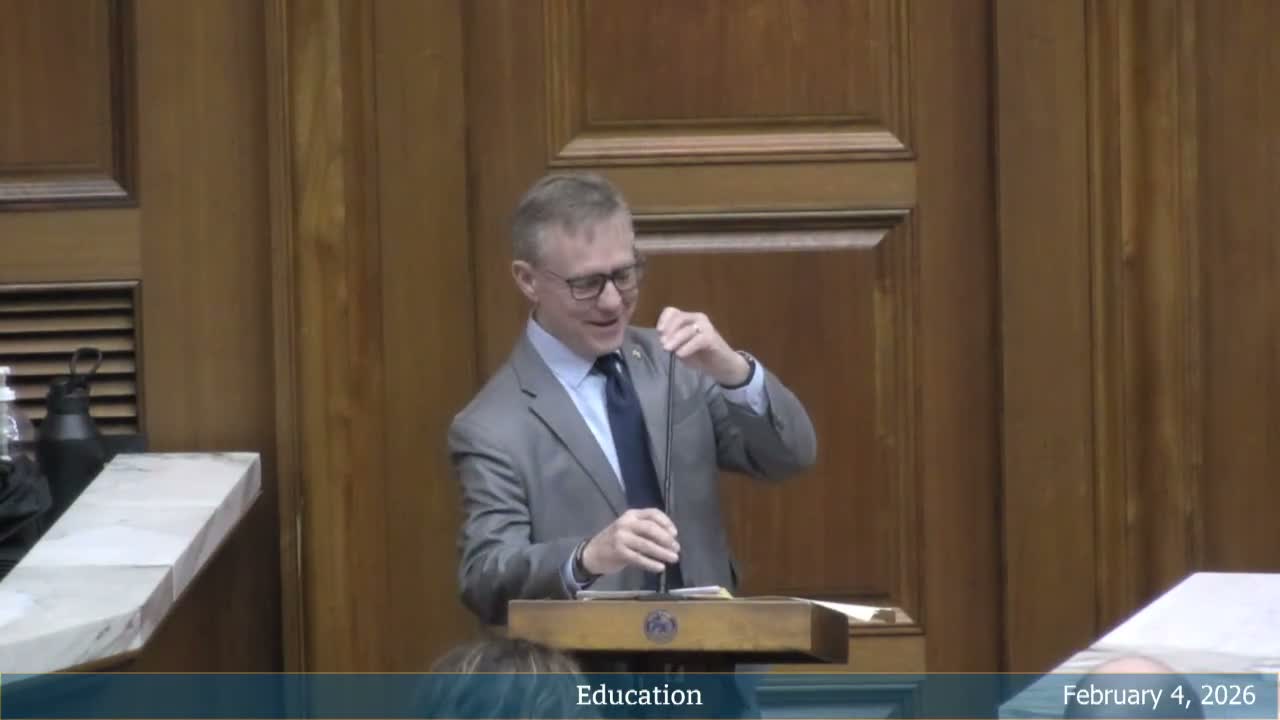
Senator Rotz, who introduced the measure, described it as a “bell-to-bell” ban intended to protect instructional time and improve academic outcomes. He told the committee that smartwatches and other connected devices remain a thorny implementation question and asked members for help refining exemptions.
Supporters testified that removing phones from sight can boost focus and reduce disruptions. “We are happy to stand in support of Senate Bill 78,” Kristen Casper, government affairs director for Stand for Children Indiana, told the committee, citing research she said shows that keeping phones out of sight improves test scores and reduces time lost to distraction.
District officials described practical steps and trade-offs. Jeff Butts of the Association of Public School Superintendents said many districts already use one-to-one or bring-your-own-device models and warned the committee to avoid creating an unfunded mandate. Fort Wayne’s Steve Corona described his district’s pilot, saying behavior incidents fell and academic performance rose after a bell-to-bell policy and the district’s purchase of device pouches: “We purchased pouches…we spent 4 to $500,000,” he said, adding that the district found the investment returned measurable benefits.
Multiple witnesses — the Indiana School Boards Association, principals and charter-school representatives — urged the panel to strike or clarify the bill’s phrase “secured storage,” asking whether lockers, backpacks or district-provided pouches would qualify and how schools without lockers should comply. Terry Spradlin of the ISBA recommended removing the word “secure” to provide local flexibility and asked that the superintendent have limited authority to grant narrow exceptions beyond those listed in the bill.
Lawmakers repeatedly raised family-safety and medical exceptions. Senator Rotz acknowledged a drafting gap around emergency access and agreed amendments are needed to define when a student may use a device for safety or medically necessary functions.
The hearing produced no vote; the sponsor said he will work with the committee on clarifying amendments and model policy language from the Department of Education was discussed as a way to limit local confusion. The committee moved SB 78 to further consideration after testimony concluded.
The committee is scheduled to take votes next Wednesday; no formal action on SB 78 was taken at this hearing.